The Big Picture
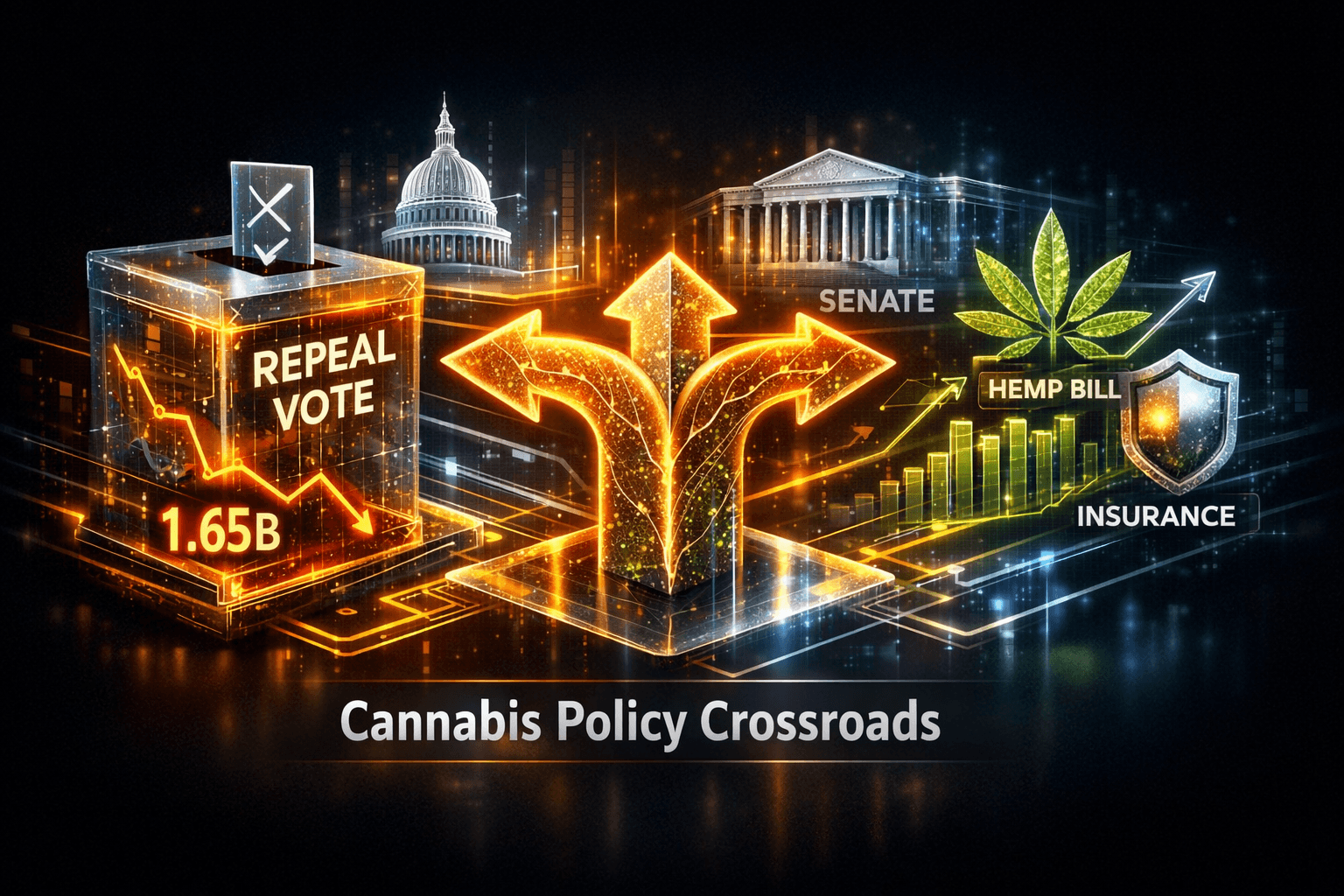
The most consequential development today is political: Massachusetts' adult-use marijuana repeal has advanced to the November ballot, threatening a $1.65 billion retail market and creating near-term regulatory risk for operators with a footprint there. That state-level threat landed alongside a string of federal and state policy moves that both shore up and complicate the legal landscape for cannabis and hemp businesses.
Why does this matter to you as an investor? Ballot outcomes and state legal fights can change revenue forecasts quickly, while bipartisan federal bills and insurance protections could reduce costs and open markets over time. It's a mixed bag, and you'll want to weigh state exposure against broader policy tailwinds when assessing positions.
Market Highlights
Key facts and headlines from today, presented for quick scanning.
- Massachusetts repeal advances to November, putting a $1.65 billion adult-use market at risk, after election officials rejected a challenge to the ballot question.
- Congressional lawmakers introduced the Lawful Hemp Protection Act to preserve certain hemp-derived THC sales, adding taxes and new regulations instead of a blanket ban.
- The bipartisan CLAIM Act was filed in the Senate to protect insurers working with state-legal marijuana businesses, a move that could ease coverage access for operators and suppliers.
- Alabama held a public hearing on whether to reschedule marijuana consistent with the federal decision, signaling more state-level alignment with federal policy in some jurisdictions.
- Virginia businesses announced plans for a federal lawsuit challenging a new state definition of hemp products, reflecting ongoing patchwork regulatory risk.
- Coverage has expanded beyond policy to demand drivers, as new research highlights cannabis use in women's health, potentially shaping product development and medical adoption.
- Sector tickers to watch for market-level signals include $MSOS, $TCNNF, $GTBIF, $CURLF, and $TLRY.
Key Developments
Massachusetts repeal advances, challenge denied
State officials confirmed that a ballot initiative to repeal adult-use marijuana sales will appear on the November ballot after the State Ballot Law Commission rejected a procedural challenge. For businesses operating in Massachusetts, the question injects near-term demand uncertainty and could force contingency planning around lost retail revenue and licensing shifts.
Bipartisan federal bills aim to stabilize hemp and insurance markets
Two notable bills were introduced by lawmakers today. The Lawful Hemp Protection Act would preserve certain hemp-derived THC products with new taxes and regulatory guardrails, partially scaling back a looming scheduled ban. Separately, the CLAIM Act would bar federal punishment of insurers that provide coverage to state-legal cannabis operators. Together these measures could reduce compliance and insurance costs for product sellers and retailers if enacted.
State fights and medical legitimacy progress
Alabama's hearing on state rescheduling shows some states are moving to align with federal rescheduling decisions, potentially expanding medical access. At the same time, Virginia companies are preparing a federal lawsuit to block the state’s new hemp definition, a reminder that states are still setting divergent rules. New research into cannabis for women’s health may broaden the medical narrative and influence product pipelines and marketing over time.
What to Watch
Looking ahead, several clear catalysts and risks will shape the sector's direction and your portfolio decisions.
- November ballot in Massachusetts. This is the single largest near-term catalyst. Polling and campaign spending will matter. How exposed are companies to MA retail sales and licenses?
- Congressional and Senate movement on the Lawful Hemp Protection Act and the CLAIM Act. Committee hearings, amendments, and votes will determine whether these protections survive and what compliance costs remain.
- State-level regulatory actions and litigation. Virginia’s planned lawsuit and other state redefinitions could produce injunctions or local enforcement changes. Watch court dockets and agency rulemaking closely.
- Insurance market responses. If the CLAIM Act or similar protections gain traction, you may see insurers re-enter the market gradually, which could reduce operating risk and financing costs for operators.
- Demand-side indicators. Research into medical uses, such as the women’s health studies reported today, may shift product development and consumer marketing. Are companies positioning for new medical niches?
What should you track tomorrow? Monitor campaign filings and spending in Massachusetts, any legislative scheduling for the hemp and insurance bills, and updates from Virginia’s business coalition. Which companies will shift guidance or cite state exposure in filings next quarter?
Bottom Line
- State-level risk in Massachusetts is the most immediate headwind and could meaningfully reduce local sales if voters approve the repeal.
- Bipartisan federal proposals on hemp products and insurer protections create constructive, longer-term regulatory signals that could lower costs and uncertainty.
- Legal fights and varied state responses mean the sector will keep being driven by politics as much as by fundamentals, so plan for volatility.
- Track exposure to Massachusetts and other states with evolving rules, and watch legislative calendars and court activity for clear catalysts.
- Analysts note this combination of developments keeps the outlook mixed, with policy wins offsetting localized downside risk rather than delivering clear sector-wide momentum.
FAQ Section
Q: How could the Massachusetts repeal affect national operators? A: Operators with stores, licenses, or wholesale distribution in Massachusetts could see revenue and licensing valuations fall, and you may see companies disclose contingency plans in near-term filings.
Q: Does the CLAIM Act guarantee insurance for cannabis businesses? A: No, it would bar federal punishment of insurers working with state-legal businesses, which could encourage re-entry by insurers, but market availability will depend on carrier appetite and underwriting.
Q: Will the Lawful Hemp Protection Act stop all bans on hemp THC products? A: The bill aims to preserve certain hemp-derived THC sales while imposing taxes and regulations, but final legal and regulatory outcomes will depend on the legislative process and any court challenges.