The Big Picture
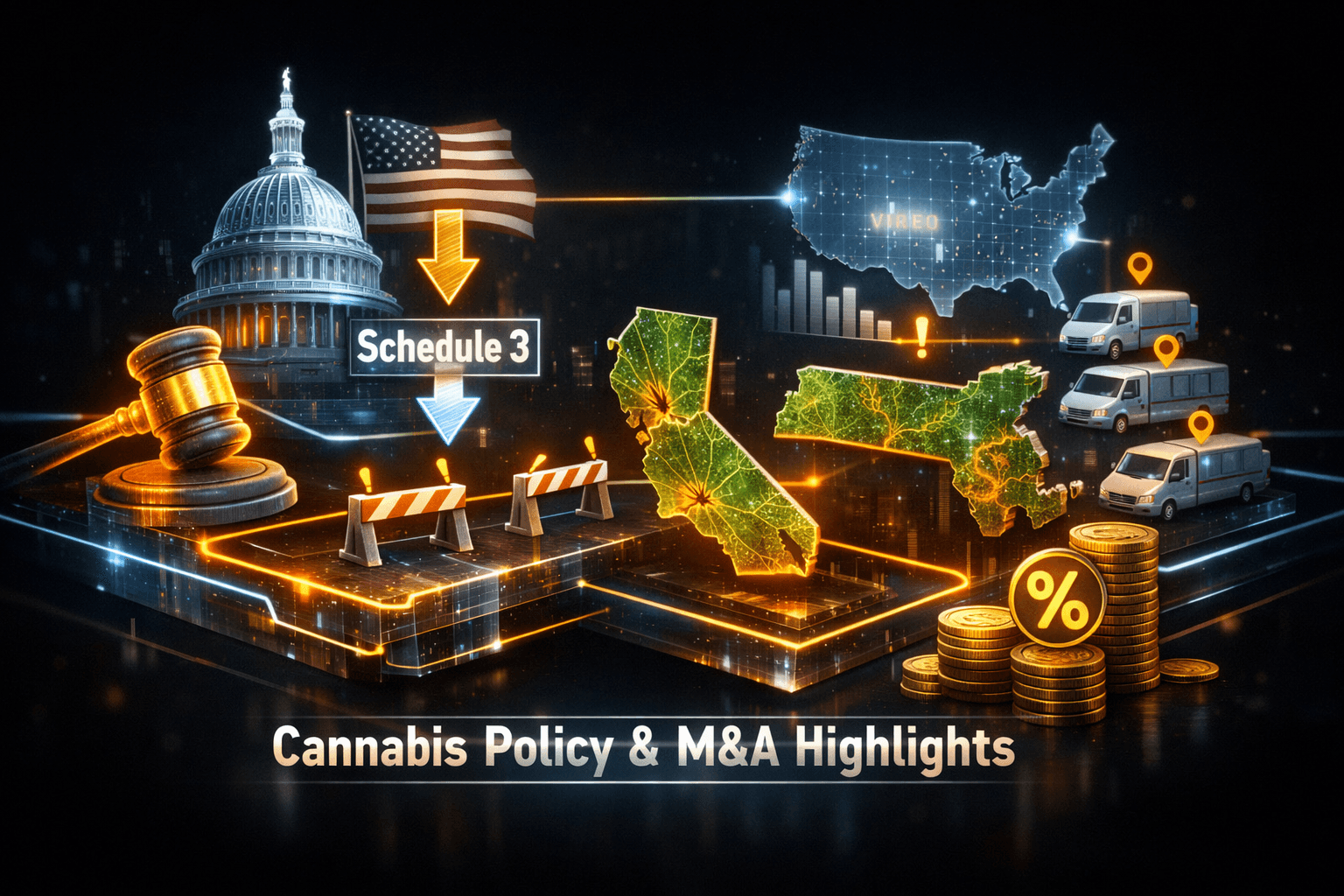
Today’s cannabis headlines offered a split picture: strong political pressure for federal legalization and incremental market consolidation, set against state and local headwinds that could slow growth in some pockets. For investors, that means momentum at the policy level may not translate evenly into near-term sales or easier operating conditions at the state level.
Why this matters to you: federal rescheduling or legalization could reshape capital flows and unlock broader markets, but ballot initiatives, municipal bans, and rising regulatory fees will determine how fast operators can scale, and where.
Market Highlights
Below are the day’s headline moves and context for key names you may be tracking. No single theme dominated; expect selective outcomes across the industry.
- Federal policy spotlight: Sen. John Fetterman publicly pushed for Congress to legalize marijuana, stressing urgency and cosponsorship of a bill to end federal prohibition.
- DEA process under scrutiny: Media and industry observers described recent DEA rescheduling hearings as unusual and uneven, highlighting the slow, evidence-driven administrative pathway to federal change.
- M&A activity: Vireo Growth Inc announced a deal to acquire several Cannabist operations across Colorado, Illinois, Massachusetts, New Jersey, and West Virginia, a transaction valued at up to $35 million with $18.75 million payable up front, pending regulatory approvals.
- State-level friction: Massachusetts officials ruled that an anti-cannabis rollback initiative will appear on the November ballot, creating a potential statewide revenue and regulatory risk for local operators.
- Local rules diverge: The Massachusetts Cannabis Control Commission tracker shows 351 municipalities will allow adult-use delivery while 13 have imposed bans, illustrating patchwork access across the state.
- Regulatory costs: Nebraska’s Medical Cannabis Commission released draft fees, including a $5,000 application fee, a $13,000 seed-to-sale participation fee, and product licensing fees of $250 per new product and $100 to renew.
- Sectors and tickers to watch: Broad and individual names investors track include $MSOS, $TCNNF, $GTBIF, $CURLF, and $TLRY as proxies for policy and market sensitivity.
Key Developments
Federal Push vs Administrative Reality
Sen. Fetterman’s forceful call for Congress to legalize marijuana brought fresh political attention to a long-sought reform. That push increases political momentum and could accelerate legislative debate, but the DEA’s rescheduling hearings underscored the slow administrative path that must also be navigated.
What this means for you, and for markets, is clearer: legislation could be a game changer, but administrative review and agency proceedings are still a parallel bottleneck that may delay or narrow outcomes.
State and Local Divergence: Massachusetts as a Case Study
Massachusetts produced both opportunity and risk today. The state’s municipal tracker shows widespread acceptance of delivery as a distribution channel, with 351 towns opting in, but a pending November ballot measure could roll back parts of legalization if voters approve it.
That creates an immediate planning problem for operators and landlords, since delivery expansion can drive sales growth, while a ballot outcome could reduce retail hours, licenses, or local demand for real estate.
M&A Activity: Vireo’s Multistate Purchase
Vireo Growth’s agreement to buy Cannabist operations across five states is a clear sign of consolidation and strategic expansion. The headline numbers, up to $35 million with $18.75 million in initial consideration, show regional operators are still in acquisition mode.
For investors, M&A like this signals operators are prioritizing scale and geographic footprint, especially in states where regulatory environments are clearer. It also means integration and regulatory approval will be near-term execution risks to monitor.
What to Watch
Looking ahead, several catalysts will shape sentiment and trading in the next days and weeks. You’ll want to focus on timing and scope, because policy and local outcomes will materially affect which companies benefit.
- Federal legislative movement: Track any congressional scheduling or text releases tied to Sen. Fetterman’s bill. Will Congress move this session, or will action stall?
- DEA rescheduling timeline: Watch for official notices, comment periods, or tentative scheduling decisions from the DEA, since administrative timelines can be long and technical.
- Massachusetts ballot updates: Monitor polling and campaign funding for the November initiative, and any interim rule changes from the state regulator that could affect retailers and delivery services.
- M&A and integration milestones: For Vireo and others doing deals, watch for regulatory approvals, financing updates, and integration guidance, which will determine near-term execution risk.
- Regulatory cost signals: Keep an eye on public comment and finalization of Nebraska’s fee schedule, and similar drafts in other emerging states, since fees affect margins and required capital.
- ETF and large-cap behavior: Watch $MSOS, $TCNNF, $GTBIF, $CURLF, and $TLRY for volatility tied to policy headlines, M&A, and state ballot developments. How will you position for sector-wide news versus idiosyncratic risk?
Bottom Line
- Federal momentum is real, but administrative processes mean legalization or rescheduling could still take time.
- State-level developments are mixed, with delivery expansion in many Massachusetts towns but a ballot measure that may roll back parts of legalization.
- M&A activity like Vireo’s purchase shows industry consolidation continues, signaling strategic focus on scale and market access.
- Regulatory fee drafts in states such as Nebraska remind you that evolving cost structures will shape profitability and capital needs.
- For better or worse, the sector is balancing big-picture policy upside with granular state and municipal execution risks, so selective monitoring is key.
FAQ Section
Q: Will federal legalization happen soon? A: Analysts note political momentum has increased, but administrative reviews and congressional timing remain uncertain, so a rapid answer is unlikely.
Q: How could the Massachusetts ballot affect operators? A: If the ballot succeeds, it could reduce license types or operational scope and pressure local demand, while delivery expansion in most towns may partially offset those risks.
Q: What should small operators watch regarding fees? A: Draft fee schedules, like Nebraska’s, show application, seed-to-sale, and product fees can add meaningful upfront and ongoing costs, so watch final rules closely for budgeting purposes.