The Big Picture
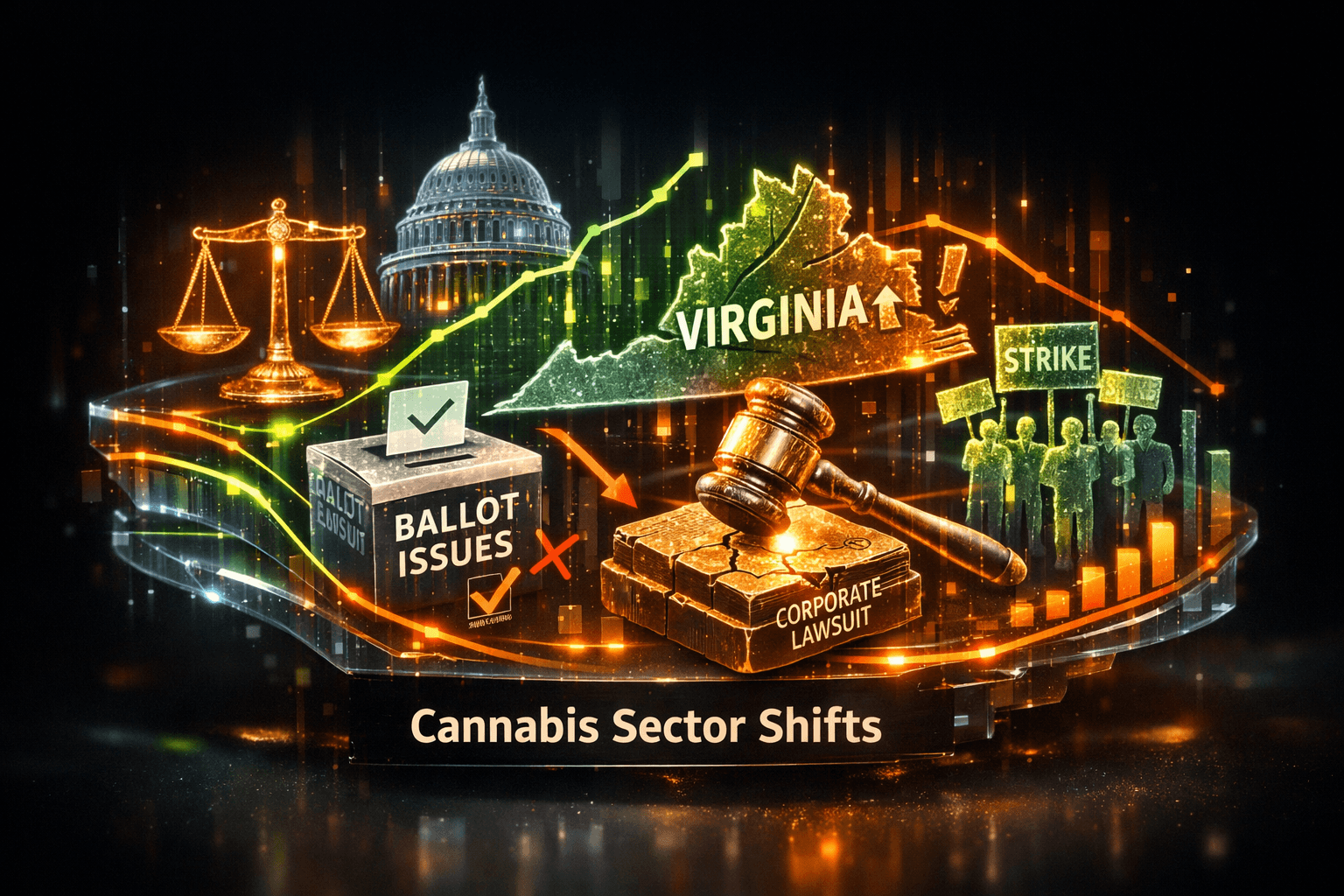
The federal rescheduling hearing dominated headlines today, as DEA and FDA lawyers emphasized marijuana's medical benefits and relative safety compared with alcohol and opioids. At the same time, Virginia lawmakers gave final approval to legal sales in a budget vote, while several industry headwinds surfaced that investors will want to track.
These developments matter because they push the policy narrative forward even as legal and operational risks persist. If you're following cannabis stocks, today's mix of regulatory momentum and countervailing pressures suggests the sector could see continued headline-driven volatility into tomorrow.
Market Highlights
Trading reacted to a blend of policy and operational news across the sector. Below are the quick facts and the most-watched names today.
- Federal hearing spotlight: DEA and FDA testimony moved the rescheduling conversation into the spotlight, boosting sentiment around regulatory clarity.
- State legalization: Virginia's final approval of recreational sales was a clear policy win that could expand market access and sales volumes in the mid-Atlantic.
- Sector tickers to watch: $MSOS, $TCNNF, $GTBIF, $CURLF, $TLRY remained the primary ETFs and names traders referenced as news unfolded.
Key Developments
Federal Rescheduling Hearing Advances the Debate
On opening day of the rescheduling hearing, DEA and FDA lawyers stressed testimony on marijuana's medical uses and its safety profile relative to alcohol and opioids. The proceedings were not livestreamed to the public, but coverage shows federal agencies presented arguments that could support moving cannabis to a less restrictive federal classification.
For investors, that matters because any durable shift in scheduling would affect banking, research, and interstate commerce. You're likely to see policy-driven price swings as stakeholders react to procedural milestones and filings.
State-Level Progress: Virginia Legalizes Sales
Virginia's legislature adopted budget amendments that finalize a plan to legalize recreational marijuana sales. Lawmakers accepted the governor's changes, so the measure is now law as part of the budget package.
This is an immediate market access win for licensed operators and for retail expansion in a populous state. You'll want to watch implementation timelines and licensing rules, which will determine who benefits first.
Legal and Operational Headwinds Surface
Not all news was positive. MMJ International Holdings is in court seeking to reverse rescheduling changes that made it easier for state operators, a lawsuit that introduces legal uncertainty. At the same time, over 300 cultivation workers at Ascend Wellness went on strike in Illinois alleging unfair labor practices, creating near-term production and reputational risk.
In addition, Idaho's medical ballot campaign hit signature verification snags, and South Carolina's House rejected a Senate compromise to regulate intoxicating hemp products. These state-level setbacks show expansion is still uneven and can be derailed by administrative or political hurdles.
What to Watch
Expect headlines to keep moving the tape. How will agencies and courts proceed, and when will states finalize implementing rules? Here are the near-term catalysts and risks to monitor.
- Federal timeline: Watch for subsequent rescheduling hearing days, agency filings, and any formal administrative moves from DEA or FDA. Those steps will shape long-term investor expectations.
- Legal risks: Track the MMJ International court case closely, because a successful challenge could complicate the regulatory path that many businesses were already banking on.
- Labor and operations: Monitor Ascend Wellness' discussions with the union and any production disruptions. You should also follow other operators for potential ripple effects on supply and margins.
- State implementation: For Virginia, look for licensing timelines, application windows, and tax rule announcements. In Idaho and South Carolina, watch for appeals or renewed legislative efforts that could revive or further delay market openings.
- Sector benchmarks: Keep an eye on $MSOS, $TCNNF, $GTBIF, $CURLF, and $TLRY for price action tied to regulatory headlines and state rollouts. These names often lead sentiment moves for the group.
Bottom Line
- Federal momentum on rescheduling is meaningful, but it's not a done deal and faces legal pushback that could slow implementation.
- Virginia's legalization is a concrete state-level expansion and will create nearer-term revenue opportunities once rules and licenses are issued.
- Labor strikes and legal challenges are active headwinds that can affect supply, costs, and investor sentiment, so you should watch operational news closely.
- Regulatory progress and state wins may drive volatility, so a selective approach and attention to execution metrics will matter for outcomes.
- Short-term trading will be headline-driven, while longer-term outcomes depend on legal rulings and concrete policy implementation timelines.
FAQ Section
Q: How could federal rescheduling affect cannabis businesses? A: Rescheduling could ease research, banking access, and federal regulatory interactions, but actual effects depend on implementing rules and court outcomes.
Q: What should Virginia market participants expect next? A: You should expect licensing timelines and retail rules to be published, with staged application windows that determine who opens and when.
Q: How material are strikes and ballot verification problems for investors? A: Labor actions can disrupt production and sales, and ballot or signature issues can delay or block market expansion, both of which add execution risk to company plans.