
 Bearish Sentiment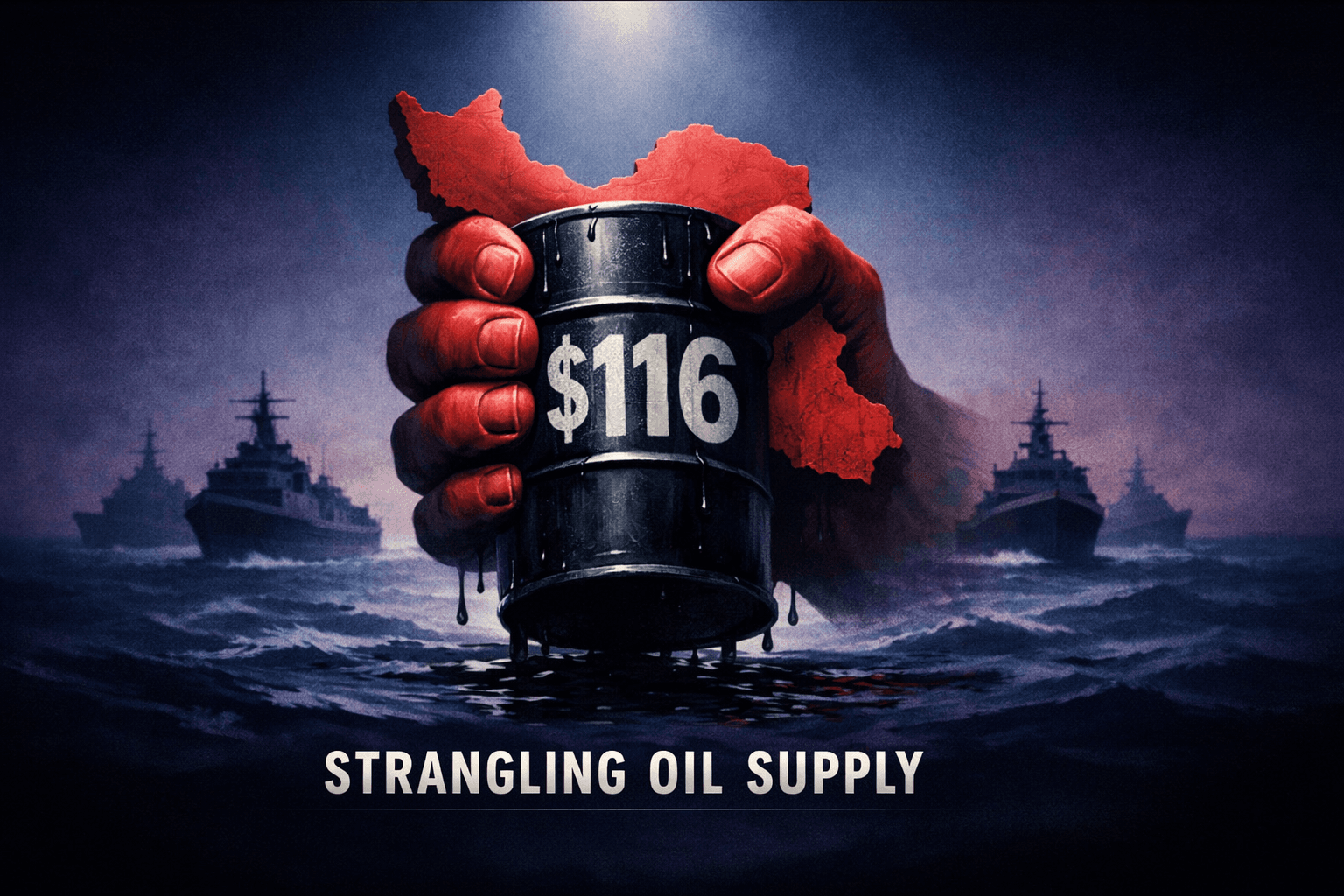
Share this article
Spread the word on social media
Oil Surges After Iran Tightens Control Of Strait Of Hormuz
Oil futures climbed again Monday, with Brent crude hitting $116 a barrel, after Iran stepped up measures that have throttled shipping through the Strait of Hormuz.
Only six ships a day are now transiting the strait, down from a normal run-rate of roughly 135, according to shipping sources. The waterway channels about 20% of the world\'s oil supply, putting global markets on edge.
New Rules, Fewer Ships, Higher Risk
Tehran is preparing legislation that would require vessels to pay tolls and hand over crew lists before passage. The move comes amid heightened military posturing and has prompted insurers and shipowners to reroute, delay or suspend voyages.
Bloomberg warned that energy markets could face shocks rivaling the crisis of the 1970s, and several analysts now say a prolonged conflict could lift prices to $200 a barrel or more if chokepoints remain closed and production outages spread.
Immediate Market Reaction
Brent\'s rise to $116 is the clearest market signal that traders are pricing in a sustained disruption. U.S. crude benchmarks also rallied, reflecting growing risk premia and a squeeze on seaborne flows.
Shipping-cost indicators and tanker insurance rates have surged, increasing the effective price of delivered crude. That added cost is showing up in refined-product margins and could feed through to consumer pump prices in weeks.
Why This Matters
The Strait of Hormuz is a bottleneck for nearly one in five barrels traded worldwide. When transit collapses, there are few near-term substitutes for the volume that moves by tanker through the waterway.
OPEC+ has some spare capacity, but analysts caution it is limited and unevenly distributed. Markets are watching whether major producers can meaningfully backfill lost seaborne flows without destabilizing other balances.
Winners And Losers
Energy producers and integrated oil majors typically benefit from higher crude prices, traders say. Names like $XOM and $CVX could see improved cash flows if elevated prices persist.
Refiners and fuel-sensitive industries face margin pressure, and shipping companies and insurers are dealing with higher costs and disrupted routes.
Emerging-market importers and oil-consuming sectors could face higher inflation, which raises the risk of demand destruction and economic slowdown.
"If transit through Hormuz remains constrained for months, the risks move from volatile price spikes to a sustained supply shock that would feed through to inflation and economic growth," said an energy strategist who tracks Middle East flows.
Two Possible Paths Forward
One scenario is fast diplomatic de-escalation. If Tehran backs off the new measures or if major navies and insurers find a workable security solution, shipping could recover and prices may retrace some gains.
The second, more worrying path, is protracted confrontation. That would force longer rerouting around Africa, push tanker freight and insurance costs sharply higher, and potentially create permanent changes in trading patterns with higher price floors.
Policy Responses And Market Safeguards
Governments have options, from coordinated strategic petroleum reserve releases to diplomatic pressure and sanctions relief talks. Any major SPR release would need to be large and sustained to drive prices back from current levels.
Analysts say markets will also watch OPEC+ supply statements, U.S. and allied naval postures, and insurer guidance. Data on actual export volumes from Gulf terminals will be a critical short-term gauge of damage.
What Traders And Investors Should Watch
Daily ship transit counts through Hormuz and reported tanker liftings from major Gulf terminals.
Statements from OPEC+ members about spare capacity and production changes.
Insurance market moves and freight-rate indices that signal how costly it is to move crude overseas.
Geopolitical signaling from Tehran, Washington, and regional capitals that might indicate escalation or de-escalation.
For investors, the situation creates a classic risk-reward tradeoff. Higher oil supports producers and commodity-focused equities, using tickers like $XOM, $CVX or $SHEL, while raising risks for consumers, refiners and broader economic growth.
In the near term, the market is pricing in significant uncertainty. Whether prices settle at a new, higher baseline or spike intermittently will depend on how long Iran sustains its chokehold and how the world responds.