 Sector Insights
Listen to this Recap
9:10
Mixed Macro, Clear Secular Bets: AI, Renewables and Real Estate Shine Amid Policy and Rate Headwinds
Podcast • Loading audio...
Share this article
Spread the word on social media
Key Takeaways
- •Secular capital allocation into AI, renewables and selected industrial projects continues despite headline risk; Nvidia’s $10B/Anthropic news and large private raises highlight this trend.
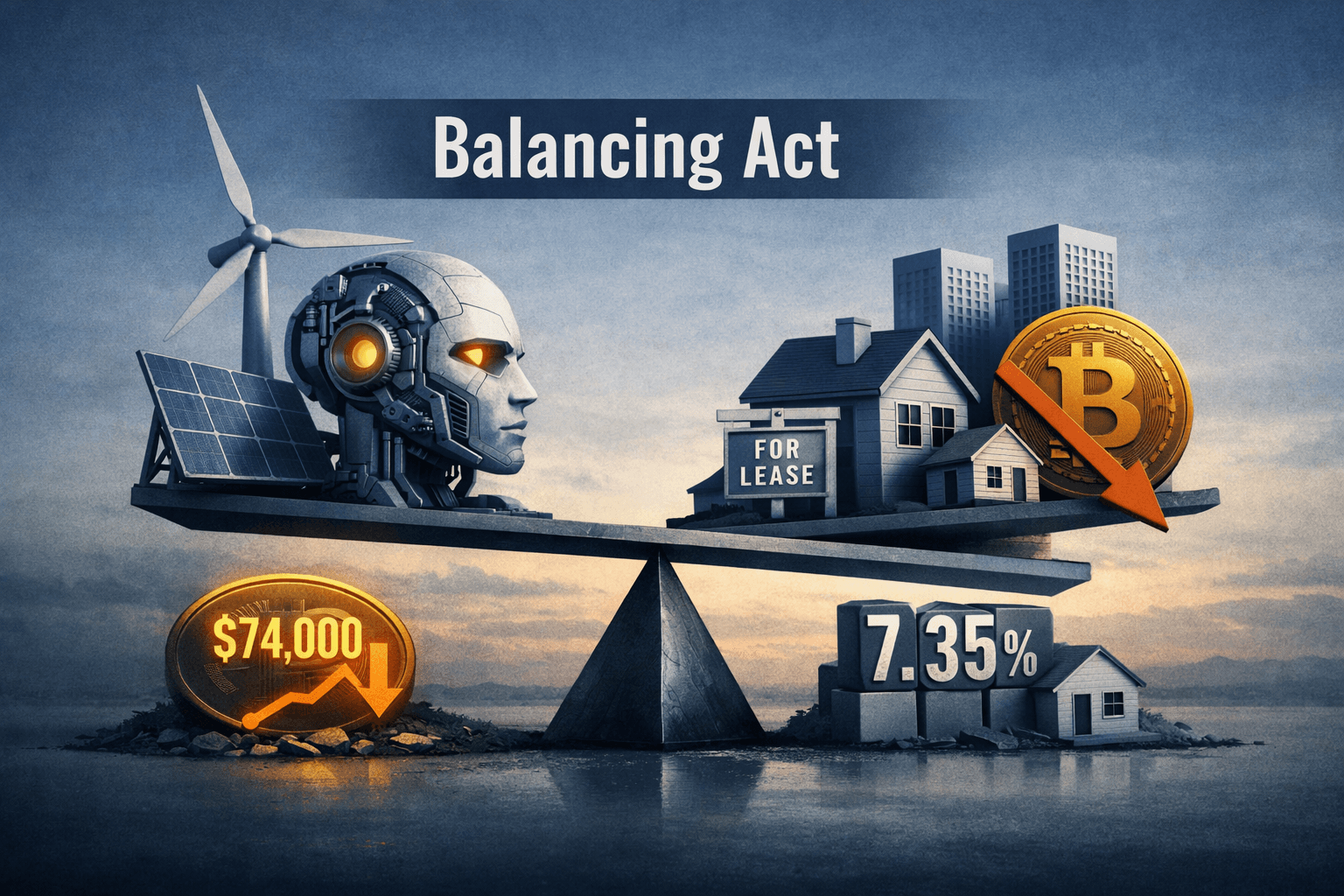
- •Macro surprises (hotter CPI) and rate expectations are re-pricing risk assets—Bitcoin fell under $74,000 and liquidity outflows pressured crypto.
- •Real estate and utilities showed tangible operational wins (leasing surge, storage/hydrogen progress) while mortgage-rate easing to 7.35% provided limited financing relief.
- •Policy and regulatory headlines (cannabis reclassification, rare-earths debate, tech governance probes) are amplifying volatility across several sectors.
- •Investors should prioritize cash-flow visibility, contracted offtakes and governance milestones while monitoring macro prints and regulatory developments.
Executive summary
November 10 closed as a study in contrasts. On one hand, fresh macro data and policy headlines—hotter-than-expected CPI and continued regulatory scrutiny—pressed risk assets and amplified short-term volatility. On the other, corporate capital continues to flow into secular growth areas: large tech-AI commitments, industrial re-shoring and clean-energy projects. Bitcoin dropped below $74,000 after the CPI print and ETF outflows renewed pressure on crypto liquidity; yet sizeable private raises (Zipline $1.5B) and strategic investments (Nvidia’s reported $10B pledge to Anthropic) underscored durable investor appetite for AI and logistics innovation.
Across 24 sector briefings, a few clear patterns emerged: real estate and utilities showed tangible operational wins, consumer names reported selective top-line momentum, and industrials recorded major strategic investments. Offsetting those pockets of strength were cross-cutting headwinds—policy uncertainty in cannabis and rare-earths, a probe into a major chipmaker’s board, and persistent rate sensitivities that keep real-estate financing and consumer discretionary demand under watch. Analysts note that the market is navigating a middle chapter: secular repositioning continues, but macro and regulatory noise are keeping near-term directional conviction muted.
Grouping by performance
Note: Sector-level performance data was not uniformly provided across briefs. The categorizations below synthesize the day’s headlines and deal flow to indicate which sectors showed the clearest upside momentum, which were under pressure, and which were broadly stable or mixed.
Outperformers
Real Estate — Leasing momentum and substantial institutional activity dominated the day. Key datapoints: Modal Labs upsized to nearly 157,000 square feet; a Class A industrial park reported full leasing; mortgage rates eased to 7.35%, providing incremental financing relief for buyers and occupiers. Analysts note increased AI-driven operational adoption and banks applying AI to underwriting, which may accelerate deal flow.
Utilities — Renewables, storage and hydrogen narratives advanced. Stakes included new financing activity for storage projects, commercial solar technology wins, and turbines being marketed as hydrogen-ready. NRG’s sale of 4.9 GW of gas plants for $4B highlighted active portfolio reshaping and capital redeployment.
Consumer — Selective growth momentum surfaced. E.l.f. posted a 51% sales jump, and Mars announced a $1.4B U.S. investment, signaling pockets of robust demand and corporate confidence in specific consumer segments.
Underperformers
Cryptocurrency — The sector reacted negatively to macro data and security incidents. Bitcoin fell below $74,000 after hotter-than-expected CPI, ETF withdrawals and outflows pressured liquidity. Regulatory uncertainty and reported hacks continued to weigh on sentiment.
Technology — A mixed bag: heavy investment into AI (Nvidia’s reported $10B commitment to Anthropic) contrasts with governance and regulatory scrutiny (a high-profile board probe into Nvidia) and export/regulatory frictions. That leaves the sector with bright secular demand but elevated event risk.
Materials/Mining — Activity and deal flow (production milestones, supply pacts) were offset by policy uncertainty (U.S. rare-earth strategy) and safety incidents (deadly mill explosion). The result: operational progress overshadowed by structural and reputational risks.
Stable / Mixed
Energy — Headlines balanced. Geopolitical noise (reports of Houthi missiles) contrasted with corporate wins (Occidental Occidental Petroleum (OXY) beat) and liquefied natural gas (LNG) volume momentum—Qatar boosted loadings and ADNOC Gas reported a strong profit rebound. Crude slid below $90 after some easing in U.S. diplomatic tensions.
Finance — M&A, fintech AI progress, and a mixed market reaction to policy and earnings produced a neutral tone. Anthropic’s IPO timing and Fed outlooks are key near-term inputs for sentiment in the sector.
Healthcare — Scientific advances (Beam’s base-editing milestone, new MRI approaches), biotech funding, and policy disputes (Medicare and marketing issues) left the sector balanced between innovation upside and regulatory risk.
Other sectors—communications, industrials, cannabis, and materials—registered a mix of localized positives (content slates, large industrial investments such as Honda’s $3B Ohio hybrid plant, Firefly’s $1.3B supply deals) and offsetting headwinds, producing idiosyncratic rather than broad market moves.
Cross-sector themes and correlations
AI is a cross-cutting capital magnet. Nvidia’s planned $10B support for Anthropic, fresh startup funding, and AI rollouts across finance and real estate point to a network effect: AI spending fuels software, datacenter demand, chip ecosystem activity and opens productivity gains across services. Data suggests that AI-related capital flows are underpinning M&A and private-market valuations even as regulatory scrutiny rises.
Policy and regulatory risk is a persistent market governor. Cannabis state-level changes (North Carolina, Texas, Missouri reclassification of hemp-derived THC), rare-earths policy debates, Medicare marketing disputes and tech governance probes are keeping headline risk elevated. Analysts note that policy-driven volatility is especially potent for smaller-cap and highly regulated names in cannabis, materials and certain biotechs.
Rate sensitivity and financing dynamics connect real estate and consumer sectors. Mortgage rates eased to 7.35%—not low by historical standards but meaningfully supportive compared with near-term peaks—coinciding with stronger leasing activity and lending appetite. Meanwhile, banks deploying AI for underwriting could speed deal approvals, but overall credit conditions remain sensitive to Fed trajectory.
Energy is bifurcated: legacy hydrocarbon dynamics versus renewables momentum. While crude traded below $90 amid diplomatic easing and supply considerations, corporate energy players posted solid results (OXY beat) and LNG producers benefited from loadings. Simultaneously, utilities and energy-transition projects (storage, hydrogen-ready turbines) drew fresh capital, indicating parallel pathways in the sector.
Liquidity and security concerns weigh on crypto flows. Hot CPI prints pushed rate-expectation chatter back into the foreground; combined with recent hacks and ETF outflows, the net effect was capital flight from risk-on crypto instruments. Tokenization and local adoption bills provide constructive long-term narratives, but near-term price action remains correlated with macro surprises and institutional flows.
Most significant moves — what happened and why it matters
Nvidia’s $10B commitment to Anthropic: A headline-sized commitment that underscores how hyperscale AI investments are reshaping software and compute ecosystems. Why it matters: such deals concentrate compute demand and sustain robust growth expectations for data-center hardware and software partners—but they also attract regulatory and governance scrutiny, as reflected in the concurrent board probe into Nvidia.
Bitcoin slipping under $74,000: Spurred by a hotter CPI reading and renewed ETF withdrawals, BTC reacted swiftly. Why it matters: crypto has become increasingly correlated with macro liquidity and risk-on flows; CPI surprises amplify rate-fear and can trigger rapid re-pricing in crypto and other high-beta assets.
Real-estate leasing surge and mortgage-rate easing to 7.35%: Large leases, including Modal Labs’ nearly 157k SF commitment and full leasing at a Class A industrial park, coincided with a modest rate relief. Why it matters: occupancy gains reinforce income stability for REITs and institutional-grade properties, while lower mortgage rates—if sustained—can ease unit-cost calculations for buyers and spur transaction activity.
Major industrial and mobility capital flows: Honda’s announced $3B Ohio hybrid plant, Firefly’s $1.3B supply deal, and Zipline’s $1.5B raise show sustained strategic investment in manufacturing, EV/advanced mobility and logistics. Why it matters: these investments underline re-shoring and supply-chain resilience themes that benefit industrial capex and select vendors across materials and equipment suppliers.
Utilities and energy-transition deal activity: NRG’s $4B sale of gas plants (4.9 GW) and advances in storage, hydrogen-ready turbines and commercial solar financing were notable. Why it matters: utilities are actively recycling capital into clean-energy assets while managing reliability concerns, a dynamic that shapes long-term regulated returns and short-term market narratives around capacity and reserve margins.
Materials & mining mixed signals: Production milestones and supply agreements advanced copper and gold projects, yet rare-earth policy uncertainty and a fatal mill explosion remind investors of execution and permitting risk. Why it matters: metals remain essential for energy transition and electrification—policy clarity and safety execution will determine near-term investment viability.
Healthcare science wins vs. policy friction: Beam’s base-editing milestone and novel MRI approaches are balanced by Medicare and marketing disputes. Why it matters: scientific breakthroughs can shift long-term valuations, but near-term reimbursement and regulatory oversight frequently determine commercial pathways and timelines.
Actionable insights for investors (for informational purposes only)
Monitor macro data and Fed commentary closely. CPI surprises and the prospect of a tighter-than-expected path for rates remain primary drivers of risk-on and risk-off flows—this is particularly relevant to crypto, growth tech, and rate-sensitive real estate exposures. Analysts note that even incremental shifts in rate expectations can re-rate growth multiples.
Track AI capital flows and regulatory milestones. Large private and public allocations (e.g., NVDA → Anthropic) are creating investment corridors across semiconductors, cloud infrastructure, and enterprise software. However, governance probes and export controls are plausible near-term shocks; data suggests a two-speed market where winners see durable demand but are exposed to event risk.
Prioritize operational, not just narrative, risk in renewables and materials. For utilities and energy-transition plays, look for concrete project financing, offtake agreements, and interconnection progress. In materials, policy clarity on rare-earths and safe execution at processing sites will be determinative.
Watch cash-flow and leasing milestones in real estate. With mortgage rates easing to 7.35%, leasing momentum in industrial and class-A assets is a positive leading indicator for income stability. Analysts note that pockets of opportunistic capital are active where net effective yields make sense versus other fixed-income alternatives.
For crypto and digital-asset exposure, liquidity and security events remain predominant. Outflows and hacks can accelerate price moves; tokenization bills and local adoption suggest structural potential, but time horizons and volatility profiles are wide.
Defense against policy shocks: For sectors sensitive to regulation (cannabis, healthcare, materials), build scenario plans around likely policy outcomes. State-level cannabis shifts (e.g., Missouri reclassifying hemp-derived THC) can have material local market impacts that ripple to retailers and producers.
Sector snapshots (quick-read points)
Cannabis: Policy momentum in some states (North Carolina, Texas headlines, Missouri’s reclassification) contrasted with regulatory delays (Nebraska) and enforcement realities (California’s illicit market). Analysts suggest the path to normalized retail expansion will be uneven and highly state-dependent.
Communications & Media: Creative content momentum and studio pipeline co-exist with satellite launch delays and executive/ legal moves that could reshape costs and distribution models.
Utilities: Positive near-term momentum from storage and hydrogen-linked developments; watch grid reserve margins (PJM warnings) and community siting issues that can delay projects.
Materials & Mining: Strong project-level progress in copper, tin and gold countered by rare-earth policy uncertainty and safety incidents. Financing and permits remain gating factors.
Real Estate: Leasing strength and institutional hotel deals (e.g., Rosewood London £300m) point to active capital deployment; AI use in operations and underwriting is accelerating transaction velocity.
Industrials & Manufacturing: Major investments (Honda’s $3B plant, Firefly supply deal, Toyota R&D tie-ups) support a constructive capex cycle in select subsectors; tariffs and logistics shifts remain watchpoints.
Crypto: Pressure from macro (CPI) and flows; BTC < $74k; tokenization and regulatory bills provide longer-term narratives but near-term volatility is high.
Consumer: E.l.f. +51% sales and Mars’ $1.4B U.S. spend show demand pockets; apparel and resale volatility show the uneven consumer backdrop.
Energy: A mixed picture—crude < $90 on diplomacy easing; LNG demand and corporate profit rebounds (ADNOC Gas) remain supportive; renewables and charging tech (BYD 5-minute demo) are structural positives.
Finance: Mixed signals amid M&A, fintech AI rollouts and shifting yield strategies from retail investors; watch bank deal flow and Fed messaging.
Healthcare: Scientific progress (base-editing, diagnostics) overshadowed by policy and reimbursement noise that can affect commercialization timelines.
Technology: Bright secular demand from AI and cloud but offset by governance probes (Nvidia board inquiry), export/regulatory frictions and event risk.
Forward-looking perspective
Markets appear to be in a phase where secular reallocations (AI, renewables, reshoring) continue to draw capital, yet the day-to-day direction will be governed by macro prints and policy headlines. Analysts suggest that the next several weeks will be defined by three interacting dynamics: incoming inflation and payroll data (which will shape rate expectations), regulatory and governance developments in big-tech and crypto, and execution updates from energy-transition projects and industrial investments.
The balance of risks argues for selective exposure and active monitoring. Sectors tied to durable demand—cloud/AI ecosystem plays, utilities with contracted renewables, and industrials benefiting from committed capex—show constructive long-term positioning. However, policy-driven volatility (from cannabis reclassification to rare-earths strategy and Medicare rules) can produce sharp short-term dislocations. Liquidity events and security breaches remain a particular hazard for crypto and certain small-cap names.
Analysts note that investors monitoring this landscape should prioritize: (1) cash-flow visibility and contract/backlog quality in real estate and industrials, (2) concrete contracted revenues and offtake agreements for renewables and materials, and (3) governance and regulatory milestones for tech and crypto exposures. The interplay between macro surprises and headline risk means tactical positioning should account for elevated event risk even as secular repositioning continues.
Investment disclaimer
This article is for informational purposes only. It does not constitute investment advice, a recommendation to buy or sell any security, or personalized financial guidance. Analysts note trends and present data and thematic analysis; readers should consult a licensed financial professional for advice tailored to their circumstances.
Key datapoints cited
- Bitcoin fell below $74,000 after a hotter CPI reading.
- Mortgage rates eased to 7.35%.
- Nvidia reportedly committed $10 billion to Anthropic.
- Honda announced a $3 billion hybrid-plant investment in Ohio.
- Firefly reported a $1.3 billion supply deal; Zipline raised $1.5 billion.
- NRG sold 4.9 GW of gas plants for $4 billion.
- E.l.f. reported a 51% sales jump; Mars announced a $1.4 billion U.S. investment.
- Crude slipped below $90 amid reduced geopolitical premium; ADNOC Gas posted a profit rebound.
Sources
+ 14 more sources
Use these insights — enter this week's contest.
Free practice contests — earn Alpha CoinsExplore More Content
Disclaimer: StockAlpha.ai content is for informational and educational purposes only. It is not personalized investment advice. Sentiment ratings and market analysis reflect data-driven observations, not buy, sell, or hold recommendations. Always consult a qualified financial advisor before making investment decisions. Past performance does not guarantee future results.
Spotted something wrong? Report an error.