 Sector Insights
Listen to this Recap
9:35
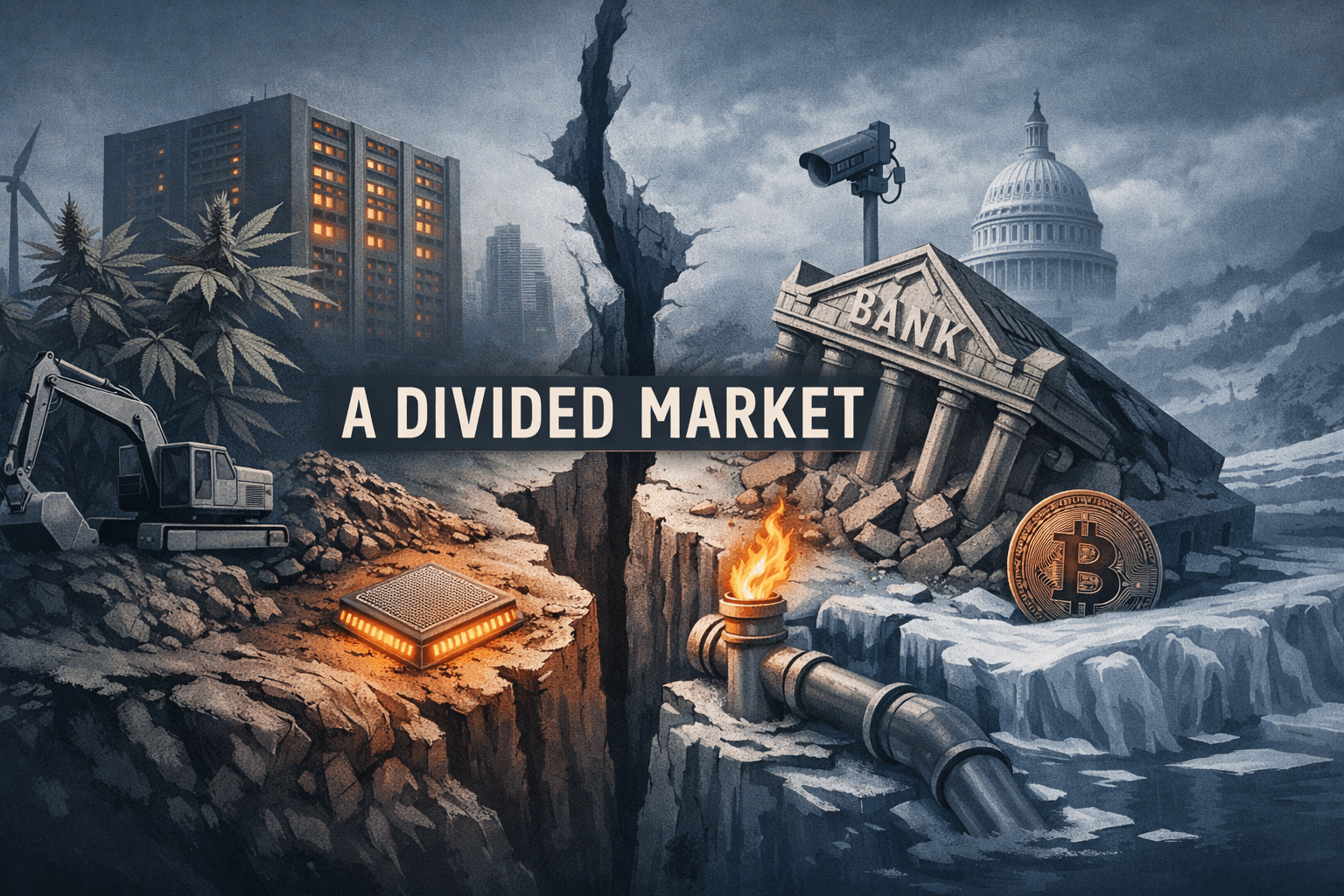
AI, Policy Wins and Winter Risks Drive Bifurcated Market: Cannabis, Utilities and Materials Lead While Finance and Crypto Face Pressure
Podcast • Loading audio...
Share this article
Spread the word on social media
Key Takeaways
- •AI-driven power demand and VPP growth are lifting utilities and related industrials, creating multi-front infrastructure winners.
- •Cannabis policy wins on Election Night and a Nepal court order reduced legal tail risk and increased investor interest in the sector.
- •Finance and crypto faced pressure after midterm-related political shifts and a large $133M exploit, respectively—security and policy remain dominant risk factors.
- •Materials and select technology names (AMD’s $13.4B quarter) showed actionable momentum tied to project milestones and AI-capex demand.
- •Energy remains bifurcated: LNG tightness is supporting gas-linked names while oil eased after midterm geopolitical re-pricing.
Executive summary
Markets opened and closed today under the influence of three cross-cutting forces: post-midterm policy shifts, accelerating AI infrastructure demand, and an early winter energy narrative that is tightening natural-gas and LNG fundamentals. Those themes produced a bifurcated day where policy winners and infrastructure beneficiaries outperformed, while politically sensitive sectors and risk-on asset classes faced renewed scrutiny.
Standouts included cannabis—where voter approvals and a Nepal court order pushed reform onto the front pages—utilities, which are increasingly being priced for AI data-center and behind-the-meter demand, and materials and mining companies that reported drilling milestones, funding and small acquisitions. Technology headlines were mixed but leaned positive after AMD reported a record quarter ($13.4 billion) and Meta drew record demand for a euro-denominated bond. At the same time, finance and crypto felt the negative fallout of midterm outcomes, dividend cuts and a high-profile $133 million exploit, respectively. Energy was a classic split: LNG prices rose on tighter winter supply expectations while oil fell after midterm-related easing of geopolitical premium around Iran.
Taken together, the market is reacting less to a single macro narrative than to a set of secular and cyclical stories that point toward selective opportunity and elevated near-term risk: AI-driven capital expenditure is lifting utilities, industrials and parts of technology; political and regulatory developments are reshaping cannabis and finance; and security incidents (cyber and physical) are keeping risk premia higher for crypto and parts of communications.
Grouping by performance
Below we group sectors into outperformers, underperformers and stable/mixed performers based on the day’s headlines, catalysts and market reactions.
Outperformers
- Cannabis: Midterm ballot wins in Massachusetts, Idaho and Houston, plus an international judicial move in Nepal, put meaningful policy upside on the table and reduced near-term legal tail risk. The headlines drove broad ETF and equity interest in the space.
- Utilities: Renewables projects, behind-the-meter generation, increased VPP (virtual power plant) participation and AI data-center demand created a multi-front narrative for higher utilization and capex. Notable company-level flow: Sunrun reported a doubling of VPP participation, and regulators are moving on permitting fixes.
- Materials & Mining: Positive drilling results, project milestones (including a reported $20 million facility), funding rounds and small strategic acquisitions gave miners and materials suppliers a clear set of near-term catalysts.
- Technology (select pockets): While the sector carried mixed headlines—product integrations, a major security breach, and cost-cutting plans—some subsegments outperformed. AMD’s $13.4 billion quarter and demand for Meta’s euro bond signaled strong underlying cash flow and investor appetite for tech-driven infrastructure.
Underperformers
- Finance & Banking: Midterm political shifts weighed on the sector; banks and credit funds faced pressure following a high-profile dividend cut and concern about regulatory direction and economic policy outcomes. Regional M&A and selective winners provided offsetting, but uneven, traction.
- Cryptocurrency & Digital Assets: Political developments initially provided a lift for BTC and ETH, but a $133 million exploit, short-term ETF selling and continued security concerns pressured sentiment and raised the bar for durable inflows.
- Communications & Media: Mixed audience wins from festivals and film deals were offset by corporate governance/legal pressure — a legal setback at Amdocs and telecom restructuring talk introduced caution across the group.
Stable / Mixed performers
- Energy: Divergent drivers—LNG tightness pushing prices higher while oil slipped after midterm-related easing of Iran risk—left the sector broadly mixed. Renewables projects and infrastructure builds were offset by tanker security concerns and coal demand in India.
- Consumer & Retail: Strong results from Wayfair (its best quarter since the pandemic) and a refreshed outlook from Estée Lauder (6.7% sales gain) contrasted with grocery margin pressure at Kroger and Amazon’s holiday bundling. CVS’s major corporate split pivoted sentiment in health-and-retail subsectors.
- Healthcare: Clinical wins and WHO trial approvals sat alongside program halts and mixed biotech data, producing selective winners rather than broad-based strength.
- Real Estate: Activity in industrial, life-sciences and retail deals was counterbalanced by homebuilder metric weakness and regional policy moves (e.g., Florida property-tax cuts) that feed both demand and supply-side uncertainty.
- Industrials: Robotics IPOs, defense manufacturing loans and operational cost reductions (3M moves to cut costs) created pockets of strength amid legal settlements and capital-spend caution.
Cross-sector themes and correlations
Several broad themes connected multiple sector stories today. Below are the most consequential and the ways they propagated through markets.
AI deployment is an economy-wide demand engine. Pressure to scale AI infrastructure increases electricity consumption and on-site generation demand, benefiting utilities, battery/storage developers and some industrial equipment suppliers. That dynamic partly explains why utilities and parts of industrials and materials outperformed, and why technology stalwarts with AI exposure (e.g., AMD) saw strong results.
Policy and elections are re-shaping risk premia. Midterm outcomes shifted regulatory expectations: cannabis picked up momentum with voter approvals that reduce enforcement uncertainty; financials absorbed a heavier political risk premium after a high-profile dividend cut and political shifts that may alter regulatory posture. Analysts note that policy-driven re-ratings can be rapid and lumpy.
Security and trust matter more than ever. A $133 million crypto exploit and a major DreamHost breach in technology reinforced that cyber risk is a market-moving variable. For crypto specifically, security incidents can quickly reverse inflows and amplify volatility; for cloud and hosting providers, breaches can depress near-term revenue growth and raise client churn risk.
Energy markets are increasingly bifurcated by geography and fuel. LNG tightness and winter demand expectations pushed gas-linked and LNG names higher, while oil saw downward pressure after geopolitical risk softened. Simultaneously, large solar and storage projects (noted in Malaysia, Vietnam and China) underline that capex is shifting into clean energy even as fossil-fuel markets remain sensitive to geopolitical incidents.
Capital markets and M&A remain active but selective. Record demand for Meta’s euro bond and robotics IPOs signal investor appetite for sizeable, growth-adjacent issuances. Smaller strategic M&A in materials and funding rounds in mining show risk capital continuing to support early-stage assets.
The most significant moves — context and implications
Below are the day’s largest headlines and why they matter beyond the immediate price action.
Cannabis policy wins (Massachusetts, Idaho, Houston) + Nepal court order
- Why it mattered: Voter approvals reduce enforcement and legal tail risk, which in turn makes cash flow and expansion planning more predictable for multistate operators and ancillary service providers. Analysts note that reduced policy risk can accelerate capital inflows into labels, retail rollouts and ancillary infrastructure.
- Market implication: ETFs and names linked to retail and wholesale distribution typically see improved liquidity and lower implied vol after clear policy wins, which can compress stock-specific risk premia and raise sector multiples over time.
AMD posts $13.4 billion quarter
- Why it mattered: AMD’s results and commentary are a real-time read on data-center and PC demand—two markets central to the AI cycle. Strong results signal that AI compute demand is translating into durable vendor revenue and margin opportunities for chip designers.
- Market implication: Positive momentum in semiconductor earnings tends to ripple into suppliers and equipment makers; investors watching AI-capex chains may rotate into component and fab-equipment names.
Utilities and behind-the-meter energy moves (Sunrun doubles VPP participation)
- Why it mattered: The growth of virtual power plants and distributed resources changes load shapes for utilities and new revenue models for solar and storage installers. Regulators promoting AI and permitting fixes reduce the friction for project deployment.
- Market implication: Utilities and storage-equipment suppliers could see steadier demand and improved project economics as more capacity is aggregated into grid services.
$133 million crypto exploit and ETF selling
- Why it mattered: Security incidents in the crypto space quickly erode trust and can trigger redemptions and short-term selling in ETFs and spot markets. Even with favorable political outcomes, security remains a gating factor for institutional adoption.
- Market implication: Tokenization announcements (e.g., Morgan Stanley work on tokenized U.S. assets) highlight institutional interest, but sustained inflows likely depend on tangible improvements in custody, insurance and on-chain security.
Energy split — LNG tightness vs oil relief
- Why it mattered: LNG markets tightened as snow- and cold-weather risk entered the winter window; pricing is sensitive to storage levels and shipping constraints. At the same time, easing geopolitical premium after midterms removed some upward pressure on oil, producing divergent returns across energy subsectors.
- Market implication: Names exposed to gas and LNG logistics may outperform near-term; integrated oil players are exposed to cross-commodity dynamics and capex recalibrations.
CVS announces major split; Estée Lauder posts 6.7% sales gain
- Why it mattered: Corporate structure changes and strong consumer discretionary results highlight differentiation within the consumer sector: select growth stories and strategic restructurings are rewarded even as grocery and staples face margin compression.
- Market implication: Investors are parsing consumer narratives more granularly—differentiating durable brand growth or margin improvement from low-margin, high-volume grocers facing deflationary pricing pressure.
Actionable insights for investors (informational only)
Below are strategic considerations and monitoring items derived from the day’s cross-sector flows and catalysts. These are provided for informational purposes and are not personalized investment advice.
Prioritize catalyst calendars and policy windows. Data suggests that political and regulatory events (e.g., state-level cannabis votes, midterm outcomes, and permitting decisions for energy projects) can create rapid re-ratings. Track upcoming state and federal calendars and regulatory filings for timing-sensitive exposure.
Watch AI capex and power grids. Momentum indicates elevated demand for power and batteries from data centers. Because power consumption is lumpy and location-specific, investors should monitor utility filings, VPP enrollments, and major data-center buildouts to anticipate where grid upgrades and rate cases may support returns.
Stress-test crypto exposures for security and custody risk. The $133 million exploit is a fresh reminder that custody and smart-contract vulnerabilities can trigger outsized short-term selling. For market participants with crypto exposure, analysts note the importance of custody structures, insurance policies, and counterparty risk assessments.
Be selective within consumer and retail. Today’s divergence between discretionary winners (Wayfair, Estée Lauder) and grocery margin pressure suggests that macro sensitivity varies sharply by business model. Monitor comps, pricing strategies and private-label penetration in grocery chains for forward-looking indications.
Follow energy forward curves and shipping data. LNG and gas price moves are tightly coupled to storage and shipping flows. Traders and allocators should watch forward curves, storage reports and tanker activity near chokepoints (e.g., the Strait of Hormuz) to assess near-term volatility.
Treat cybersecurity as an operating-cost variable for tech names. The DreamHost breach and other incidents can increase short-term costs (remediation, legal, reputational) and delay product adoption. Analysts recommend incorporating potential security-related contingencies into near-term revenue and margin models.
Use M&A and financing activity to gauge risk appetite. Record demand for corporate bonds (Meta) and the continuation of robotics IPOs indicate pockets of investor risk appetite. Where capital markets are open, expect smaller firms and early-stage projects to find buyers, which can be an indicator of broader market liquidity conditions.
What to watch next (calendar and catalysts)
- Fed communications and any guidance on rate paths: interest-rate expectations will continue to influence financials, REITs and growth-equity valuations.
- Winter weather reports and gas-storage releases: these will be central to the LNG and utilities stories into December and January.
- Corporate earnings and guidance from AI-capex suppliers and large cloud providers: they will provide forward guidance on demand for chips, power and networking equipment.
- Regulatory and ballot developments for cannabis in remaining states and federal-level signals that could accelerate or slow policy change.
- Any follow-up on the $133 million crypto exploit and related regulatory investigations; custody and insurance outcomes will be important for institutional flows.
Conclusion — forward-looking perspective
Today's market profile reinforces that we are in a transitionary phase: structural shifts (AI, decentralization of power, renewable scaling and cannabis policy reform) are colliding with traditional cycle drivers (winter energy demand, midterm political outcomes and risk events like cyber exploits). That collision creates both concentrated opportunities and elevated dispersion across sectors.
Near term, expect continued bifurcation. Sectors tied to physical infrastructure for AI and energy—utilities, materials, select industrials—appear to be entering a stronger phase of demand as projects move from planning to construction. Policy and legal developments will continue to be a primary determinant of near-term returns in cannabis, finance and segments of healthcare. Security incidents and operational risks will remain potent catalysts for volatility in crypto and some parts of technology.
Analysts caution that momentum can reverse quickly when geopolitical or macro variables change: shipping incidents, a colder-than-expected winter, or rapid policy reversals could reprice energy and financial exposures. For market participants, the task for the coming weeks will be to distinguish durable shifts in demand (AI buildouts, renewable project pipelines, regulatory normalization in cannabis) from cyclical noise and one-off headline risks.
This market environment favors a disciplined, catalyst-driven approach to exposure: monitor policy calendars and operational updates closely, stress-test exposures to security and winter-weather risk, and use liquidity in corporate bond and M&A markets as a barometer of investor risk appetite. Above all, the week ahead should be viewed through a lens that prioritizes visibility on earnings, regulatory decisions and physical risk-management around energy and cybersecurity.
Investment disclaimer: This article presents market analysis and data for informational purposes only. It does not constitute investment advice or a recommendation to buy, sell, or hold any security. Analysts note that individual investment decisions should consider personal risk tolerance and consult a professional advisor where appropriate.
Sources
+ 14 more sources
Use these insights — enter this week's contest.
Free practice contests — earn Alpha CoinsExplore More Content
Disclaimer: StockAlpha.ai content is for informational and educational purposes only. It is not personalized investment advice. Sentiment ratings and market analysis reflect data-driven observations, not buy, sell, or hold recommendations. Always consult a qualified financial advisor before making investment decisions. Past performance does not guarantee future results.
Spotted something wrong? Report an error.