 Sector Insights
Listen to this Recap
9:42
Markets Mixed as Energy and Industrials Rally; Crypto Shock Ripples Across Financials
Podcast • Loading audio...
Share this article
Spread the word on social media
Key Takeaways
- •Energy and industrials showed clear strength on strong Q3 results and rising capex indicators (e.g., CAT $78B backlog; robot orders +~25%).
- •A $6.3B Binance breach triggered broad crypto volatility, with ~ $3B frozen onchain, creating contagion risk for crypto-adjacent equities and financials.
- •Materials benefited from new lithium and mining commissioning, supporting the commodity-supply narrative amid the energy transition.
- •Finance faces dual pressure from Fed hawkishness and regulatory enforcement costs (Bank of America $1.21B charge), increasing sector sensitivity to headlines.
- •Market direction will hinge on capex execution, oil-market signals, and the regulatory fallout from recent security and enforcement events.
Executive summary
Markets closed the day split between cyclical strength and risk-off headlines. Energy and industrials led headlines after outsized third-quarter results and clear signs of sustained capital spending: major oil majors reported stronger-than-expected refinery profits and exploration upside, while manufacturers from Caterpillar (CAT) to automakers signaled elevated backlog and factory shifts. Materials companies moved on new lithium and gold project milestones that support medium-term commodity supply narratives.
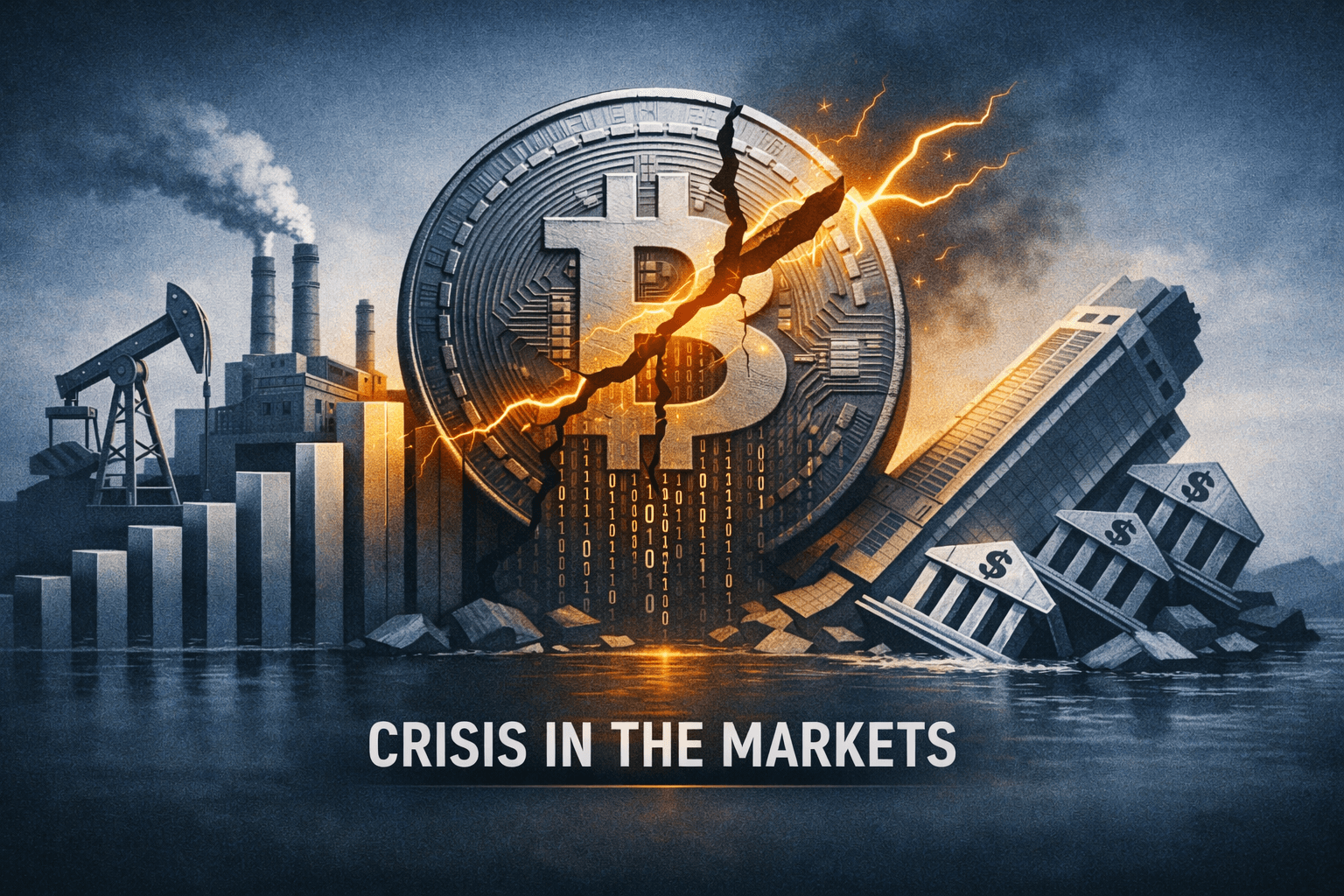
Counterbalancing that optimism was a jarring shock from the crypto world. A record $6.3 billion breach at Binance dominated intraday risk flows, with about $3 billion of stolen assets frozen onchain and token dumps triggering severe price swings across crypto markets. That event spread into equities — hitting crypto-adjacent names and amplifying regulatory and liquidity concerns for financials. At the same time, Federal Reserve officials reiterated a readiness to hike further, and a $1.21 billion enforcement hit to a major bank (Bank of America, BAC) underscored regulatory drag on the finance sector.
The net result: pockets of clear outperformance in cyclical, commodity- and capex-sensitive sectors; concentrated weakness and volatility in crypto and parts of finance; and broadly mixed signals across tech, consumer and utilities as investors parsed AI progress, M&A headlines and policy shifts. The tape points to selective rotation rather than a uniform market trend.
Sector groups by performance
Note: sector-level returns were not uniformly reported in the summaries you provided. Groupings below are based on observed headlines, corporate results and macro drivers that shaped performance expectations today.
Outperformers
- Energy: Strong Q3 results from major integrated oil companies (XOM, CVX) and a BP discovery in Brazil tightened near-term supply narratives and lifted sentiment across the group. Headlines described "blowout Q3s" and rising oil forecasts, which supported the sector.
- Industrials: High sales and backlog metrics (Caterpillar cited a $78 billion backlog and its highest sales quarter) and signs of rising automation demand (robot orders up nearly 25% in Q3) pointed to sustained investment in heavy equipment and logistics.
- Materials: Resource-side catalysts, including Rio Tinto opening Argentine lithium operations and Allied Gold's commissioning at Kurmuk, plus recycling and critical-minerals grants, gave materials a constructive tone.
Underperformers
- Crypto: The market was sharply negative after a $6.3 billion Binance hack. Onchain freezes (~$3 billion) and token dumps produced cascading price declines for many coins and crypto-related equities.
- Finance: Pressure from Fed hawkishness, regulatory scrutiny highlighted by a $1.21 billion enforcement action against Bank of America, and contagion effects from the crypto breach hurt sentiment. Midterm politics also injected M&A uncertainty.
- Cannabis: Policy uncertainty — including federal registration requirements covering 900+ dispensaries, DEA sourcing deadlines, and continuing hemp-policy pushback — created cost and compliance questions, weighing on sentiment.
Stable / Mixed
- Technology: A mix of major AI product launches and security/cloud execution issues left the sector with divergent internal performance; gains in AI-related areas were offset by heightened security risk and a major cloud project snag.
- Consumer & Retail: Large M&A moves (DoorDash's reported ~$17 billion approach for Instacart) and shifting grocery trends left retail selective: winners tied to convenience and data, while legacy names face margin pressure.
- Utilities: Big policy and financing moves (a $5.1 billion DOE loan, a reported $9 billion acquisition in the space, plus wildfire and gas-plant regulatory debates) propelled capex optimism but left regulatory risk visible.
- Healthcare, Communications, Real Estate: Each sector saw offsetting forces — earnings and research upside in healthcare, fiber builds and layoffs in communications, and vacancy news mixed with strong refinancing activity in real estate — leaving them largely mixed.
Cross-sector themes and correlations
- Risk-on cyclical trade vs. risk-off shock
- The day’s clearest split was between cyclical sectors benefiting from higher commodity prices and capex (energy, industrials, materials) and risk-sensitive areas hit by the crypto breach and policy/regulatory noise (crypto, finance, cannabis). Data suggests momentum favored exposure to real-economy activity — factories, logistics and energy refining margins — while event-driven risk triggered de-risking in speculative or highly regulated pockets.
- Energy & geopolitics lifting commodity-linked groups
- Strong Q3 refinery performance at XOM and CVX and BP’s Brazil find tightened near-term supply sentiment. That boosted not only energy equities but also materials (mining, lithium) as investors reassess commodity cycles and the interplay between oil and mining investment.
- Capex cycle and reshoring
- Multiple reports — Caterpillar’s backlog, GM shifting a plant to hybrid production, robot orders up ~25%, and 247,000 reshoring jobs in 2025 — paint a consistent picture: companies are investing in domestic capacity and automation. This supports industrials, materials and select machinery suppliers and suggests supply-chain and labor dynamics are pushing firms to spend.
- Regulatory and security spillovers
- The Binance breach provides a clear example of cross-market contagion: crypto asset liquidations and onchain freezes created liquidity and confidence issues that rippled into exchanges (Coinbase/COIN referenced), payment rails, and banks with crypto exposure. Similarly, the finance sector is contending with both Fed-rate risk and enforcement costs (BAC’s $1.21B). Security incidents and enforcement trends increase the perceived regulatory premium across sectors that touch crypto, payments and fintech.
- Technology bifurcation: AI lift, security drag
- Tech headlines combined forward-looking AI deployments (on-orbit models, consumer agents) with execution and security issues (a major cloud project snag and the Binance hack’s implications for crypto security). That dichotomy is driving dispersion within the sector: high-growth, AI-focused names show momentum, while names exposed to cloud execution risk or crypto connectivity are under pressure.
Biggest moves and why they mattered
Energy: blowout refiners and exploration upside
- What happened: ExxonMobil (XOM) and Chevron (CVX) reported outsized refinery profits in Q3; BP announced a promising discovery off Brazil.
- Why it mattered: Refinery margins and exploration success tighten near-term supply and improve cash-flow profiles for integrated oils. Given energy’s current weight in many indices, strong results here lifted sector beta and encouraged rotation back into cyclical, commodity-linked equities.
Crypto: the $6.3B Binance breach and onchain freezes
- What happened: A record $6.3 billion hack targeting Binance assets sent shockwaves through crypto markets; roughly $3 billion of funds were frozen onchain according to the summaries. Token dumps followed; hardware-wallet vendor Trezor warned of a possible hardware implant, amplifying security fears.
- Why it mattered: The scale and apparent sophistication of the breach triggered immediate deleveraging among retail and institutional crypto participants. Exchange and custody risk repriced, liquidity evaporated in some tokens, and crypto-related equities saw spillover volatility. The event also magnified regulatory scrutiny and likely accelerates calls for tighter oversight and custody standards.
Finance: Fed rhetoric and enforcement costs
- What happened: Fed officials signaled openness to further rate increases, and Bank of America disclosed a $1.21 billion enforcement hit. Midterm political uncertainty raised merger-and-acquisition odds in the banking patch.
- Why it mattered: Higher-for-longer rates can help net interest incomes but also increase credit and funding stress for certain borrowers; enforcement charges are a reminder of operating-cost and reputational risks. Combined with crypto contagion, these forces left finance stocks vulnerable to headline-driven flows.
Industrials & manufacturing: capex and backlog indicators
- What happened: Caterpillar reported its highest sales quarter and a $78 billion backlog; GM moved a plant to hybrid production; robot orders rose nearly 25% in Q3; USDA and logistics projects signaled government and corporate support for manufacturing capacity.
- Why it mattered: These are direct indicators of demand for heavy equipment, automation and logistics services. A durable industrial capex cycle tends to support materials, parts suppliers and transport firms and can be a structural tailwind for earnings through 2026 if orders convert to production.
Materials: lithium and critical-minerals supply moves
- What happened: Rio Tinto opened Argentine lithium operations, Allied Gold began wet commissioning at Kurmuk, and federal recycling grants (Eastman $375M example) were announced.
- Why it mattered: Supply-side developments for lithium and rare earths influence the EV battery supply chain and the broader energy transition timeline. Where timelines accelerate for new capacity, they create medium-term pressure on prices but also signal increased investment and potential M&A activity in the space.
Consumer & retail: large M&A and data plays
- What happened: DoorDash reportedly pursued a $17 billion approach for Instacart; Amazon’s Alexa shopping data and various pilots highlighted the intensifying race for grocery and last-mile data.
- Why it mattered: Consolidation and control over consumer data shift competitive dynamics in grocery and delivery, affecting margins and marketing efficiency. Such deals also re-rate expectations for future scale and profitability in convenience-oriented services.
Utilities: policy-driven capex and regulatory friction
- What happened: A $5.1 billion DOE loan and a reported $9 billion acquisition in the sector signaled large-scale investment ramps, while regulators debated wildfire reform and gas-plant scrutiny.
- Why it mattered: Utilities are squarely in the middle of a transition: major funding initiatives will require execution across buildouts (transmission, storage, nuclear) but regulatory and public-safety considerations introduce execution and cost-certainty risk.
Actionable insights for investors (informational only)
Monitor liquidity and counterparty exposure to crypto: The Binance breach highlights how fast liquidity can evaporate in niche markets and the potential for contagion into broader financials. Data suggests investors should monitor exchange flows, margin positions and any direct exposure corridors in payments or custody arrangements. Analysts note that exchanges with strong custody controls and transparent proof-of-reserves will likely be scrutinized more closely.
Watch oil-forward curves and refinery margins: Energy’s outperformance was driven by refinery profits and exploration news. Momentum indicates that if oil-forward curves continue to price in tighter near-term supply — potentially supported by geopolitical risk — energy equities and certain materials names may retain leadership.
Track capex conversion in industrials: A rising backlog (CAT’s $78B) and elevated robot orders point to ongoing industrial demand. The key watch is conversion: look for signs that orders translate into shipped equipment and sustained aftermarket service revenue, which supports durable earnings growth.
Read the regulatory tea leaves for finance and cannabis: Enforcement hits (BAC’s $1.21B) and federal registration/compliance moves in cannabis signal increasing regulatory costs. Data suggests investors should monitor legal outcomes, reserve levels for penalties, and any shifts in policy that affect operating models.
Separate AI hype from execution risk in tech: The sector is bifurcated between product-level AI progress and operational issues (cloud project snags, security incidents). Analysts note that names with clear monetization paths for AI and manageable security postures may be differentiated from firms where execution risk undermines adoption.
Evaluate supply timelines in materials: New lithium and gold capacity announcements can depress near-term pricing expectations but improve supply resilience and reduce input risk for downstream EV and battery producers. Investors should map project commissioning timelines to sensitivity analyses for commodity prices.
Keep an eye on political calendars and macro signals: Fed rhetoric and midterm politics continue to shape M&A odds, regulatory posture and fiscal policy that feeds into sectors such as finance, healthcare and infrastructure. Near-term trading may be driven by headlines; longer-term allocations should consider policy trajectories.
Risks to monitor
Crypto contagion and liquidity risks: The Binance breach demonstrates an acute tail risk. Continued token volatility or additional security breaches could pressure crypto-adjacent equities and payments infrastructure.
Policy and regulatory surprises: Enforcement costs in finance and evolving federal cannabis/DEA regulations can create unanticipated P&L impacts. Utilities remain sensitive to policy on wildfires and permitting, which can change project economics.
Execution gaps in tech and large projects: Cloud or AI project failures, supply shortages in chips, or construction delays for grid and nuclear projects could undermine otherwise constructive sector narratives.
Macro: Fed policy remains a central pivot. Further tightening or a more hawkish stance than markets expect could compress multiples and affect cyclical demand; alternatively, a pivot to easing would change yield and sector leadership dynamics.
What to watch next
- Oil prices and refinery margin releases: Regular margin reads and inventory data will indicate whether energy strength is durable.
- Crypto forensic updates and regulatory reactions: Enforcement actions, exchange disclosures and legislative responses could materially change market structure for crypto.
- Bank transcripts and Fed speakers: Look for forward guidance that clarifies rate path and its potential hit to credit conditions.
- Industrial OEM order books and supplier lead times: Shipping schedules and backlog conversion rates are the next proof points for the capex cycle.
- Lithium/critical minerals commissioning schedules: Timing on new supply coming online will directly influence materials pricing and downstream cost curves.
Bottom line and forward-looking perspective
Today’s tape reinforced a bifurcated market narrative: a classic cyclical upswing driven by energy, industrials and materials on the one hand, and event-driven, regulatory and security risk compressing valuations in crypto, select financials and policy-exposed industries on the other. The capex and reshoring story remains a durable theme underpinning industrial demand and commodity investment, while the crypto breach is an acute reminder that operational security and regulatory frameworks can quickly reprice entire sub-sectors.
Looking forward, markets will likely be guided by three vectors: (1) confirmation of durable demand via capex execution and order fulfillment in industrials; (2) oil market signals — inventories, geopolitics and refining margins — that will set commodity-linked sector momentum; and (3) the pace and breadth of regulatory responses to the crypto breach and ongoing enforcement actions in finance and cannabis. If capex converts to revenue and oil-forward curves remain elevated, cyclical leadership can persist despite headline shocks. Conversely, an escalation in security incidents or an unexpectedly hawkish Fed could prompt broader risk-off moves.
Investment disclaimer: This article is for informational purposes only. It does not constitute investment advice or a recommendation to buy, sell or hold any security. Analysts note that market conditions can change rapidly; readers should consult licensed advisors and perform their own due diligence.
Key tickers and data points referenced (for context)
- Energy: XOM, CVX, BP
- Industrials / Manufacturing: CAT, GM, FDX
- Materials / Mining: RIO, Allied Gold (company mention)
- Finance: BAC (enforcement action), broad bank group
- Crypto / Exchanges: Binance (breach, $6.3B), Coinbase (COIN), Tether (reported $1.5B profit)
- Consumer / Retail: DASH (DoorDash), AMZN (Amazon), KR (Kroger)
- Technology: NVDA, INTC, SPOT (Spotify)
Final thought
Today’s market was a reminder that pockets of strength and headline shocks can coexist. The cyclical recovery in industrials and energy is showing tangible evidence, but event-driven risks — most visibly the Binance hack — underscore that market structure and regulatory dynamics matter as much as macro fundamentals. For now, data suggests a selective, disciplined approach to sector exposure, with close attention to execution and regulatory developments.
Sources
+ 14 more sources
Use these insights — enter this week's contest.
Free practice contests — earn Alpha CoinsExplore More Content
Disclaimer: StockAlpha.ai content is for informational and educational purposes only. It is not personalized investment advice. Sentiment ratings and market analysis reflect data-driven observations, not buy, sell, or hold recommendations. Always consult a qualified financial advisor before making investment decisions. Past performance does not guarantee future results.
Spotted something wrong? Report an error.