 Sector Insights
Listen to this Recap
11:39
Policy, Power and Production: Materials, Energy and Industrials Lead as Crypto and Health Face Headwinds
Podcast • Loading audio...
Share this article
Spread the word on social media
Key Takeaways
- •Materials, energy and industrials showed constructive momentum today driven by large project commitments, defense frameworks and tight fuel markets.
- •Regulatory and security risks (crypto exploits, healthcare coverage policy, cannabis state-level actions) elevated volatility in several sectors.
- •AI and cloud remain secular positives but are diverging from cyclical hardware weakness — PC shipments fell ~21%, even as AI-related M&A and valuations gained traction.
- •Near-term positioning should focus on execution risk for long-lead projects and policy-event calendars that can produce binary outcomes.
- •Monitor fuel inventories, project milestones (Rio Tinto, Cornish Metals, data-center builds), and regulatory developments for catalysts that will re-rate sectors.
Executive summary
Today’s sector tape leaned into tangible assets and project-driven momentum: materials and mining headlines — led by Rio Tinto’s $1.9 billion commitment and fresh rare-earth capability outside China — set a constructive tone for resource names, while energy markets rallied on tight distillate supplies and company-specific strength such as Eni’s Q3 surge and dividend boost. Industrials extended that constructive narrative with large defense frameworks and capex upgrades (Lockheed’s $7 billion F‑35 framework, Honeywell’s raised outlook, and U.S. Steel capex initiatives).
At the same time, regulatory and security risks kept a lid on more speculative pockets. Cryptocurrency markets were pressured by the Initia exploit, ongoing Tether probes and heightened SEC scrutiny; healthcare faced policy-driven uncertainty around Medicaid/Medicare coverage changes; and segments of real estate absorbed caution amid mortgage-servicing gaps and municipal policy headwinds in NYC. Technology remained mixed: big AI infrastructure plans and a $1 billion agent‑cloud valuation competed with a 21% plunge in PC shipments and resurfacing botnet risks.
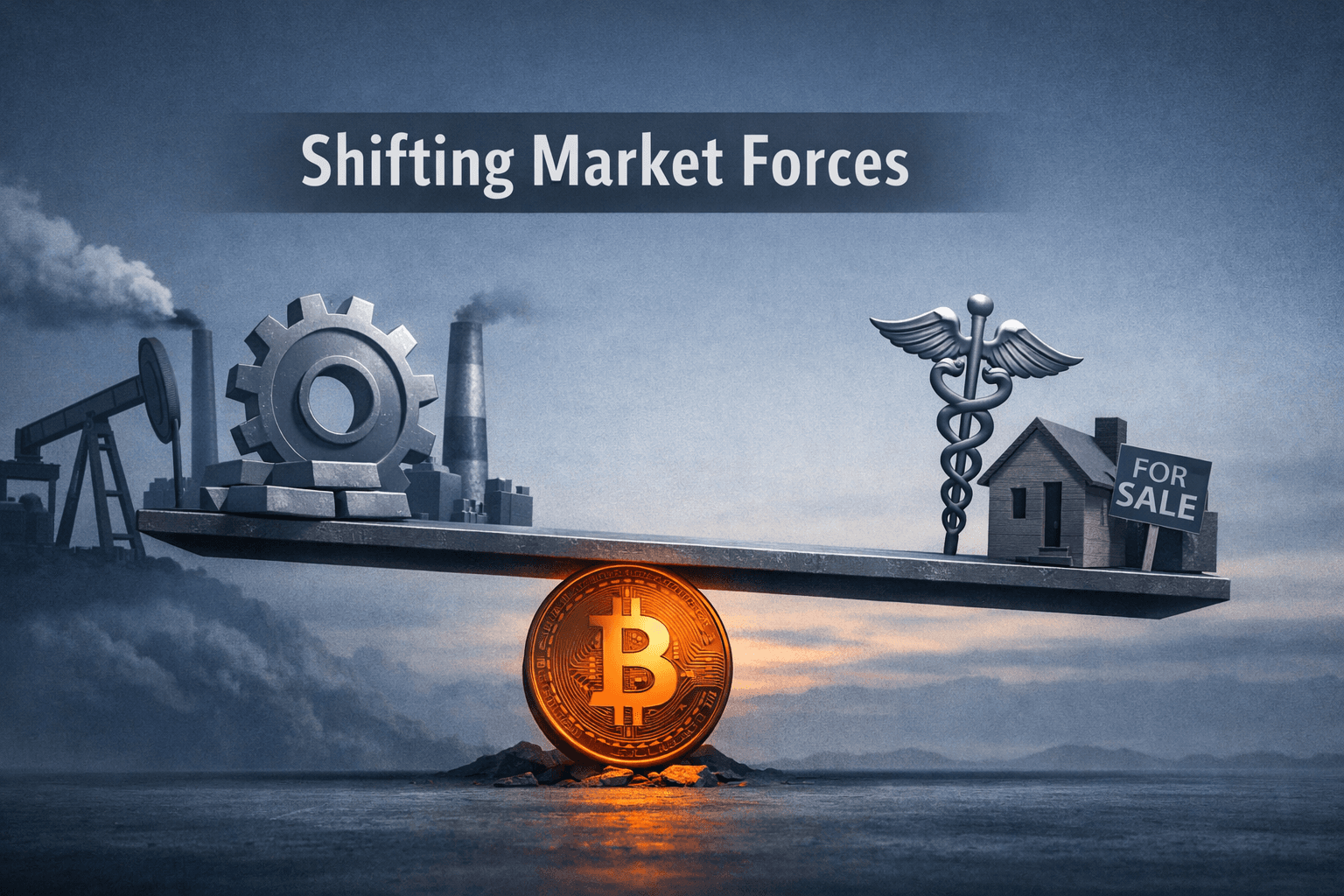
Taken together, the tape today underscores a bifurcated market: real, physical-asset and defense-related investment flows supported sectors tied to production and supply-chain commitments, while policy and security shocks amplified risk premia in regulated or high-volatility corners of the market.
Sector groupings by performance
Note: sector summaries supplied today did not include intraday index returns. Groupings below reflect directional momentum and narrative strength from company and macro headlines.
Outperformers
- Materials: Big project bets and M&A (Rio Tinto’s $1.9bn Kangwinan commitment; Cornish Metals’ $181m raise) drove bullish headlines. New rare-earth capacity outside China and improved recycling margins added structural tailwinds.
- Energy: Tight diesel and jet fuel markets in Europe, steady U.S. rig counts, and company-level strength (Eni’s strong Q3 and dividend increase) supported sector momentum.
- Industrials: Defense frameworks (Lockheed’s $7B F‑35 framework), capex moves (U.S. Steel), and positive guidance (Honeywell) pointed to stronger activity and backlog visibility.
Underperformers
- Cryptocurrency: Security breaches (the Initia exploit), regulatory probes (Tether), and ETF outflows tempered risk appetite and price action.
- Healthcare: Coverage and reimbursement policy moves on Medicaid/Medicare prompted concern about patient access and provider reimbursement — a headwind for near-term cash flows in parts of the sector.
- Real estate: While deal flow in multifamily and retail ground leases persisted, mortgage-servicing gaps and municipal policy shifts in NYC injected caution into investor sentiment.
Stable / Mixed
- Technology: AI infrastructure and a $1B agent-cloud valuation offered upside, offset by a 21% drop in PC shipments and botnet resurfacing; overall mixed.
- Utilities: Advances in battery reliability, a plug-in solar bill in Congress, and regulatory easing on nuclear licensing suggested steady structural evolution but with execution and grid-integration risks.
- Consumer & Retail: AI ad tools, holiday merch positioning and strategic M&A/spinoffs (Salesforce’s $5.66B Braze deal; David’s Bridal AI spinoff) showed a sector balancing cyclicality and tech-led efficiency gains.
- Communications & Media: Spectrum wins, tower deals and device innovation were offset by content-related controversies and some adoption questions for 5G devices.
- Cannabis: Mixed regulatory signals — state pushback in Oklahoma vs. a Massachusetts poll and bipartisan rescheduling talk — produced a neutral-to-volatile profile for names tied to policy outcomes.
Cross‑sector themes and correlations
- Policy risk is cross-cutting and market-moving
- From cannabis rescheduling discussions and state-level regulatory friction to Medicaid/Medicare coverage actions and renewed SEC focus on crypto, policy developments are a primary driver of short-term re-pricing. Analysts note that sectors with high dependency on government action (healthcare, cannabis, crypto infrastructure companies seeking regulatory clarity) are experiencing elevated volatility as markets attempt to price in a binary outcome risk.
- Real assets and industrial capex stand out
- Materials, energy and industrials showed correlated strength today. Project commitments (Rio Tinto’s $1.9bn), defense contract frameworks (Lockheed’s $7B F‑35) and corporate capex plans (U.S. Steel) point to durable demand for raw materials and engineering — a thematic link that also supports specialist equipment, logistics and certain parts of the financial sector that underwrite or finance projects.
- Energy tightness is translating across fuels and technology
- Shortages in diesel and jet fuel in Europe tightened near-term fundamentals, lifting sentiment across integrated energy names and service providers. At the same time, storage and EV-battery breakthroughs and funding for charging and storage are connecting short-term tightness with long-term electrification demand — a cross-over that benefits both traditional energy cash generators and the utilities/industrial supply chain.
- AI and cloud drive horizontal spend — but end-market signals vary
- AI-related M&A (Salesforce’s $5.66B Braze buy), a $1B agent-cloud valuation, and massive data-center plans (SK Hyper’s $350B push) highlight continued spending on AI infrastructure. Yet end-demand signals — a 21% plunge in PC shipments and retailer caution ahead of a higher-price holiday season — suggest that hardware and consumer-facing segments are more cyclical and varied in recovery timing. Cloud providers and enterprise software vendors benefit from secular AI spend even when consumer hardware weakens.
- Security and operational risk have contagion potential
- Crypto security incidents (Initia exploit) and botnet concerns in tech raise questions about operational resilience. When high-profile breaches hit one corner of the market, they tend to widen risk premia in related fintech and payments businesses — particularly those targeting the same customer segments or regulatory oversight.
Most significant moves and why they matter
Rio Tinto’s $1.9bn Kangwinan commitment
- What happened: Rio Tinto committed $1.9 billion in project financing tied to bauxite/processing expansion.
- Why it matters: Large project commitments by major miners tighten forward supply expectations for certain alumina and downstream products and signal investor appetite for long-lead resource projects. That, in turn, lifts equipment suppliers, shipping and regional labor markets — and underscores the premium markets are placing on reliable, geopolitically diversified raw-material supply (especially amid rare-earth re-shoring moves).
Lockheed’s $7B F‑35 framework and Honeywell guidance
- What happened: Lockheed advanced a $7 billion framework for F‑35 activity while Honeywell raised its outlook.
- Why it matters: Defense backlog growth and improved industrial guidance point to sustained government-funded capex, which usually has high-margin aftereffects for suppliers. Analysts note defense frameworks provide multi-year revenue visibility and often accelerate supplier tool-up and capacity investments — beneficiaries include specialty materials, electronics and precision manufacturing.
Initia exploit and crypto scrutiny
- What happened: The Initia exploit, coupled with Tether-related probes and ongoing SEC attention, drove negative headlines for crypto.
- Why it matters: Security breaches quickly erode confidence in on‑chain protocols and intermediaries. The net effect is often short-term outflows from spot and derivative products, greater due diligence demands by institutional participants, and a push for clearer regulatory guardrails. For crypto-adjacent firms (exchanges, custody providers, fintechs) this means higher compliance costs and possibly slower institutional adoption until frameworks stabilize.
Eni’s Q3 and fuel tightness
- What happened: Eni reported a strong Q3 and boosted its dividend; Europe also reported tight diesel and jet fuel supplies.
- Why it matters: Company-level cash generation supports payouts and buybacks, which in turn buttress investor sentiment in integrated energy stocks. Fuel tightness raises the probability of continued strength in refining margins in the near term, even as longer-term transition themes (EVs, storage) reshape capital allocation.
PC shipments slide and AI valuation signals
- What happened: Global PC shipments plunged ~21% (reported figure), while AI/cloud valuations and M&A deals (e.g., a $1B agent-cloud valuation; Salesforce’s $5.66B Braze deal) kept software and cloud narratives buoyant.
- Why it matters: Hardware weakness signals end-user softness that can bleed into device OEMs, component suppliers and retail-facing distribution. But strong AI/cloud valuations show the software and infrastructure layer is increasingly detached from consumer hardware cyclicality — suggesting a bifurcation between secular enterprise IT spend and cyclical consumer hardware demand.
Actionable insights for investors (informational)
- Monitor policy calendars and prepare for binary outcomes
- What to watch: State votes and federal scheduling moves for cannabis, CMS and state-level Medicaid/Medicare timelines, SEC and stablecoin enforcement actions. Analysts note that sectors tied to government decisions show elevated volatility around these events.
- Why it matters: Binary policy outcomes can create rapid re-pricing opportunities and risks. Investors tracking exposure should model both upside and downside scenarios and be explicit about time horizons and liquidity needs.
- Track project milestones and capex cadence in materials and industrials
- What to watch: Spend schedules for Rio Tinto’s Kangwinan commitment, Cornish Metals’ deployment following its $181m raise, Lockheed’s and Honeywell’s contract timelines, and U.S. Steel capex rollouts.
- Why it matters: Project announcements are one thing; execution (permitting, timelines, cost control) determines when revenue and margin benefits arrive. Improved execution compresses risk premia in suppliers and logistics chains.
- Treat energy as both tactical and structural
- What to watch: Distillate inventories (diesel, jet), refining utilization, EV charging and storage funding announcements, and polysilicon inventory trends in China for solar pricing signals.
- Why it matters: Tightness in distillates can support near-term earnings in integrated energy names; conversely, polysilicon gluts can depress solar module margins and weigh on solar-equipment suppliers. The interplay between short-term commodity tightness and long-term electrification investment creates differentiated winners across the value chain.
- Prioritize operational resilience in crypto and tech exposures
- What to watch: Security audit outcomes, custody and key‑management practices, regulatory filings and ongoing probes (e.g., stablecoin backers), and botnet/IoT vulnerability disclosures.
- Why it matters: Security incidents not only hurt token prices but can create structural distrust among institutional participants. Firms that demonstrably improve custody, insurance and compliance may see lower future funding costs and faster institutional adoption.
- Separate AI infrastructure winners from cyclical hardware losers
- What to watch: Data‑center project pipelines (e.g., SK Hyper-scale plans), cloud provider capital intensity, M&A activity (Salesforce’s Braze deal), and vendor-level gross‑margin trends.
- Why it matters: Even as consumer hardware (PC shipments) dips ~21%, software and cloud firms benefiting from AI adoption may see persistent demand. Positioning models should reflect this two-speed environment: durable enterprise AI spend vs. cyclical consumer device demand.
- Stay alert to municipal and servicing risks in real estate
- What to watch: Mortgage-servicing stress indicators, municipal policy changes (e.g., NYC regulations), and CRE leasing trends in multifamily and retail ground-lease markets.
- Why it matters: Real estate valuations are sensitive to financing conditions and policy shifts. Operational metrics (occupancy, collection rates) will matter more than headline deal flow when assessing near-term downside risks.
What moved the tape today — quick hits by sector
- Materials: Rio Tinto $1.9bn pledge; Cornish Metals $181m raise; rare-earth capability out of China; recycling margins rising.
- Energy: Tight diesel and jet fuel in Europe; Eni Q3 and dividend boost; steady U.S. rig counts; storage and EV battery advances.
- Industrials: Lockheed $7B F‑35 framework; Honeywell raises outlook; U.S. Steel capex; DHL logistics links.
- Technology: AI/cloud valuation headlines and M&A vs. 21% drop in PC shipments; botnet risks re-emerge; SK Hyper $350B data-center push.
- Finance: American Express (AXP) trims 3,500 roles; BitGo wins OCC charter and explores public listing; mixed breadth in REITs.
- Consumer & Retail: Salesforce $5.66B Braze deal; David’s Bridal AI spinoff; Walmart (WMT), Lululemon (LULU), Macy’s (M) and Etsy (ETSY) executing holiday playbooks.
- Crypto: Initia exploit; Tether probes; Bybit gains Dubai license; South Korea advances Digital Asset Basic Act.
- Utilities: Battery reliability gains; plug-in solar bill hits Congress; NRC eases nuclear licensing rules; VPP activity after sonnen sale.
- Healthcare: Mixed clinical progress and policy headwinds; a $318m IPO; Medicaid/Medicare coverage shifts.
- Real Estate: Active deal flow but mortgage and policy caution; NYC-specific headlines affect local sentiment.
- Communications & Media: Tower deals and content news; FCC device blocks and 5G adoption questions.
- Cannabis: State-level pushback in Oklahoma but progress on rescheduling and retail strategies in other states.
Risk profile and positioning considerations
Volatility drivers: Policy (healthcare, cannabis, stablecoins), security incidents (crypto and tech), and macro shocks (inflation surprises or abrupt rate shifts) are the main near-term volatility drivers. Liquidity-sensitive positions — small‑cap miners, crypto-native firms, and leveraged real‑estate plays — will see the widest moves if any of these triggers accelerate.
Time horizon matters: The distinction between project-driven, long-lead investments (materials, defense, data center infrastructure) and short-cycle, consumption‑driven businesses (PC OEMs, discretionary retail categories) is crucial. Investors with multi-year horizons may prioritize exposure to execution-focused resource projects, while shorter-horizon traders should monitor policy calendars and security headlines.
Forward-looking perspective
Over the next 3–6 months, expect a continuation of the current bifurcation: sectors tied to physical projects, energy supplies and government-funded contracts should find clearer paths to revenue growth as capital allocators commit to multi-year builds and defense backlogs. Meanwhile, sectors where outcomes hinge on regulatory rulings (crypto, cannabis, healthcare reimbursements) or on volatile consumer demand (PCs, certain retail categories, parts of real estate) will remain sensitive to headline risk.
Key macro and policy items to watch that could reshape sector narratives:
- Any definitive federal action on cannabis rescheduling or meaningful state ballot outcomes.
- SEC/stablecoin enforcement decisions and progress on comprehensive stablecoin frameworks internationally.
- Energy inventory data (distillates and crude) and Chinese polysilicon stocking patterns that will drive near-term energy and solar margin dynamics.
- Corporate earnings and guidance from large-cap industrials and materials names that will either validate or temper the project-driven optimism.
Analysts note that with M&A and capex still visible in multiple sectors (from data centers to mines), capital expenditure remains a central channel by which the current strength in materials and industrials could translate into durable earnings upgrades. Conversely, security incidents and policy uncertainty are likely to compress risk appetites in crypto and parts of healthcare until regulatory visibility improves.
Final thoughts
Today’s session reinforced the market’s appetite for tangible catalysts: funded projects, defense frameworks and energy-tightness narratives supported clear winners, while regulatory and security events amplified caution in other corners. For market participants, the imperative is to separate idiosyncratic, event-driven noise from structural shifts — project commitments and capex plans point to a multi-quarter cycle in materials and industrials, while policy and security risks remain the gating factors for crypto and healthcare.
Investment disclaimer: This article is for informational purposes only. It does not constitute investment advice, a recommendation to buy or sell securities, or personalized financial guidance. Analysts note risks and provide scenario-based observations; readers should consult their own advisors before making investment decisions.
Sources
+ 14 more sources
Use these insights — enter this week's contest.
Free practice contests — earn Alpha CoinsExplore More Content
Disclaimer: StockAlpha.ai content is for informational and educational purposes only. It is not personalized investment advice. Sentiment ratings and market analysis reflect data-driven observations, not buy, sell, or hold recommendations. Always consult a qualified financial advisor before making investment decisions. Past performance does not guarantee future results.
Spotted something wrong? Report an error.