 Sector Insights
Listen to this Recap
11:34
AI, Bitcoin ETF Flows and Renewables Lead Rotation as Regulatory Frictions Temper Gains
Podcast • Loading audio...
Share this article
Spread the word on social media
Key Takeaways
- •Crypto and AI-related tech led headline flows — BlackRock’s IBIT drew ~ $665M and Switzerland approved a retail Bitcoin fund — renewing allocation momentum into liquid crypto wrappers.
- •Materials & Mining gained on defense funding and strategic mineral M&A (e.g., New Hope’s A$1.8bn deal), supporting a multi-year narrative around critical inputs to electrification and defense.
- •Renewables and grid projects accelerated with municipal and national approvals, but utility merger scrutiny (NextEra-Dominion) and LNG/gas volatility raise execution and commodity risks.
- •Regulatory and compliance headlines (cannabis testing audits, healthcare pricing oversight, utility merger pushback) created cross-sector headline risk that can drive episodic volatility.
- •Investors should track flows, approval calendars, supply-chain and project timelines as primary drivers of relative sector performance in the coming quarters.
Executive summary
Markets opened on mixed signals on Oct. 20 as distinct pockets of risk-on activity — led by cryptocurrency ETF flows, fresh AI infrastructure news and industrial materials M&A — intersected with regulatory and compliance headlines that capped upside in more sensitive parts of the market.
Notable data points from the day: BlackRock’s IBIT Bitcoin ETF drew roughly $665 million in flows overnight; a Swiss regulator approved the first retail fund holding Bitcoin directly; Germany and France accelerated renewables approvals while LNG spot prices pushed above $30/MMBtu on shipping risk; and industrials and materials saw deal activity including New Hope’s A$1.8 billion transaction and ongoing rare-earth project builds. At the same time, pockets of legal, regulatory and operational stress surfaced — a Colorado audit exposed testing gaps in cannabis operations, the proposed NextEra-Dominion merger met state and industry resistance, and healthcare pricing and Medicaid oversight stories added headline risk.
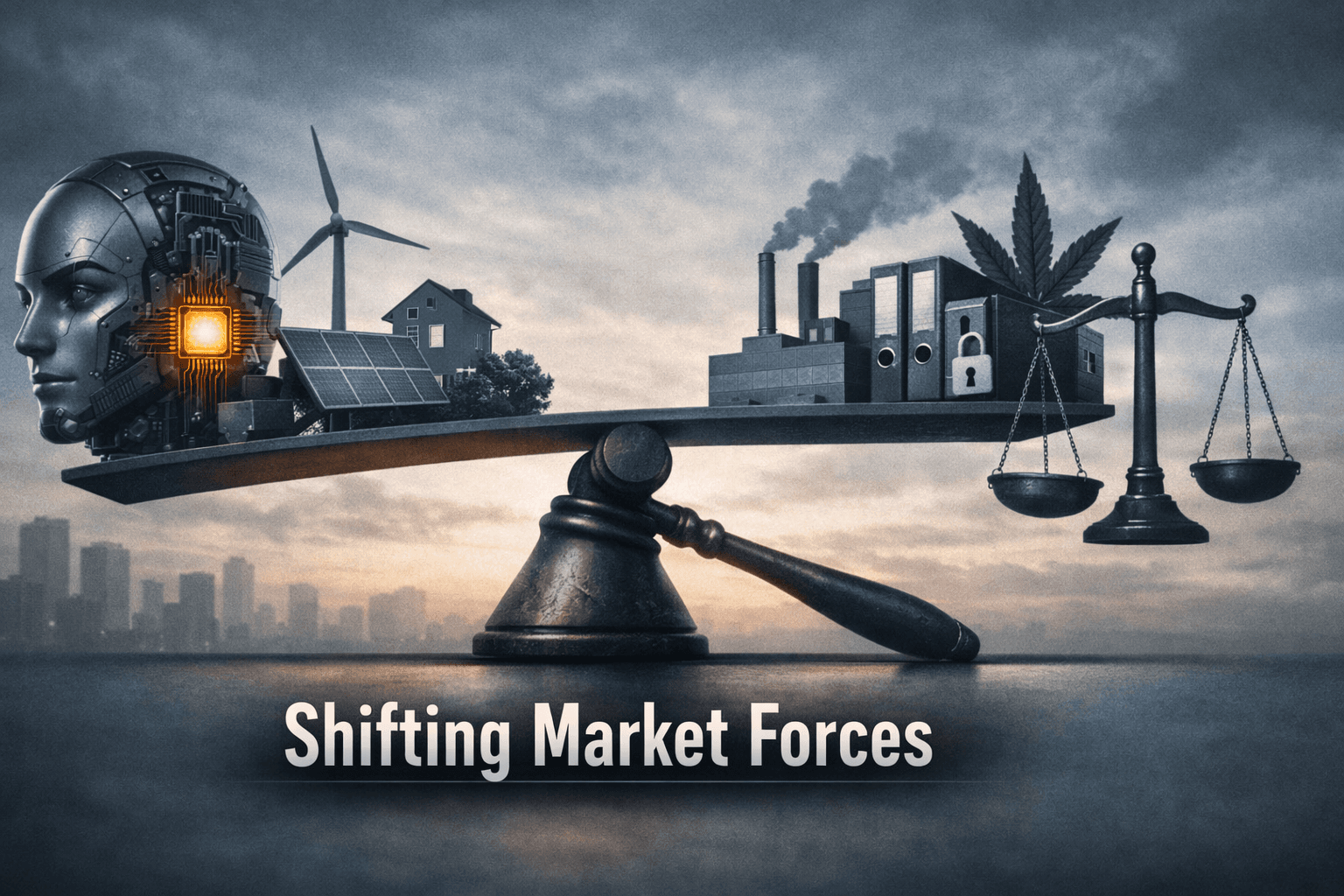
Taken together, the tape looked like a market rotating into structural themes (AI, Bitcoin allocation, clean energy and materials tied to defense and electrification) while short-term sentiment remained constrained by regulatory headlines and idiosyncratic operational risks.
Grouping of sector performance
Below we group sectors into outperformers, underperformers and stable areas based on the balance of news flow, capital movement and near-term catalysts observed today.
Outperformers
Cryptocurrency: Spot ETF demand and regulatory approvals renewed allocation flows. BlackRock’s IBIT drew ~ $665M; JPMorgan added Bitcoin to a decade-long asset-allocation outlook, and Switzerland cleared a retail Bitcoin fund. Momentum indicates renewed institutional and retail interest in crypto allocation vehicles.
Technology: AI infrastructure and major filings dominated headlines. Anthropic’s high-profile filing and fresh cloud vendor moves from Google and Amazon on AI infrastructure kept investor focus on platform winners and infrastructure chains, despite company-specific disruptions (a large accounting loss, Xbox layoffs, and a Windows security bug).
Materials & Mining: Defense funding, rare-earth pilot projects and M&A created momentum. Ucore’s rare-earth push and New Hope’s A$1.8bn deal are emblematic of stronger deal flow and supply-chain investment tied to both defense and electrification themes.
Stable / Mixed
Real Estate: A constructive day driven by leasing wins, portfolio trades and a small dip in mortgage rates. Structural tailwinds such as proptech adoption and new retirement product designs (reverse mortgages) support a neutral-to-positive view on activity, even as office demand remains uneven.
Utilities: Project announcements (community solar, large CSP, hydro funding and a 7.2-MW municipal array) show investment momentum, offset by regulatory and political pushback on major deals (notably the NextEra-Dominion merger). Grid upgrade spending supports the sector, while M&A friction raises near-term execution risk.
Finance & Banking: Consolidation and AI adoption are supporting headline interest — Wells Fargo rolled out an AI workflow plan and regional deals/fintech bank buys continue — although market appetite for AI-related IPOs showed signs of cooling today.
Industrial & Manufacturing: Automation and technology adoption boosted capacity narratives, but headlines around lawsuits and trade-related layoffs (e.g., Cleveland-Cliffs citing trade policy after Stelco layoffs) kept sentiment tempered.
Underperformers
Cannabis: A Colorado audit revealing testing gaps and a payroll squeeze among hemp operators signaled regulatory and cash-flow pressure. Political noise (a Nebraska candidate promising faster medical access) underscores a bifurcated policy backdrop that leaves operators exposed to enforcement risk and margin pressure.
Healthcare: Clinical wins were offset by pricing pressure and regulatory scrutiny (ICER pricing warnings and increased Medicaid oversight). The net of the day’s stories is a sector with discrete scientific upside but material policy and margin risk.
Energy (select sub-sectors): Renewables posted wins (policy approvals, project starts), but volatility in commodity markets — a sharp Norway gas drop and LNG prices spiking above $30/MMBtu on shipping risk — created mixed returns and heightened near-term headline risk for energy names exposed to gas and LNG dynamics.
Cross-sector themes and correlations
Several cross-cutting themes tied together the day’s moves and explain why disparate sectors moved in tandem or diverged.
- AI and the infrastructure rotation
- Why it matters: Major cloud providers (Google, Amazon) and AI entrants (Anthropic) drove headlines tied to computing demand, data-center services and enterprise software upgrades. This feeds demand for semiconductors, cloud-capacity providers, managed services and industrial upgrades (automation equipment).
- Where it shows up: Technology, industrials (automation suppliers), materials (specialty metals for chips and data centers), and real estate (data-center leasing).
- ETF-driven allocation and crowding into liquid vehicles
- Why it matters: The Bitcoin ETF flows show how easily liquid, ETF-accessible exposure can concentrate capital. BlackRock’s IBIT pulling ~$665M and related approvals in Switzerland are examples of capital channeling into a regulated wrapper rather than spot OTC exposure.
- Where it shows up: Crypto (flows, product approvals), finance (ETF product innovation and CLO ETFs drawing interest), and technology (open-source AI tools being repackaged into enterprise offerings).
- Renewables policy + grid investment = project pipeline strength, but execution risk remains
- Why it matters: Germany and France speeding approvals and municipal projects (7.2-MW arrays, 50-MW home-battery plans) highlight the accelerating project pipeline. But project execution, permitting and supply-chain limits can create stop-start outcomes that affect utilities and industrial suppliers unevenly.
- Where it shows up: Utilities, energy, materials (copper, rare earths), industrials (construction equipment), and real estate (solar on rooftops, resilience projects).
- Regulatory squeeze and compliance risk as a common drag
- Why it matters: Across cannabis, utilities (merger scrutiny), healthcare (pricing and Medicaid oversight), and even communications (criminal trials, sanctions), regulatory headlines increased perceived downside risk and volatility premiums.
- Where it shows up: Cannabis, utilities (merger approvals), healthcare (pricing), communications/media (legal cases), and materials (export controls around rare earths).
- Defense funding and strategic materials
- Why it matters: Increased defense funding and attention to domestic supply chains lift mining and processing of strategic inputs (rare earths, specialty alloys). That creates multi-year demand visibility for specific materials and processing technology.
- Where it shows up: Materials & Mining, industrial equipment makers, and to providers of recycling and offtake services.
Significant moves and context
Below are the most market-moving items from Oct. 20 and why they mattered beyond the headline.
Cryptocurrency: BlackRock’s IBIT drew ~$665M; Switzerland approved the first retail Bitcoin fund
- Context: ETF flows concentrate liquidity and reduce frictions to allocation for institutional and retail investors. The IBIT inflow signals that investors are again reallocating into liquid crypto wrappers, which can increase correlation between spot BTC and broader risk assets. Swiss approval suggests jurisdictional competition on product innovation; regulatory acceptance in Europe may spur similar products, adding another distribution channel.
Technology/AI: Anthropic filing, cloud infra moves from Google and Amazon
- Context: A major filing from Anthropic and infrastructure plays by cloud giants reinforce the secular capex tailwind into GPU/AI compute, data center capacity and software stacks. This increases demand for chipmakers, data-center REITs, and enterprise software vendors. Offsetting factors included an accounting loss and layoffs at a high-profile gaming unit and software security bugs, which underscore idiosyncratic execution risks even amid structural demand.
Materials & Mining: Rare-earth pushes and a A$1.8bn deal (New Hope)
- Context: National-security-linked defense funding and offtake demand are helping underwrite projects in rare earths and critical minerals. New Hope’s A$1.8bn transaction and Ucore’s pilot activity illustrate both consolidation and capex commitment in supply chains where Western producers are trying to reduce dependency on concentrated suppliers.
Utilities: Grid and storage projects vs. NextEra-Dominion merger friction
- Context: The pipeline of solar, storage and resilience projects (including a 7.2-MW municipal array and a 50-MW home-battery initiative) points to real, near-term demand for grid upgrades. However, the NextEra-Dominion proposed merger’s run-in with industry and state pushback highlights political and regulatory risk around large-scale utility consolidation, which could slow measured deal activity and keep spreads for regulated utility debt and equity constrained.
Real Estate: Leasing momentum and lower mortgage-rate ripples
- Context: Leasing wins and portfolio sales, supported by a small dip in mortgage rates, suggest that capital markets and transaction activity can pick up quickly when financing conditions ease even slightly. Structural concerns (AI-driven office risk) remain; investors will be watching occupancy metrics and cap-ex needs for office-to-industrial or office-to-multiuse conversions.
Energy: Renewables acceleration vs. gas/LNG volatility
- Context: Renewables approvals in Germany and France and new project starts provide a positive growth backdrop for clean-energy developers and EPC contractors. Offsetting this, a sharp drop in Norway gas and a rise in LNG to above $30/MMBtu on shipping risk create commodity-driven cash-flow volatility for energy producers and utilities exposed to gas prices.
Cannabis: Colorado audit, payroll squeeze and regulatory uncertainty
- Context: Operational compliance gaps on testing and payroll pressures expose cannabis operators — particularly smaller hemp producers — to cash-flow stress and potential enforcement costs. Political signals (e.g., state-level candidates promising faster medical access) create a policy patchwork that complicates forecasting for market participants.
Finance & Banking: AI workflows and consolidation
- Context: Wells Fargo’s disclosure of an AI workflow strategy and continued regional bank M&A highlight the push to automate and consolidate. A new BBB CLO ETF drew positive comment while some AI IPOs were shelved, suggesting capital markets appetite is selective and product-driven.
Healthcare: Clinical trial wins vs. pricing and oversight
- Context: While clinical and AI-driven research advances support long-term therapeutic pipelines, ICER pricing guidance and stricter Medicaid oversight create immediate headline risks for margins and pricing models. Biotech and device investors should weigh trial readouts against evolving payor dynamics.
Actionable insights for investors (informational, not advice)
Monitor liquid flows and correlation risk: ETF flows (e.g., IBIT’s ~$665M) can rapidly concentrate volatility into specific corners of the market. Data suggests that sudden inflows into liquid vehicles can increase short-term correlation with S&P 500 and risk assets. Investors keeping exposure to crypto via ETFs should track flows, AUM growth and secondary-market liquidity.
Watch policy and regulatory calendars closely: Several stories today (utility merger pushback, cannabis audits, healthcare pricing reviews) were driven by policy and regulatory decisions. For sectors with heavy regulatory touchpoints, volatility often clusters around filings, state votes and agency guidance.
Stress-test supply-chain exposures in materials and energy plays: Renewables and electrification narratives lift long-term demand for copper, rare earths, storage components and EPC services, but project-level execution and shipping risks (LNG > $30/MMBtu today) can create episodic margin pressure. Data suggests monitoring of offtake contracts, freight/ship schedules, and permitting timelines.
Look through near-term noise in AI and cloud adoption: While company-specific execution issues (layoffs, one-off accounting events) matter, the structural demand for compute, GPUs and cloud services remains a multi-year trend. Investors tracking exposure should separate platform leaders (cloud infra, AI-native software) from cyclically exposed hardware suppliers.
For real estate, prioritize cash-flow resilience and catalyst calendars: Leasing wins and mortgage rate moves can change NAV expectations quickly. Track mortgage rate trends, occupancy metrics and capex needs for office conversions when modeling forward cash flows.
Stay attentive to reputational and compliance risk in niche consumer categories: Cannabis operators continue to face a patchwork of enforcement, testing compliance and payroll pressures. Where enforcement increases, small operators with thin liquidity are typically the first to experience stress.
Conclusion — forward-looking perspective
Oct. 20’s tape illustrates a market in selective rotation: capital is gravitating toward structural themes (AI, crypto ETFs, renewables and strategic materials) that promise multi-year secular growth, while regulatory headlines and idiosyncratic operational risks continue to cap upside in more politically sensitive or compliance-heavy sectors.
Near term, expect continued bifurcation. Sectors tied to AI infrastructure, ETF access and defense-driven materials are likely to attract capital and M&A interest, creating leadership but also valuation scrutiny. Conversely, sectors where outcomes hinge on state-level approvals, agency rulings or project execution (cannabis compliance, utility mergers, LNG shipping) will likely show elevated headline-driven volatility.
Over the medium term, investors and managers will be watching three critical inputs that will shape cross-sector returns: 1) central-bank/sentiment-driven capital availability (which affects real estate and financing-dependent projects), 2) regulatory clarity in crypto, healthcare pricing and utility consolidation, and 3) supply-chain resolution for critical materials and energy project components. Data on flows, approvals and project timelines will matter more than quarterly beats in shaping relative performance.
Investment disclaimer
This article is for informational purposes only. It does not constitute investment advice or a recommendation to buy, sell, or hold any security. Readers should consult qualified financial, tax, or legal professionals for advice specific to their circumstances. Analysis reflects market information available as of Oct. 20, 2026; market conditions can change rapidly.
Sources
+ 13 more sources
Use these insights — enter this week's contest.
Free practice contests — earn Alpha CoinsExplore More Content
Disclaimer: StockAlpha.ai content is for informational and educational purposes only. It is not personalized investment advice. Sentiment ratings and market analysis reflect data-driven observations, not buy, sell, or hold recommendations. Always consult a qualified financial advisor before making investment decisions. Past performance does not guarantee future results.
Spotted something wrong? Report an error.