 Breaking Analysis
Listen to this Recap
9:38
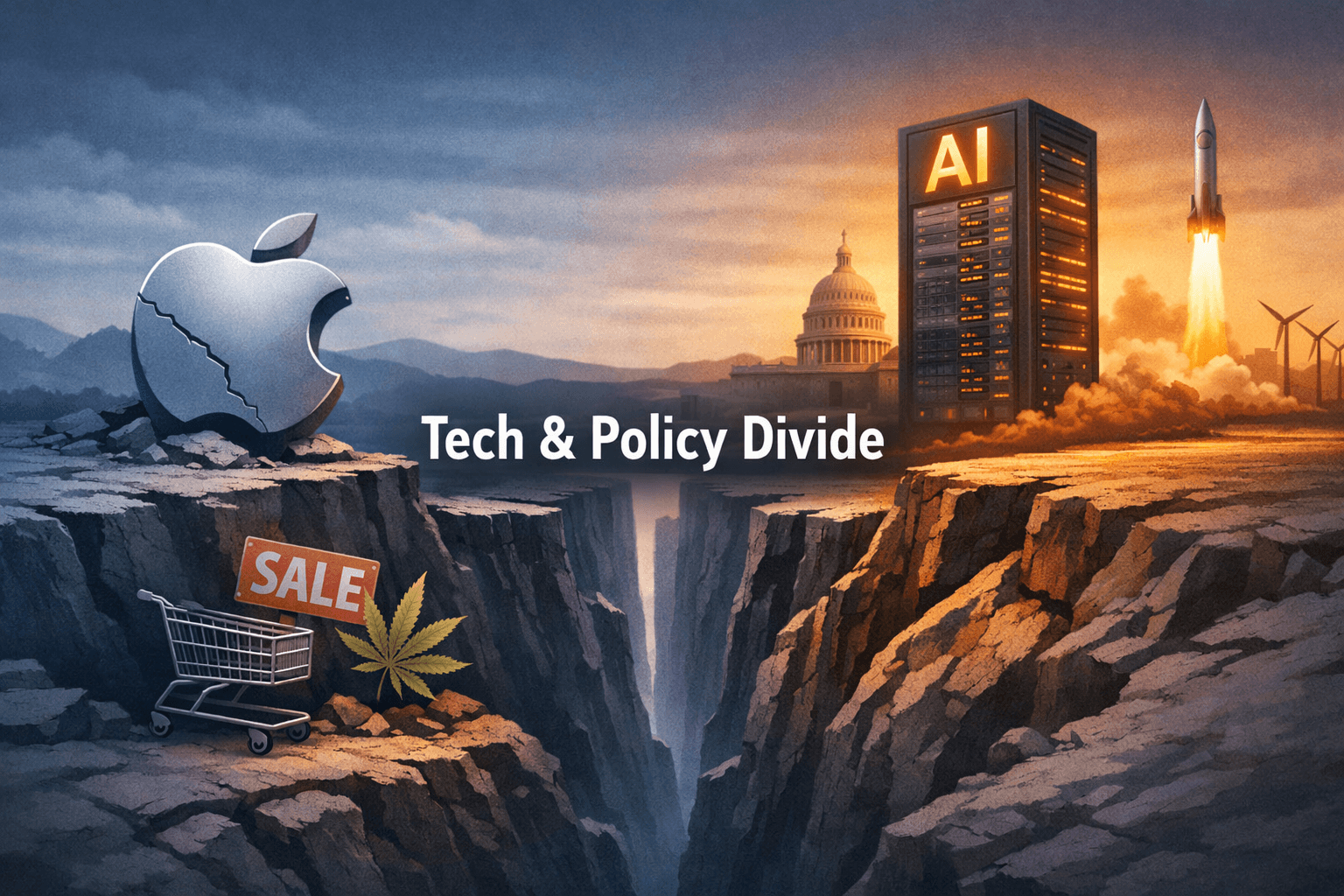
Apple Demand Shock Meets AI Bifurcation: Tech, Retail and Policy Drive a Mixed Market Narrative
Podcast • Loading audio...
Share this article
Spread the word on social media
Key Takeaways
- •Apple’s reported iPhone18 Pro component order cuts are the day’s primary market driver, with implications for suppliers and hardware sentiment.
- •AI demand is concentrating value in infrastructure and observability names (e.g., Arista, Datadog), but high multiples raise execution risk.
- •Political and regulatory signals (cannabis rescheduling, White House appointment) can be underpriced; markets may not immediately reflect their potential economic impact.
- •Index funds remain a strong baseline for many investors as active, AI-driven stock-picking has not yet produced broad, repeatable outperformance.
Today's biggest market moves — what mattered
Two dominant threads set market headlines on Oct. 9: first, fresh reporting that Apple trimmed iPhone18 Pro component orders amid softer-than-expected demand, which sparked follow‑on weakness in Apple and supplier groups; second, continuing evidence that AI demand is concentrating premium valuations in infrastructure names even as doubts grow about how and when industrial and consumer businesses will monetize AI investments.
Those headlines sat alongside several other notable developments: Treasury yields held steady as markets digested President Trump’s diplomatic comments on Iran; the cannabis sector largely ignored a political appointment tied to December’s rescheduling order; and a broad slate of Wall Street calls repriced expectations across cyclical and growth names. Taken together, the day’s reporting emphasized a market split between narrative-led, richly priced AI winners and a longer list of names trading on operational data or macro sensitivity.
Investment disclaimer: This briefing presents analysis and market context for informational purposes only. It does not constitute personalized investment advice or a recommendation to buy, sell, or hold any security.
Cross-cutting themes from today’s Alpha coverage
AI is concentrating value — and lifting infrastructure multiples. Analysts continue to point to sustained enterprise AI demand as a core growth story. Arista Networks (coverage notes valuation near ~65.7x earnings vs. the S&P ~21.5x) shows how the market is willing to pay for visible AI revenue acceleration. Datadog (DDOG) is another beneficiary: fund letters and investor commentary highlight rising spending on observability as companies put AI models into production, a classic example of secular software demand tied to technological adoption.
Monetization and execution are now the margin-of-error for AI optimism. Ferrari’s chairman, John Elkann, articulated a now-common caveat: companies may invest rapidly in AI but struggle to convert those investments into near-term revenue. That tension appears across sectors — heavy R&D or capex today can compress margins if monetization lags, raising the bar for richly valued names.
Consumer and hardware demand are softening in places, creating knock‑on effects. Apple’s reported order cuts for iPhone18 Pro components — the primary news driver for the day — are being treated as a signal of cooling upgrade cycles. That development matters not only for AAPL but for suppliers and for discretionary names that depend on a healthy consumer upgrade backdrop.
Technology-driven disintermediation is reshaping retail economics. New AI shopping agents (e.g., Muse) that can execute purchases on behalf of consumers create both convenience and competitive displacement. The analyses highlight the winners (dominant platforms that can monetize convenience) and losers (brand-reliant merchants that could lose direct customer relationships), with implications for AMZN, COST, and TJX.
Political and policy moves can be underpriced. The cannabis sector is a case in point: Alpha’s coverage flagged that Howard Kessler — credited with the December rescheduling order — received a White House title. Yet the ETF MSOS is trading 39% below its Dec. 18 high ($4.45 vs $7.25), suggesting markets may not be pricing the potential regulatory implications into cannabis valuations.
Where analysts agree — and where they don’t
Agreement
- AI is a durable, multi-year demand driver for infrastructure and cloud services. Coverage of Arista and Datadog aligns on the structural nature of this opportunity.
- Apple’s supply-chain signals are meaningful for near-term revenue expectations across tech hardware suppliers.
- Broad-market index exposure remains hard to beat for many investors. A MarketWatch summary and related data (e.g., outsized difficulty for AI-driven active managers) reinforce the persistence of passive advantages.
Divergence and debate
- Valuation vs. execution for AI beneficiaries. Some notes treat Arista’s repeated upward guidance and elevated multiple as justifiable, while others warn that the company must continue to beat expectations to justify premium pricing. This is a classic risk-reward tension between momentum and downside if growth slows.
- Impact of AI on retail. Analysts differ on the timing and magnitude of disruption from shopping agents. One view emphasizes rapid disintermediation that favors platforms (Amazon), another highlights opportunities for retailers (Costco, TJX) that can integrate agents into loyalty and omnichannel strategies.
- The cannabis policy read-through. Alpha’s piece on Howard Kessler suggests the market missed a political signal; other investors appear to be treating rescheduling as already priced or unlikely to produce immediate earnings. That gap creates a debate over whether MSOS and peers are discounting regulatory upside.
Deeper context on the biggest moves
Apple order cuts: why this matters beyond one quarter
- Component order reductions are the clearest near-term indicator of OEM demand. When Apple trims orders, suppliers face earnings and guidance risk in near-term cycles; revenue and margin pressures can cascade into a broad hardware supplier complex.
- The news amplifies a larger theme: the hardware upgrade cycle is no longer a given. For companies dependent on steady replacement demand, weakened shipments translate into an earnings-growth recalibration.
AI winners — valuation dynamics
- Investors are driving a valuation bifurcation: infrastructure players showing repeatable AI-driven revenue growth are trading at multiples many times the market average (e.g., Arista ~65.7x vs S&P ~21.5x). That premium reflects conviction in durable demand, but also concentrates downside if multiple compression occurs.
- Observability (Datadog) is a canonical example of a category which benefits when customers move AI models to production — the more critical and embedded the software becomes, the stickier the revenue and the easier it is to maintain pricing power.
Cannabis policy and MSOS
- Political developments — Howard Kessler’s new White House title and his role in the December rescheduling order — can materially affect regulatory risk. Yet the cannabis ETF MSOS sits roughly 39% below its Dec. 18 high, implying the market has not re-rated the sector in light of the appointment.
- Policy moves are slow and noisy; the challenge for investors is disentangling headline momentum from the timing and legal mechanics that actually change market access and revenue potential.
Credit, yields and geopolitical noise
- Treasury yields were broadly steady after diplomatic comments relating to Iran, signaling a temporary dampening of safe‑haven flows. Stability in yields reduces one immediate source of market volatility, but election-related uncertainty remains a material background risk for longer-duration assets.
What this means for different investor types
Short-term traders
- Volatility catalysts abound: Apple order confirmations, earnings seasons (IBM, Arista, others), and ongoing Wall Street calls. Traders should expect headline-driven swings and use clear trigger points (guidance changes, order updates) rather than narrative alone.
Long-term, core investors
- Index-fund arguments remain persuasive: the MarketWatch report and Alpha’s note on passive resilience argue that picking long-term winners remains difficult, even with AI tools. Core allocations to diversified ETFs remain a defensible baseline while selective thematic exposure can be layered on thoughtfully.
Thematic/AI-focused investors
- Themes still look constructive, but valuation discipline is crucial. Analysts note that premium multiples demand persistent top-line acceleration and execution; monitor guidance revisions, incremental margin leverage, and customer concentration risks.
Income and conservative investors
- Steady Treasury yields ease immediate market stress but election risk and corporate cost pressures (e.g., airlines) matter. In names like American Airlines, record revenue coexists with a 25% three‑month share decline — a reminder that revenue growth does not always translate to shareholder returns.
Event‑driven and policy-focused investors
- Political appointments and regulatory signals (e.g., cannabis rescheduling) can be underpriced. These investors should track legal timelines, regulatory filings, and formal confirmations rather than headline mentions alone.
Specific metrics and catalysts to watch (short list)
- Apple: further confirmations or reversals of iPhone18 Pro order cuts; supplier guidance and revenue revisions.
- Arista: continued guidance raises and AI-related sales growth (and any signs of customer concentration risk).
- Datadog: fund flows and public fund letters noting incremental observability demand tied to AI rollouts.
- MSOS/cannabis: regulatory filings, DOJ/DEA statements, and any formal White House policy clarifications following Howard Kessler’s appointment.
- Adobe: new subscription-sales trends after a 31% 12‑month share decline; monitor new-subscription metrics from quarterly calls.
- Joby: the split between cash-burning eVTOL development and revenue-generating Blade helicopter operations; watch unit economics and cash-burn guidance.
Strategic considerations — what analysts note for positioning
- Distinguish durable secular winners from narrative trades. AI infrastructure and observability show durable demand, but rich multiples require sustained execution.
- Prioritize evidence over headline optimism. Seek recurring revenue growth, margin expansion, and explicit guidance improvements rather than one-off statements.
- Monitor policy and legal timelines, not just appointments. Regulatory moves (cannabis rescheduling) may be impactful but typically play out across months and require formal rule-making to change economics.
- Use position sizing and rebalancing to manage concentrated bets. Whether it’s a high‑multiple AI beneficiary or a cyclically exposed hardware supplier, analysts emphasize controlling exposure to avoid undue portfolio stress.
Bottom line
Today’s tape underscores a market of contrasts: clear conviction in AI infrastructure is driving premium valuations, while hardware demand softness and policy ambiguity keep many other sectors under pressure. Analysts across the Alpha notes converge on the idea that execution, guidance and measurable monetization will decide winners — not optimism alone. For investors, that implies a focus on catalysts, disciplined valuation checks, and careful sizing of thematic positions amid an environment where narratives can diverge sharply from near-term fundamentals.
Key tickers discussed: MSOS, AMZN, COST, TJX, EFOR, AAL, ADBE, ANET (Arista), DDOG, RACE, JOBY, SIG, AXP, PLTR, RKLB, LMT, IBM, NKE, AAPL
Sources
+ 10 more sources
Use these insights — enter this week's contest.
Free practice contests — earn Alpha CoinsExplore More Content
Disclaimer: StockAlpha.ai content is for informational and educational purposes only. It is not personalized investment advice. Sentiment ratings and market analysis reflect data-driven observations, not buy, sell, or hold recommendations. Always consult a qualified financial advisor before making investment decisions. Past performance does not guarantee future results.
Spotted something wrong? Report an error.