
 Alpha Breaking
US.S. Food Banks Demand Tops Pandemic Levels - Nov 24
Share this article
Spread the word on social media
The Big Picture
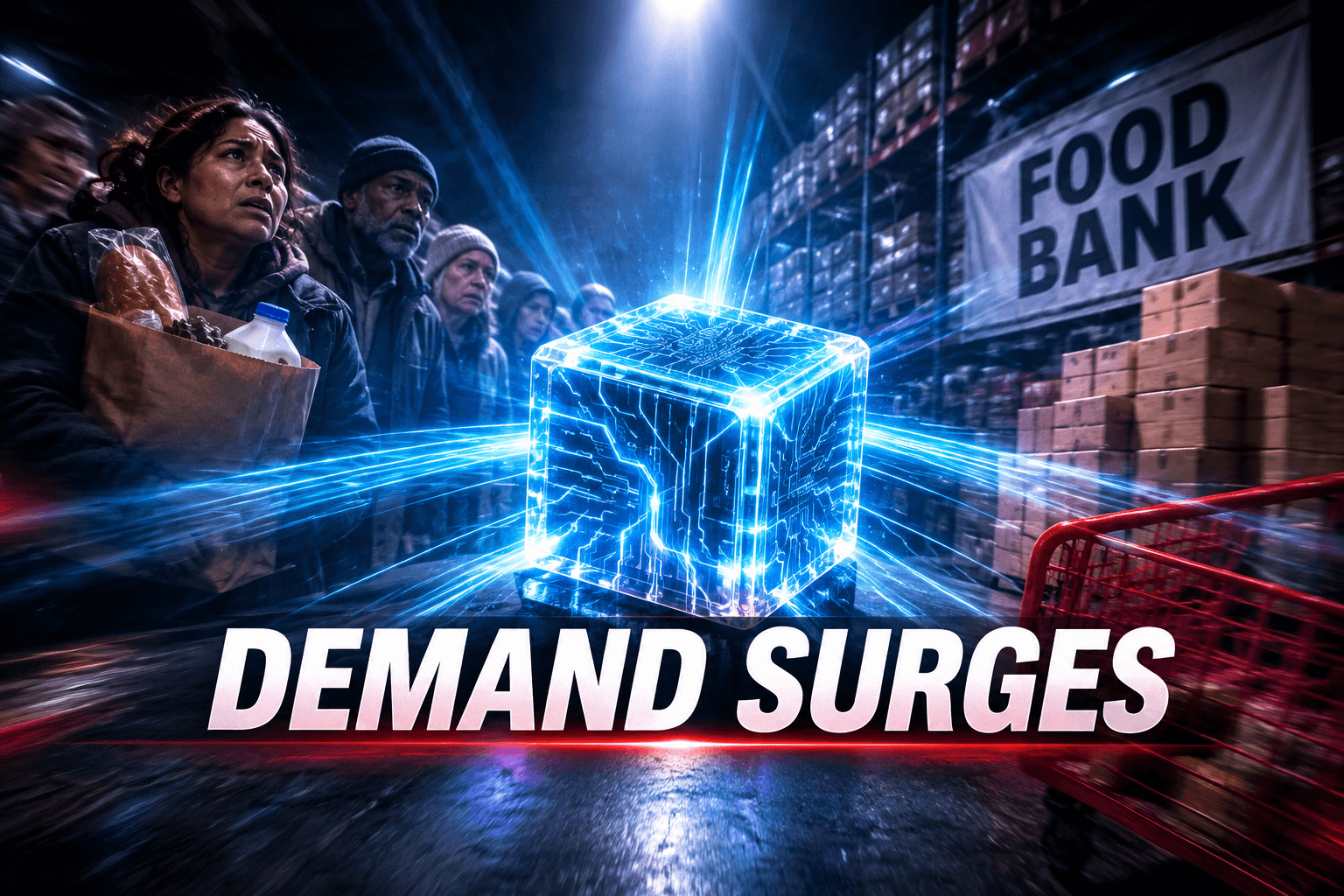
Some U.S. food banks report demand exceeding levels seen during the COVID-19 pandemic, a sign that high grocery and housing costs are putting greater pressure on household budgets. For investors, the immediate takeaway is not a stock call: food-bank activity is not a directly investable public-market sector, and the report does not identify a company or ticker.
The operating picture is challenging. Food banks depend on donations, government programs and charitable funding, but demand can rise at the same time that donated food and cash contributions become harder to secure. That imbalance may matter to investors assessing food-assistance providers, charities or public funding exposure, but the available information does not quantify its financial impact on any listed business.
What's Happening
CNBC reports that a combination of high costs and restrictions to federal aid has contributed to soaring demand at many U.S. food banks. The key measure in the report is comparative rather than a national total: some food banks say demand has moved above levels they experienced during the pandemic. No count of food banks, number of households served, dollar amount of aid or percentage change is provided in the available information.
That distinction matters if you're trying to translate the story into an investment thesis. The news signals a serious need for support, but it doesn't provide the operating or financial figures required to estimate the size, duration or market impact of that need.
- Demand at some U.S. food banks is reported to exceed pandemic-era levels, but the source does not give a nationwide total.
- High grocery costs are identified as one source of pressure on household budgets.
- High housing costs are also contributing to financial strain, according to the provided context.
- Restrictions on federal aid are cited alongside high costs as a factor behind rising demand.
- Food banks rely on donations, government programs and charitable funding, while donated food and cash contributions can become harder to secure as demand increases.
These are meaningful indicators of need, not a set of earnings data. The source material does not provide revenue, earnings per share, margins, guidance, valuations or analyst estimates for a company. Investors therefore can't compare the reported demand with company expectations or use it to calculate a valuation change based on the information provided.
Why It Matters For Your Portfolio
Growth investors, value investors, income investors and traders should treat this primarily as a social and operating-capacity story, rather than a direct public-equity catalyst. No specific ticker is identified, and food banks themselves are not a directly investable public-market sector. The report also contains no analyst ratings or stock-price data, so it doesn't support a conclusion about the near-term move in any particular security.
There may be indirect areas for investors to monitor, including organizations or businesses with exposure to food assistance, charitable contributions or government programs. But the available facts don't establish which companies have such exposure or how large it may be. Before connecting the headline to a portfolio holding, you would need company-specific disclosures and information about funding, demand exposure and financial results. Those valuation inputs are not included here.
Risks To Consider
The central concern is that need could remain elevated while the resources available to meet it are constrained. The report does not quantify the size of any funding gap, so the scale of the operational risk is unclear. For investors, avoid treating a rise in demand as an automatic revenue benefit for any company: the topic supplies no evidence of a listed company directly benefiting.
- Persistent food and housing inflation could keep demand elevated and strain food-bank capacity.
- Reduced donations could make it harder for food banks to secure enough food and cash to respond to need.
- Changes to government food-assistance funding could widen the gap between available supplies and household need.
A bear case for the food-assistance system is a prolonged mismatch: household costs remain high, demand stays above the levels some food banks saw during the pandemic, and donations or government support don't keep pace. That scenario could increase pressure on capacity. It still doesn't imply a specific stock outcome without evidence about a company's exposure and finances.
What To Watch Next
The provided information does not identify scheduled announcements, dates, stock levels or company-specific catalysts. Instead, the relevant developments are conditional: changes in public funding, food-assistance benefits, charitable donations, grocery-price inflation and household incomes could affect the balance between need and available support.
- Additional public funding or food-assistance benefits could improve food-bank supply and capacity.
- More charitable donations could help close the gap between available resources and demand.
- Easing grocery-price inflation or stronger household incomes could reduce pressure on food banks.
- Further evidence on demand, supplies and funding would help clarify whether the strain is broadening or easing.
For a company-level analysis, look for disclosed exposure and financial measures before drawing conclusions. No share price, trading move, earnings metric or valuation figure is available in the provided material, so there are no defensible entry points or price levels to monitor based on this report alone.
The Bottom Line
- Some U.S. food banks report demand above pandemic-era levels, while high grocery and housing costs and restrictions on federal aid are contributing to pressure.
- Food banks depend on donations, government programs and charitable funding, and those resources may be harder to secure when demand rises.
- The report does not identify a publicly traded company, ticker, stock price or financial metric. It is not enough to support a buy, sell or hold view on a security.
- Potential developments to monitor include public funding, food-assistance benefits, charitable donations, grocery prices and household incomes.
- Investors evaluating a related company need company-specific disclosures before assessing valuation or portfolio impact. This analysis is informational, not personalized investment advice.
FAQ
Q: What is driving the increased demand at some U.S. food banks?
A: The provided report cites high grocery and housing costs along with restrictions on federal aid as contributing factors.
Q: Does this report point to a specific stock to buy or sell?
A: No. It identifies no company or ticker, and food-bank activity is not a directly investable public-market sector.
Q: What developments could ease pressure on food banks?
A: Additional public funding, food-assistance benefits or charitable donations could improve supply and capacity. Easing grocery-price inflation or stronger household incomes could also reduce demand.