
 Alpha Breaking
Trump's Economy Approval Rating Hits LOW - Oct 22
Share this article
Spread the word on social media
The Big Picture
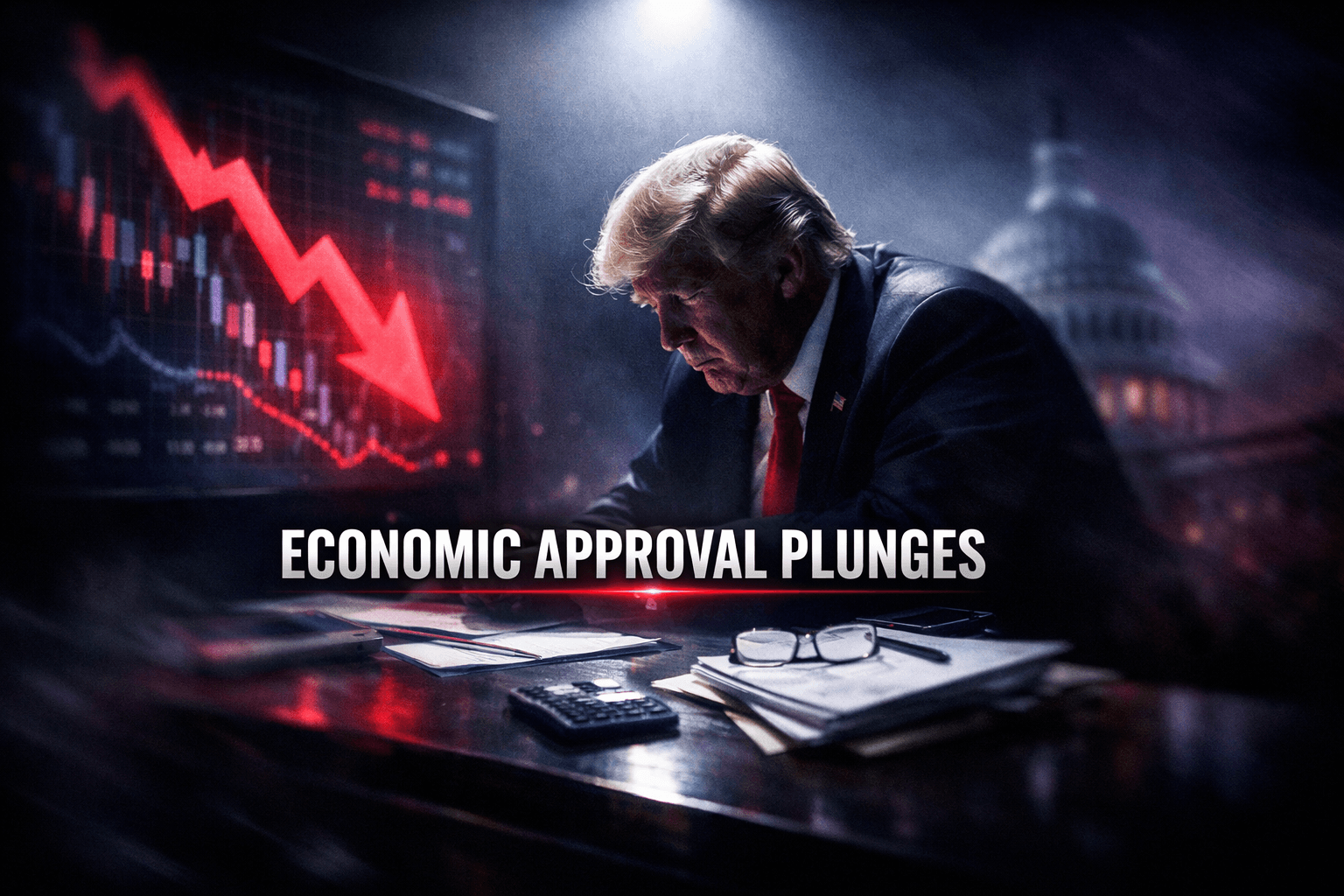
Investors should pay attention: Trump’s approval on the economy has fallen to an all-time low, a development that can raise political uncertainty and market volatility ahead of the midterms. CNBC’s poll finds 31% approval on the economy and a related 28% approval figure, with eight out of 10 Americans rating the economy as fair or poor.
That slump matters because the survey highlights an uphill path for Republican candidates, which could reshape expectations for policy and the political backdrop that markets trade on.
What's Happening
The CNBC poll delivers stark numbers that underline consumer and voter unease. Here are the key data points investors need to know:
- 31%: Trump’s approval rating on the economy, an all-time low for both terms, per the poll.
- 28%: A related approval figure reported in the survey.
- Eight out of 10 Americans: The share now rating the economy as fair or poor, equivalent to about 80%.
- 2 terms: The 31% economy approval is the lowest recorded across both presidential terms.
Each number implies rising dissatisfaction that could translate into voter behavior and policy risk. The survey notes Republican candidates face uphill battles, a fact investors should treat as a sign that political outcomes are less certain than markets may expect.
Market participants often react to shifts in political sentiment because elections can change fiscal, tax, and regulatory outlooks. This poll adds fresh evidence that the political environment may be a near-term driver of sentiment-sensitive assets.
Why It Matters For Your Portfolio
Political sentiment affects investor psychology and can trigger volatility in interest-rate-sensitive or policy-dependent sectors. A weak economy approval score raises the odds of campaign narratives focused on economic distress, which can influence consumer confidence and sector rotation.
Who should care: traders and event-driven investors who position around political catalysts, and portfolio managers monitoring macro and policy risk. Analysts note that weaker political backing increases the chance of headline-driven moves, which can create trading opportunities but also raise downside risk for momentum strategies.
Risks To Consider
- Policy Uncertainty: If the poll signals tougher midterm races, legislative gridlock or changes in policy priorities could follow, increasing uncertainty for sectors reliant on regulatory clarity.
- Market Volatility: Sentiment-driven headlines can produce short-term swings, especially in small-cap and consumer-sensitive names; event-driven traders may see wider intraday ranges.
- Execution Risk: Polls are snapshots. If subsequent polls diverge, markets may reverse quickly, turning a perceived trading edge into a loss.
What To Watch Next
Watch for immediate and medium-term catalysts that could amplify or offset the poll’s market impact. Focus on timing and sentiment metrics rather than making blanket assumptions.
- Follow-up polls and national surveys, which can confirm or counter CNBC’s findings.
- Major campaign events and debates, which can reshape narratives and voter sentiment.
- Market indicators to monitor include consumer confidence releases and volatility indexes that typically react to political news.
- Watch for any fiscal or regulatory announcements tied to election positioning that could affect market sectors.
The Bottom Line
- CNBC’s survey shows a 31% economy approval and a correlated 28% figure, with eight out of 10 Americans rating the economy fair or poor, signaling political headwinds ahead of the midterms.
- Expect increased political headlines and sentiment-driven market moves; event-driven and short-term traders may see the most immediate impact.
- Long-term investors should track policy signals and multiple polls rather than reacting to a single survey.
- Monitor volatility and liquidity; use position sizing and risk controls to manage potential swings tied to political developments.
FAQ
Q: How severe is the approval drop for market risk?
A: The 31% economy approval is an all-time low across both terms, and the poll indicates broader dissatisfaction; analysts say this raises the chance of sentiment-driven volatility, especially near key political events.
Q: What should traders watch right now?
A: Traders should watch subsequent polls, major campaign events, consumer confidence data, and volatility indicators, as these items can trigger short-term market moves tied to political sentiment.
Q: Does this poll change investment strategy for long-term investors?
A: Long-term investors should treat this as one data point; monitor policy implications and multiple polls over time, and maintain risk management rather than making abrupt portfolio shifts based on a single survey result.