
 Alpha Breaking
Trump Open to Capping Credit-Card Interest Rates - Nov 23
Share this article
Spread the word on social media
The Big Picture
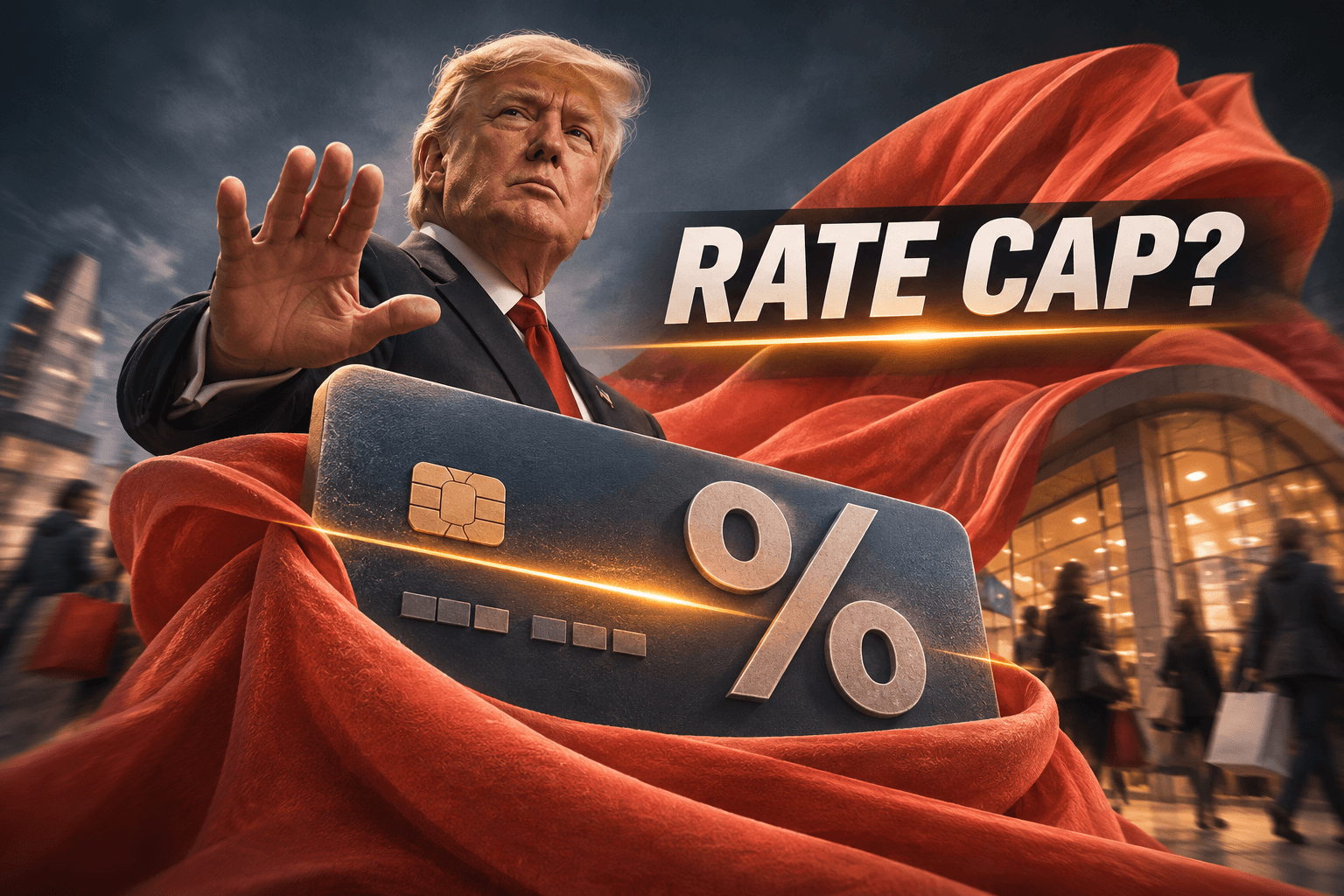
Trump's openness to capping credit-card interest rates isn't a policy change, so holiday shoppers shouldn't expect it to lower their APRs by itself. For investors, the key distinction is between a political statement and a binding cap: no effective date or finalized details are provided, leaving card issuers and borrowers facing uncertainty.
The available information doesn't include current stock prices or today's moves for card issuers, so there is no basis here for a company-specific market reaction. A 10% cap has been discussed in political proposals, but shoppers shouldn't count on that figure applying to their accounts during the 2026 holiday season.
What's Happening
Trump has expressed openness to limiting credit-card interest rates as Americans prepare for holiday shopping. That position alone does not change existing rates or establish a binding policy. A federal cap would likely require legislation or a clearly defined regulatory action, and the timing and details remain uncertain.
- A 10% cap has been discussed in political proposals. It is not presented here as an enacted or finalized limit.
- Many U.S. credit-card APRs are substantially higher, often above 20%. That gap indicates why a binding cap could matter to borrowers, as well as to issuers' interest income.
- The 2026 holiday season is the near-term consumer context, but no effective date is specified for a potential cap.
- Congress has considered credit-card rate-cap proposals before, but those proposals have faced substantial political and industry opposition.
The difference between a discussed 10% limit and APRs often above 20% is significant, but it doesn't establish what a final policy would cover. The available information doesn't specify which accounts might be included, how existing balances would be treated, or when any measure could take effect. Those details would determine how much borrowers and lenders are actually affected.
For now, the practical point for cardholders is straightforward: current rates aren't changed merely because a president has said he is open to a cap. For investors, the proposal is a potential policy risk to monitor, not a confirmed change to issuer earnings or lending practices.
Why It Matters For Your Portfolio
Credit-card issuers could face pressure on interest income if a binding cap materially limits APRs. But that possibility comes with a countervailing risk for borrowers: issuers could respond by tightening approval standards, lowering credit limits, or reducing rewards. Investors assessing card-issuer exposure will need to weigh potential limits on revenue against possible changes in credit access and product costs.
This issue may be relevant to growth investors tracking changes to issuer earnings, value investors evaluating how policy uncertainty affects company economics, and traders watching for legislative or regulatory developments. No analyst ratings, issuer-specific figures, or stock-price data are available in the provided information, so a company-level valuation or market reaction can't be established from these facts alone. The proposal's scope and timing matter more than the headline statement.
Risks To Consider
A rate cap could have consequences beyond the APR listed on a card. The bear case for issuers is that a binding limit could reduce interest income, while the bear case for some borrowers is that lenders could respond by making credit harder to obtain or less rewarding to use.
- Issuer response: A cap could lead to tighter approval standards, lower credit limits, or cuts to cardholder rewards, potentially changing the value of a card even for customers who pay attention to APRs.
- Policy uncertainty: Legislative or regulatory delays, along with political and industry opposition, make the timing and ultimate scope difficult to forecast.
- Unclear coverage: Without a bill or defined regulatory action specifying covered accounts and an effective date, borrowers and investors can't determine which products would be affected or when.
In a downside scenario, a proposed cap advances slowly or takes a narrower form than shoppers expect, leaving current rates in place while uncertainty persists. Alternatively, if a binding cap is adopted, the effects could differ across issuers depending on the final terms and their responses. The provided information doesn't identify those company-level differences.
What To Watch Next
The clearest upcoming catalysts are concrete policy details and issuer commentary. Until those appear, a stated willingness to consider a cap offers no reliable timeline for rate relief and no confirmed basis for estimating its effect on any particular company.
- Watch for a bill that specifies the proposed cap, its effective date, and which accounts it covers.
- Monitor whether a proposal advances through Congress or a clearly defined regulatory action emerges. No specific schedule is available.
- Review issuer disclosures and regulatory announcements for indications of possible changes to APRs, lending standards, fees, and cardholder rewards.
- Compare any future proposal with the discussed 10% figure and the reported context that many APRs are often above 20%, while checking what the final terms actually apply to.
For valuation analysis, investors can focus on issuer disclosures about interest income and any stated changes to lending or rewards, if those details become available. No issuer metrics or valuation figures are provided here, so the next useful evidence would be company-specific disclosures tied to a defined policy proposal.
The Bottom Line
- Trump's openness to a cap is not a binding policy and does not itself change current credit-card rates.
- A 10% cap has been discussed, while many U.S. card APRs are often above 20%; the proposal's final terms and coverage are unknown.
- Holiday shoppers shouldn't assume a cap will lower their rates during the 2026 season.
- For investors, the key issues are potential effects on issuer interest income, credit availability, limits, and rewards.
- Legislation, regulatory action, and issuer disclosures are the relevant developments to monitor. This information isn't a recommendation to buy, sell, or hold any security.
FAQ
Q: Will a credit-card rate cap lower holiday shoppers' rates in 2026?
A: Not based on Trump's statement alone. No binding policy or effective date is specified, so shoppers shouldn't assume their APRs will change for the 2026 holiday season.
Q: What cap has been discussed?
A: A 10% cap has appeared in political proposals. It has not been described here as an enacted or finalized limit, and the accounts it might cover are unknown.
Q: What could a cap mean for credit-card issuer investors?
A: A binding cap could reduce interest income, while issuers might respond by tightening approvals, lowering credit limits, or cutting rewards. The effect would depend on the policy's final terms and issuer disclosures.