
 Alpha Breaking
The next PMI reading will be worse. Plan accordingly!
Share this article
Spread the word on social media
PMI Data Flashes Warning as Iran War Drives Inflation Shock and Supply Chain Risk
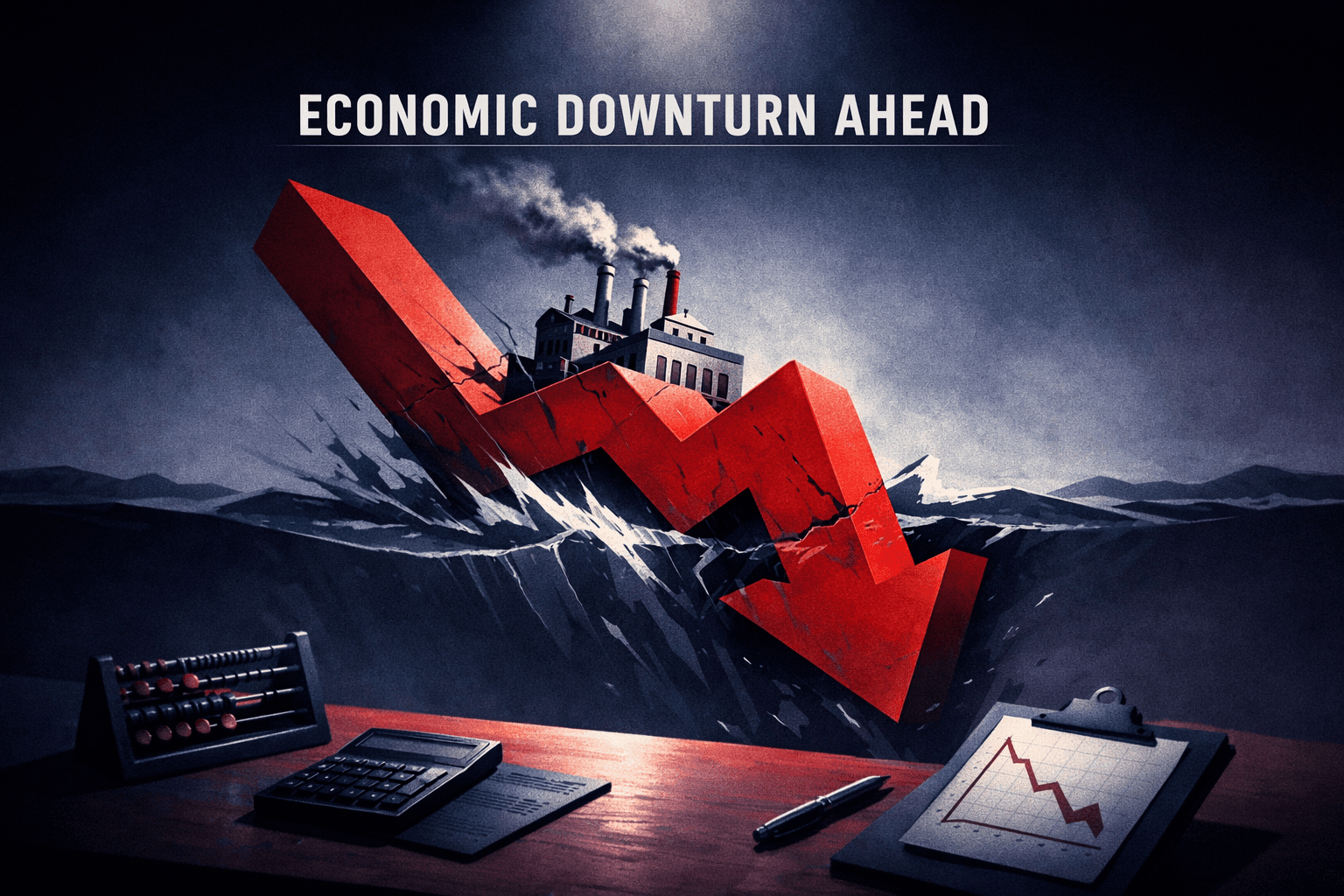
The latest S&P Global Flash PMI data shows an economy still technically expanding — but the numbers beneath the headline tell a different story.
Manufacturing PMI came in at 52.4, blowing out a forecast of 51.5. Composite PMI slipped to 51.4. Services fell to 51.1. Both missed forecasts. On paper, above 50 means growth. In practice, the direction and composition matter far more than the headline number — and both are deteriorating.
Growth Is Narrowing, Not Strengthening
The services sector has been the engine of U.S. economic growth for the past two years. It's stalling. Meanwhile, manufacturing's relative strength doesn't reflect organic demand — it reflects companies front-loading activity to hedge against anticipated supply disruptions. That's a critical distinction. Precautionary inventory-building and pulled-forward production support short-term PMI readings but typically precede slower growth as demand eventually adjusts downward.
This is not an economy accelerating. It's an economy bracing.
The Strait of Hormuz Is Now an Inflation Variable
The catalyst isn't abstract. On February 28, 2026, U.S. and Israeli forces launched coordinated strikes on Iran under Operation Epic Fury. Iran responded by effectively closing the Strait of Hormuz — the narrow chokepoint through which roughly 20 million barrels per day of crude oil and petroleum products, representing approximately 20% of global oil supplies, normally flow.
Tanker traffic dropped approximately 70%, with over 150 ships anchoring outside the strait to avoid risk. Crude oil prices surged more than 12% in a single session. European natural gas futures soared more than 40%.
Goldman Sachs $GS estimates that traders are pricing roughly $14 more per barrel of oil than before the conflict to compensate for increased risk. JPMorgan $JPM warns Brent could hit $120 per barrel in a prolonged disruption scenario. Deutsche Bank puts a full closure scenario closer to $200.
This is no longer a tail risk. It is the base case.
How Energy Prices Feed Inflation
Energy doesn't just raise gas prices — it feeds through the entire cost structure of the economy. Transportation costs rise. Manufacturing input costs rise. Every business that moves goods, heats a facility, or runs equipment absorbs higher costs and passes them downstream.
The PMI data is already capturing this. Businesses report sharply higher prices paid. The Services PMI decline reflects exactly this squeeze: input costs climbing while consumer demand softens. The result is the most dangerous inflationary combination — cost-push pressure hitting simultaneously with demand weakness.
The Dallas Fed's updated modeling suggests the Strait closure could lower global real GDP growth by an annualized 2.9 percentage points in Q2 2026 while pushing WTI oil prices toward $98 per barrel.
The Federal Reserve now faces a scenario it has few good tools to address: inflation driven by supply destruction, not demand excess. Rate hikes don't reopen shipping lanes.
Supply Chain Disruption Goes Beyond Oil
Qatar shut down LNG production after Iranian drone strikes on key facilities. Qatar supplies approximately 20% of global LNG exports. European gas benchmarks nearly doubled, prompting the ECB to postpone planned rate cuts and raise its 2026 inflation forecast. UK inflation is now expected to breach 5%.
The Strait of Hormuz closure has disrupted not just oil shipments but fertilizer access and high-tech supply chains — cascading effects that extend well beyond energy markets into food security and industrial production. The IEA has described the situation as "the greatest global energy security challenge in history."
What the PMI Data Is Actually Saying
When you strip away the headline numbers, the PMI data reads as a preparation signal, not a strength signal. Companies are building inventories. They are accelerating procurement. They are locking in supply before conditions worsen. This is rational behavior in the face of visible, escalating risk — but it creates a false floor under economic data that could collapse quickly once that behavior runs its course.
The soft-landing narrative — controlled disinflation, stable growth, gradual rate normalization — was already fragile before the first strike on Iran. The conflict has landed in a global economy already navigating tariffs, post-pandemic debt overhangs, and inflationary pressures that central banks in Europe and Asia had only recently begun to contain. Those stabilization efforts are now in jeopardy.
The Bottom Line
The PMI data is not a signal of resilience. It is a lagging reflection of an economy attempting to adjust to a rapidly destabilizing external environment — one where a single geopolitical decision has already disrupted 20% of global oil supply, doubled European gas prices, and reintroduced stagflation risk into the global policy conversation.
Plan accordingly the markets are in for a bumpy ride.Trump Pauses Strikes On Iranian Energy Sites