
 Alpha Breaking
Trump Pauses Strikes On Iranian Energy Sites
Share this article
Spread the word on social media
President Orders Five-Day Pause On Strikes
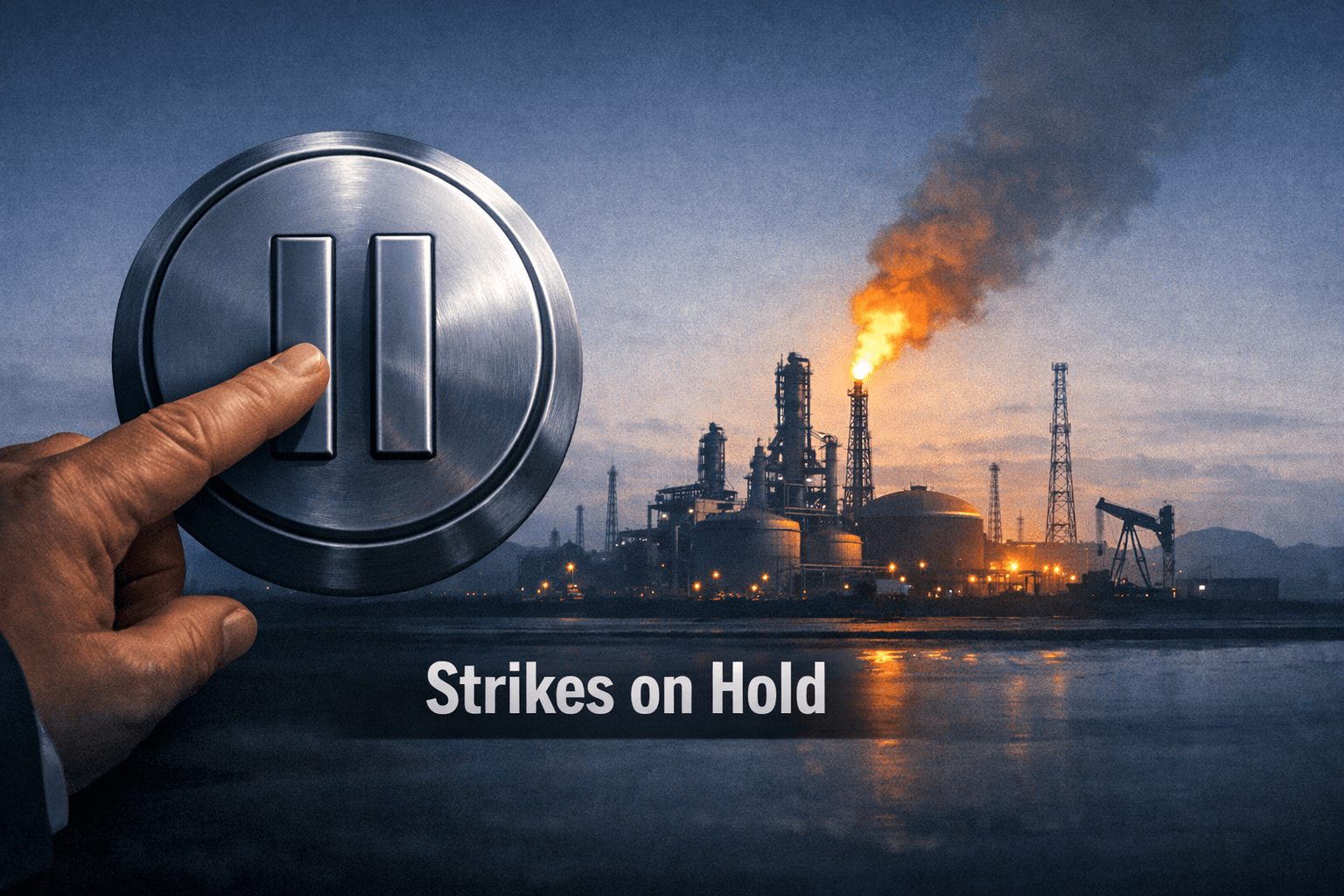
President Trump has instructed the Department of War to postpone any and all military strikes against Iranian power plants and energy infrastructure for a five-day period, subject to the success of ongoing meetings, the White House said Monday.
The pause buys time for high-level diplomatic contacts and a review of the potential economic fallout, according to senior administration officials. The decision followed urgent consultations inside the administration and with key allies.
Immediate Market Reaction
Markets reacted quickly to the announcement. Brent crude futures, which spiked sharply on earlier reports of planned strikes, retraced some gains after the pause, trading down from intraday highs but still above prior levels.
Defense contractors were volatile. Shares of $LMT and $RTX initially rallied on the prospect of action, then pared gains as the pause was announced. Energy majors such as $XOM and $CVX also saw swings as traders reassessed supply-risk assumptions.
Why The Pause, According To Officials
"The president has directed a limited postponement to allow diplomacy and to avoid undue economic damage to American workers and global markets," a senior administration official said, speaking on background.
Officials framed the move as pragmatic, citing intelligence assessments and analyses of the likely economic impact of strikes on regional oil flows, insurance costs, and global supply chains.
Economic Costs Cited
Administration advisers warned that strikes on energy infrastructure could sharply raise the price of oil, disrupt shipping through the region, and trigger retaliatory actions that would escalate costs across multiple sectors.
Analysts note that even a temporary disruption in Persian Gulf exports can lift oil prices by double-digit percentages. Several energy economists estimated that a sustained disruption in output could add $10 to $30 per barrel to benchmarks depending on duration and the scale of damage.
Political Reactions Split
Within Washington, reactions were mixed. Supporters of the administration’s tougher posture said the pause was a wise tactical decision, allowing diplomacy to run its course while keeping military options on the table.
Critics accused the administration of backtracking under market pressure, and some lawmakers signaled concern that a short pause could be used to delay accountability. House and Senate leaders from both parties called for briefings on the criteria that will determine whether strikes proceed.
Allies and Regional Players
U.S. allies welcomed the extra time for diplomatic engagement, but European and Middle Eastern partners emphasized that the pause must produce concrete steps or the risk of a broader confrontation will remain.
Regional governments are watching closely because attacks on Iranian energy infrastructure could ripple through energy markets and increase security costs for neighboring states.
Analysts Offer Competing Readings
Some national security experts say the pause reflects a careful cost-benefit calculation, where limited strikes might not achieve strategic aims but could impose heavy economic costs on civilians and global markets.
Other analysts warn the delay could embolden Tehran, giving it time to reposition assets and prepare asymmetric responses. They argue that economic pressure alone will not deter future provocations.
What Investors Should Watch
Oil benchmarks, including Brent and WTI, for renewed volatility and directional breakout above recent resistance levels.
Defense contractors such as $LMT and $RTX for contract and guidance sensitivity to geopolitical developments.
Energy majors $XOM and $CVX and shipping insurers, which can be impacted by elevated premiums and rerouted cargoes.
Possible Next Steps
The administration set a five-day window tied to the outcome of meetings with regional partners and international interlocutors. If diplomacy yields concrete de-escalation, the threat of strikes could be further reduced.
If talks stall or Iran takes new hostile actions, officials said military options remain on the table. In that event, markets and political actors would quickly reassess risk and pricing.
Bottom Line
The five-day pause is a temporary reprieve that reflects concern about the immediate economic consequences of military strikes on Iranian energy infrastructure. It keeps both diplomacy and military pressure as possible outcomes, leaving investors and policymakers to navigate short-term market volatility and long-term strategic ambiguity.
For now, traders will likely trade headlines and briefings, and longer-term investors will be watching oil, defense, and trade-sensitive sectors for signs the situation is resolving or hardening.Hormuz Bottleneck: Iran Restricts Passage