
 Alpha Breaking
Stem Cell Platform: Pulmonary Fibrosis - Nov 17
Share this article
Spread the word on social media
The Story
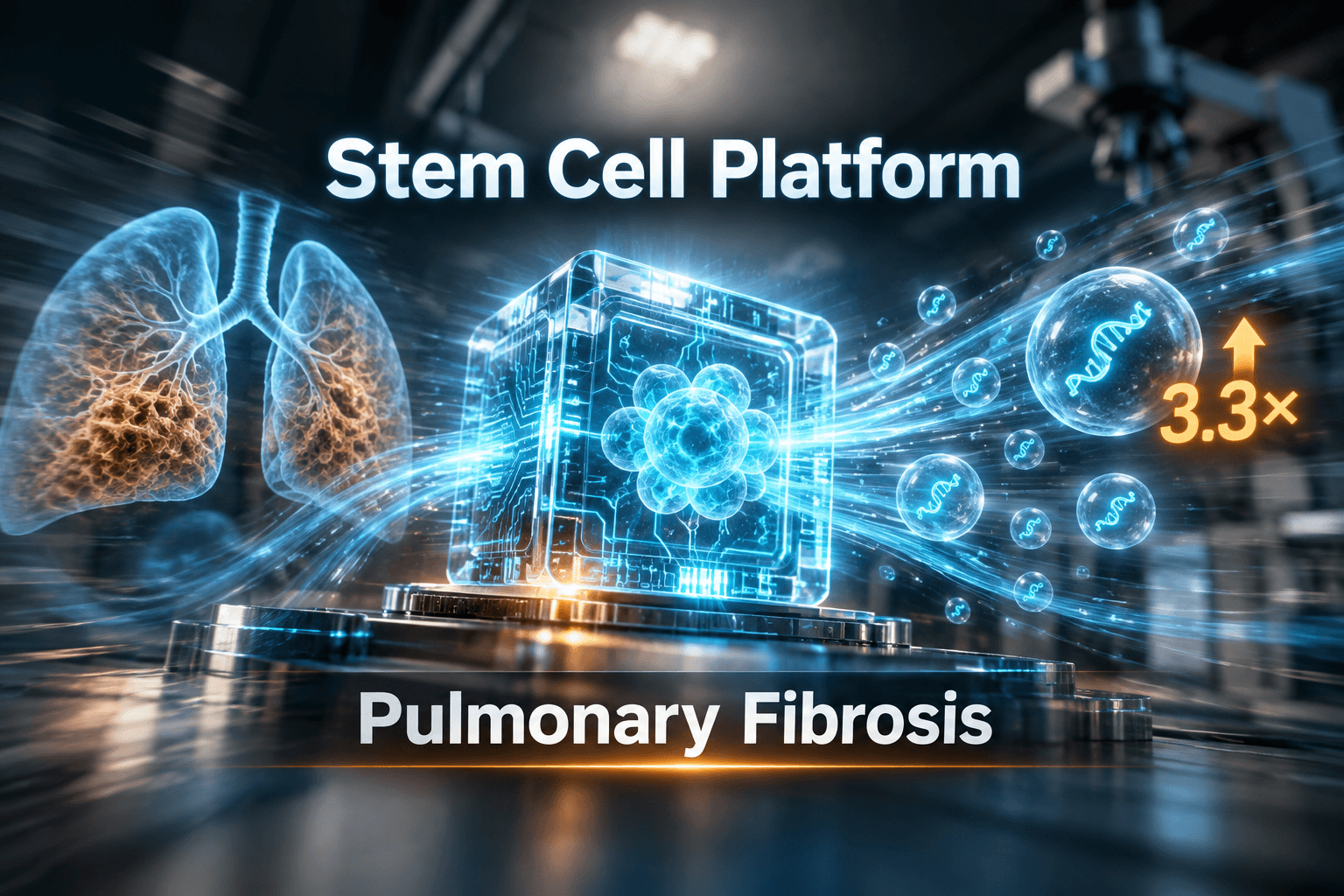
A Taiwan-based team at China Medical University Hospital reports that a stem-cell platform mimicking the lung’s breathing-related mechanical environment reduced pulmonary fibrosis in a preclinical study. The researchers found that extracellular vesicles from “breathing-trained” stem cells carried about 3.3 times more antifibrotic miR-30. No publicly traded company or stock ticker is identified in the available information.
Why It Matters For Your Portfolio
- The roughly 3.3-times increase in miR-30 is a measurable biological finding, but it is not evidence of a corresponding reduction in human disease or a commercial opportunity.
- The work is preclinical. Animal or laboratory results may not translate into clinical benefit, and human trials, regulatory review, and manufacturing validation would be needed before the approach could be considered a therapy.
- CMUH refers to China Medical University Hospital, a hospital and research institution. No ownership, licensing, or commercialization agreement with a listed company is established, so there is no confirmed direct public-stock exposure.
- Detailed study data, including sample sizes and effect sizes, plus independent replication could clarify how robust the results are. Any clinical-trial plan or partnership with a clearly identified public company would also be relevant to investors.
The Trade
Biotechnology investors can track the research as an early-stage scientific development, but the available facts do not support tying it to a specific ticker or valuing a listed company on this result alone. There is no stock price or percentage move to report. The next useful checkpoints are fuller study details, replication, and any announced clinical, licensing, or partnership plans; the timing of those developments is not specified.