
 Alpha Breaking
Oshkosh (osk): Buy, Sell, or Hold Post Q2 Earnings? - Sep 30
Share this article
Spread the word on social media
The Big Picture
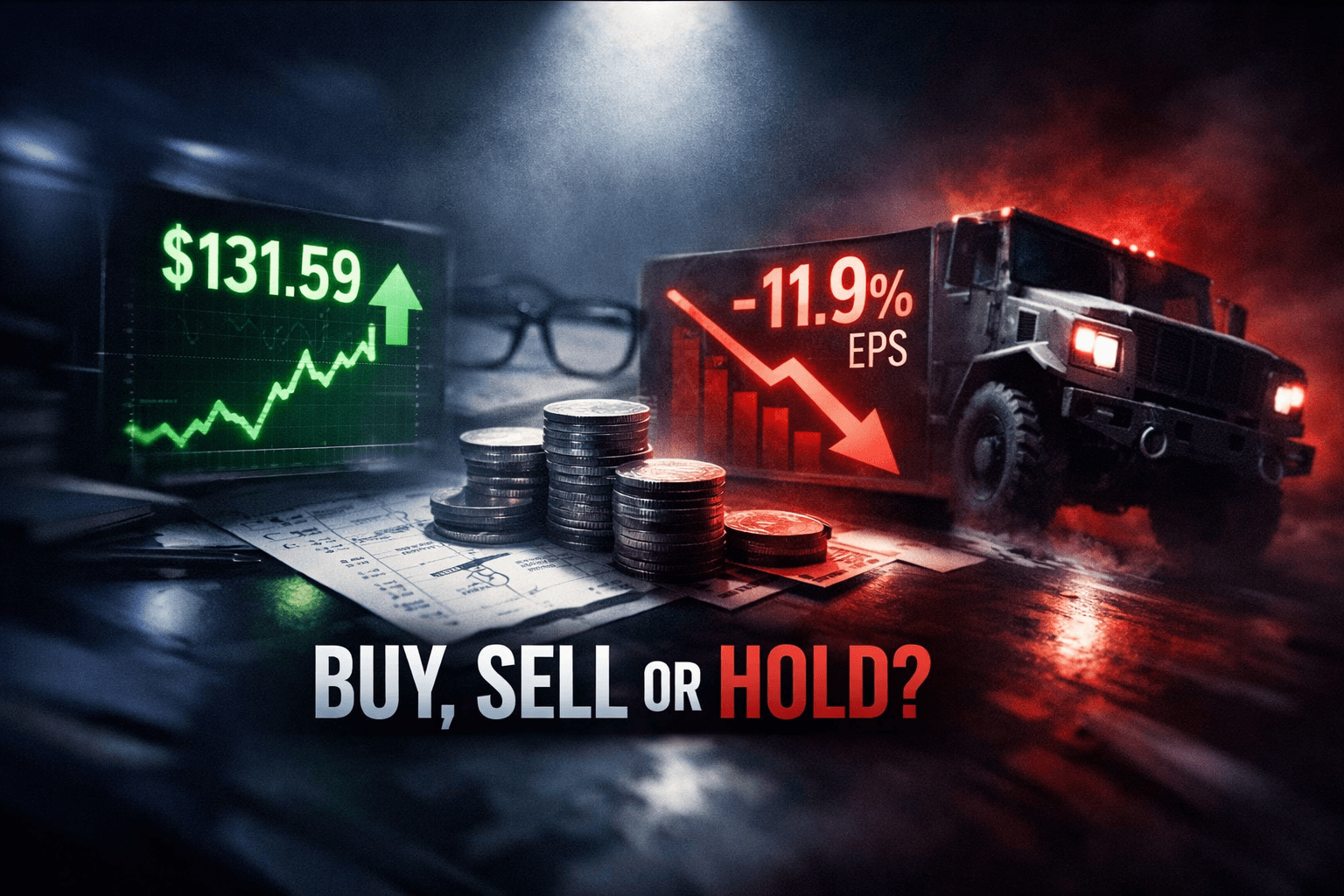
Oshkosh ($OSK) is showing signs of strain after its recent performance, trading at $131.59 and treading water over the past six months with a small loss of 4.4%.
That underperformance versus the S&P 500, which gained 21.1% over the same period, and an 11.9% annual decline in EPS over the last two years are the headline investor takeaways. These dynamics matter for portfolio allocation and risk weighting in industrials exposure.
What's Happening
Q2 and recent company trends paint a mixed picture: revenues have inched higher while profitability metrics are weakening. Below are the specific data points reported or noted in coverage and analyst context, and why each matters for investors.
- Current stock price: $131.59, noted as holding steady in recent coverage, useful as a reference for valuation and stop levels.
- Six‑month performance: down 4.4%, versus the S&P 500's 21.1% gain, indicating relative underperformance for $OSK.
- EPS change: declined 11.9% annually over the last two years, a red flag for margin pressure and profitability deterioration.
- Revenue growth: rose by 1.2% over the same two‑year frame, showing top‑line expansion but not enough to offset EPS weakness.
- Additional reported figures to include in your analysis: 32.71%, 15.20%, 0.09%, and 11.9%, which should be compared against peers and historical company levels when modeling valuation.
Put together, these numbers suggest Oshkosh is growing revenue slowly while seeing squeezed earnings, a combination that explains recent share weakness and draws analyst attention to margins and order trends.
Why It Matters For Your Portfolio
The combination of slowing EPS and modest revenue growth affects how investors should size $OSK in a portfolio. Growth investors will be weighing whether earnings can recover, while value investors will ask if the current price reflects the business's operating realities.
Specifically, income investors should note the limited yield context implied by the small percent figures provided, and traders may view the recent underperformance as a setup for event-driven moves if upcoming catalysts shift sentiment. Recent analyst activity indicates Wall Street is watching the name more closely than before.
Risks To Consider
- Profitability risk: EPS declined 11.9% annually, indicating margin pressure that could continue without cost or product mix improvements.
- Relative underperformance: a six‑month drop of 4.4% while the S&P rose 21.1% raises concern about market sentiment and capital allocation relative to other opportunities.
- Execution and order flow: if revenue growth stalls below the reported 1.2% pace, the earnings recovery story could weaken and push multiples lower.
The bear case is a continued margin squeeze leading to further EPS weakness and multiple compression, forcing reassessment of $OSK's fair value versus peers.
What To Watch Next
Investors should monitor near‑term catalysts and a handful of metrics that will determine whether Oshkosh can stabilize earnings and regain momentum.
- Upcoming company updates and any management commentary on margin recovery, cost controls, or new orders; those will be primary drivers of sentiment.
- Quarterly revenue and EPS comparisons to see whether revenue growth accelerates beyond the recent 1.2% figure and whether EPS can reverse the 11.9% decline trend.
- Key valuation and yield metrics implied by figures like 32.71%, 15.20%, and 0.09% when benchmarked against peers and historical ranges.
- Analyst notes and revisions, since recent analyst activity suggests Wall Street is paying attention and revisions could move the stock.
The Bottom Line
- Oshkosh is under pressure, trading at $131.59 after a six‑month drop of 4.4% while the S&P rallied 21.1%; EPS has fallen 11.9% annually over two years despite 1.2% revenue growth.
- Consider conditional frameworks rather than blanket calls: look for signs of margin stabilization before increasing exposure, and use stop or hedge strategies to limit downside risk.
- Growth investors should wait for consistent EPS improvement; value investors should demand a clear earnings recovery or a valuation cushion tied to the reported metrics like 32.71% and 15.20%.
- Traders may find opportunities around quarterly updates or analyst revisions, but be mindful of the execution and margin risks that created the recent weakness.
FAQ
Q: How serious is Oshkosh's EPS decline?
A: The company reported an 11.9% annual EPS decline over the last two years, a significant signal of margin pressure that investors should monitor alongside revenue trends.
Q: Is the current $131.59 price a buying opportunity?
A: That depends on your criteria: if you require visible EPS recovery and stronger revenue momentum, you may wait; if you analyze valuation vs. peers and accept short‑term risk, you might consider phased exposure under strict risk limits.
Q: What are the clearest near‑term catalysts?
A: Management commentary, quarterly results that move revenue and EPS beyond recent trends, and analyst revisions are the primary catalysts likely to influence $OSK in the coming weeks.