
 Alpha Breaking
Optical Stocks Have a China Problem - Aug 7
Share this article
Spread the word on social media
The Big Picture
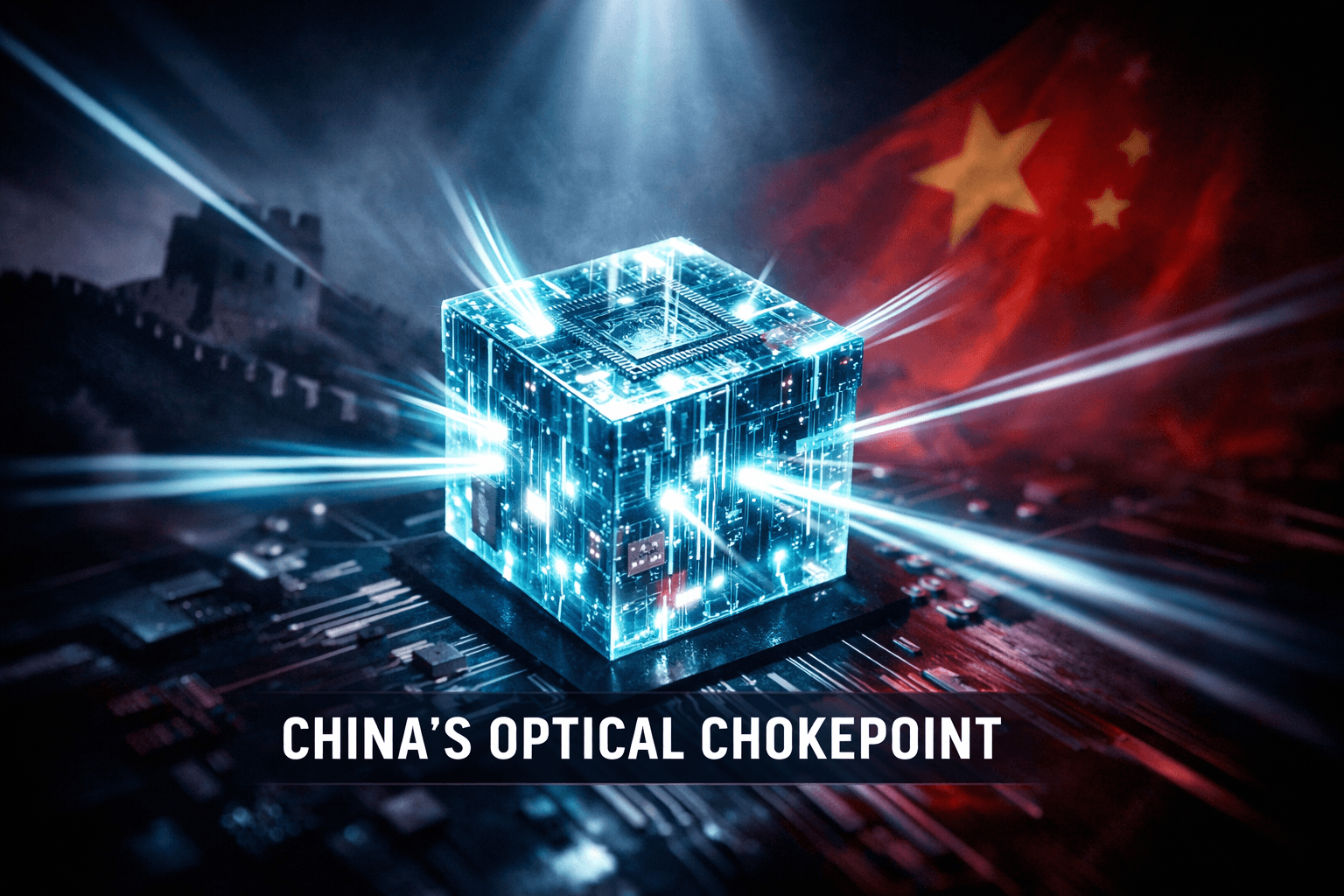
Optical stocks face a China-controlled chokepoint that could pressure margins and returns across the sector, and many investors may be underestimating that risk.
MarketWatch reports Beijing controls a key chokepoint that Washington’s export curbs alone can’t address, creating persistent supply and policy uncertainty for optical-component makers and their customers.
What's Happening
The core issue is concentration: critical optical components and production capacity sit under Beijing’s influence, leaving U.S. investors and companies exposed to policy decisions outside their control. That dynamic is different than a one-off supply disruption because it reflects structural control.
- 0.9% — an example short-term intraday move size investors are seeing in some names, underscoring volatility potential in the sector.
- 0.1% — a reminder that some stocks within the optical group have only marginal moves amid broader headlines, creating dispersion.
- 6.1% — illustrative of larger swings seen in certain optical names when new policy or supply reports surface.
- 460 points — the Dow's drop on Aug. 6 highlighted market sensitivity to policy and risk-off headlines that can amplify sector volatility.
For investors that track fundamentals, these market moves can outpace changes to revenue or margins, but they reflect real exposure to Chinese control of inputs and chokepoints described by MarketWatch.
Why It Matters For Your Portfolio
Concentration risk at the supplier or regional level changes how you should size positions and evaluate sector exposure. If Beijing can influence availability or pricing of optical parts, earnings and capital expenditure plans for downstream firms could be affected.
Who should care: growth investors with exposure to AI, telecom, or data-center supply chains that rely on optical components; value investors holding cyclicals tied to these inputs; and traders who may look to profit from heightened volatility. Analysts note the policy-driven nature of this risk means fundamentals alone may not fully explain price action in $AAPL, $NVDA or other related names.
Risks To Consider
- Geopolitical control: Beijing's control of a chokepoint could restrict supply or prioritize domestic firms, pressuring margins and delivery timelines for foreign customers.
- Policy limits: U.S. export curbs may not mitigate the core dependency if manufacturing and critical inputs remain concentrated in China, limiting policy effectiveness.
- Market volatility and sentiment: headline-driven swings, illustrated by double-digit moves in some names and single-digit intraday shifts in others, can hurt timing and short-term positions.
- Operational risks: software updates, logistics, or regulatory actions (noted in recent market coverage) can trigger near-term shocks to the sector.
What To Watch Next
Investors should track both policy developments and concrete operational indicators that speak to supply resilience.
- Policy announcements from Beijing or Washington that reference export controls, industrial policy, or investment restrictions.
- Company-level updates on supply-chain diversification, capital spending to move capacity, or disclosed concentration of suppliers.
- Short-term market catalysts including software or infrastructure updates that can affect demand and logistics timing.
- Price action and volatility in the sector, using recent move ranges such as 0.1% to 6.1% as a reference for expected swings.
The Bottom Line
- Beijing's control of an optical supply chokepoint creates a persistent, policy-driven risk that many investors may be overlooking.
- Expect elevated volatility in optical-linked names; monitor company disclosures on supplier concentration and diversification plans.
- Focus on risk management: reduce sizing for large, concentrated bets and stress-test portfolios for supply and policy shocks.
- Watch policy headlines and firm-level updates as the primary catalysts that will move prices in the near term.
- Use valuation and exposure checks before adding new positions, especially where revenue or margins could be disrupted by supply restrictions.
FAQ
Q: How immediate is the China-related risk for optical stocks?
A: The MarketWatch analysis frames this as a structural chokepoint, not a single short-term outage, so the risk is ongoing and tied to policy and supply concentration rather than a one-off event.
Q: What should I monitor to gauge whether the situation is improving?
A: Track company disclosures on supplier concentration, announcements about relocating or diversifying capacity, and any policy changes from Beijing or Washington that materially alter trade or investment flows.
Q: Can diversification within a portfolio mitigate this risk?
A: Diversification can reduce single-point exposure, but investors should also assess correlated risks across suppliers and regions since a chokepoint can propagate through multiple companies.