
 Alpha Breaking
Colorado Living-Donor Liver Transplant Benefits - Nov 20
Share this article
Spread the word on social media
The Story
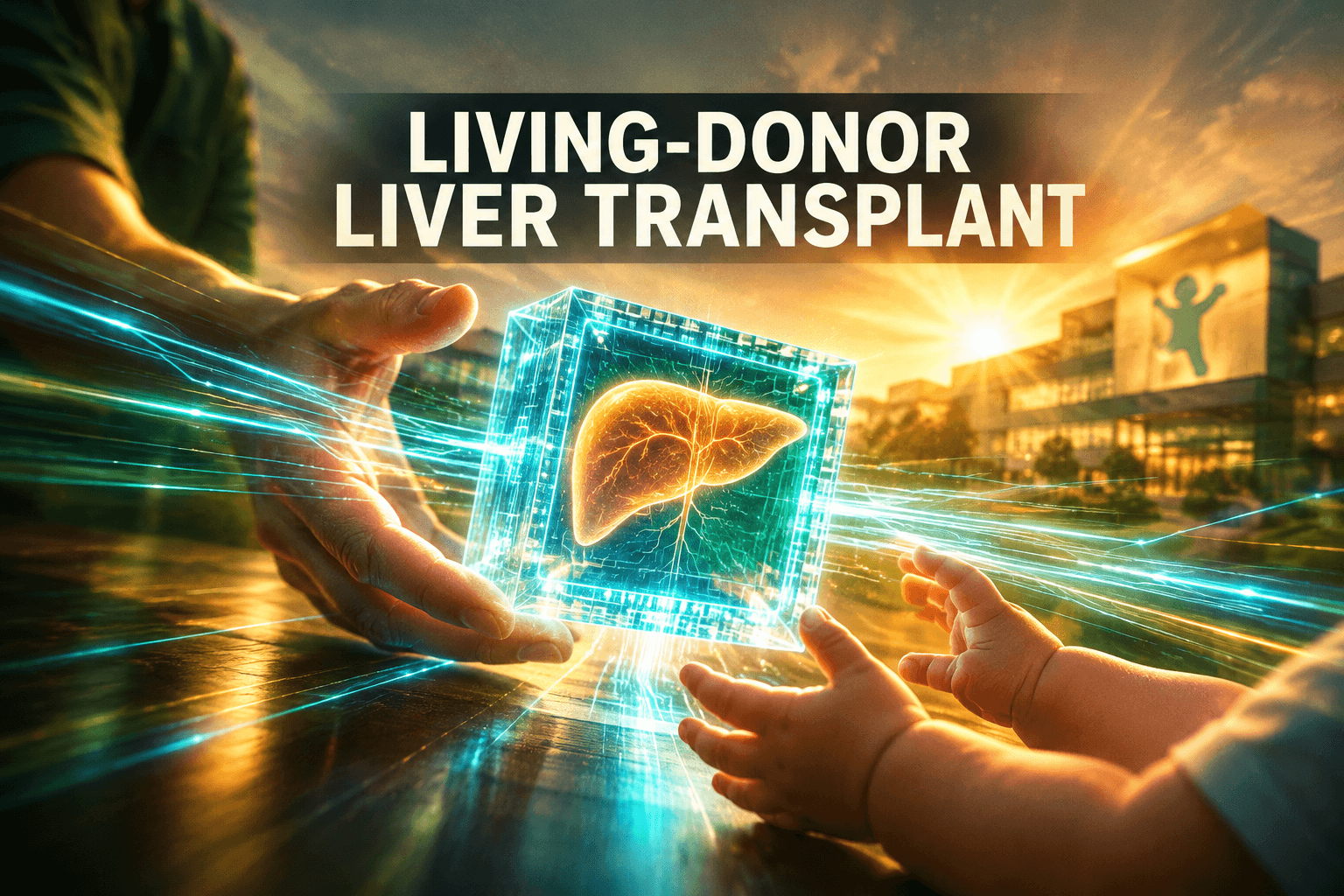
Children’s Hospital Colorado researchers report that infants with biliary atresia who receive a living-donor liver transplant may have lower overall healthcare costs than those waiting for a deceased-donor liver. The finding points to a potential economic benefit, but the available summary doesn’t provide a dollar amount or percentage of savings. This is research on transplant care, not a publicly traded company or a security called LDLT.
Why It Matters For Your Portfolio
- Researchers link living-donor transplantation with potentially lower costs tied to prolonged illness and hospital care. Without a reported savings figure, you can’t assess the size of the potential economic benefit.
- The research concerns infants diagnosed with biliary atresia, so the result may not apply to other patient groups, hospitals or health systems. The findings may also depend on study assumptions and U.S. healthcare costs.
- Living-donor transplantation uses a portion of a healthy donor’s liver; both the donor’s liver and the recipient’s graft can grow after surgery. The procedure still involves major surgery and medical risks for both donor and recipient.
- No direct publicly traded investment exposure or company-level revenue, valuation or share-price data is identified in the provided information. The findings therefore don’t establish a stock catalyst on their own.
The Trade
Healthcare investors and readers tracking transplant economics may find the results relevant, but the evidence is not a direct security signal. Further studies validating costs across transplant centers and patient groups are a key catalyst to watch; no timing is provided. Broader adoption could affect transplant-center activity and healthcare spending, but the scale of any impact remains uncertain.