
 Alpha Breaking
A Bigger-Than-Expected Win for Democrats - Oct 27
Share this article
Spread the word on social media
The Big Picture
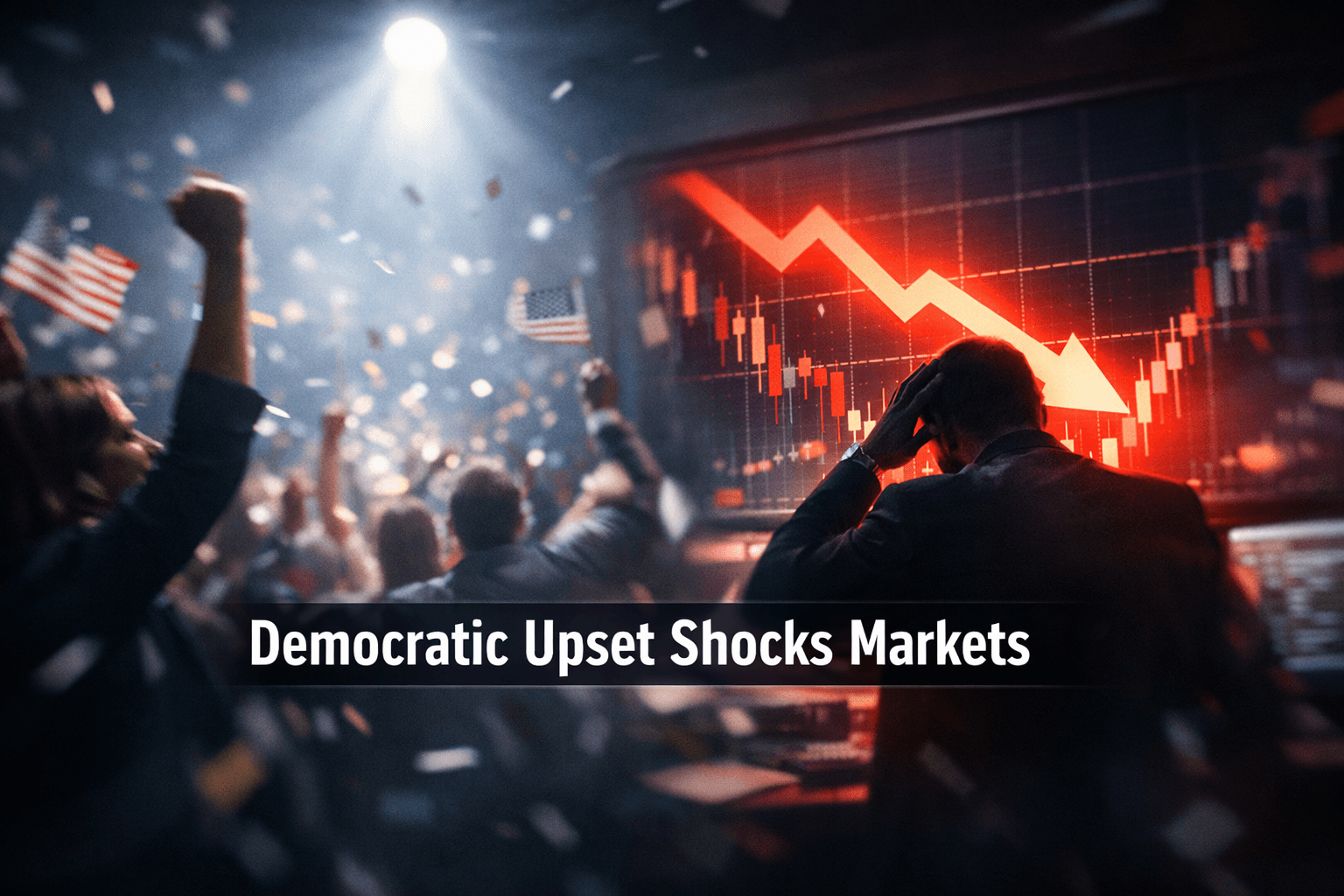
Strategists warn that a bigger-than-expected win for Democrats in the midterms could deliver short-lived weakness for stocks, a development that could influence portfolio positioning ahead of the 2026 midterm elections.
Markets have been pricing in a divided federal government, but strategists say the size of congressional majorities matters and could trigger temporary volatility if Democrats overperform expectations. Investors should treat this as a potential market shock to monitor rather than an automatic long-term regime change.
What's Happening
MarketWatch reports strategists view a larger-than-expected Democratic congressional victory as a catalyst for short-term market pullbacks. The story emphasizes that while a divided government is broadly expected, the magnitude of either party's majority could change policy risk and market sentiment.
- Oct 27, 2026: Coverage date for these strategist comments and market reaction context.
- 2026: The midterm election year in focus, where results could shift legislative dynamics and investor sentiment.
- One major Wall Street firm believes the correction could end after the 2026 midterm elections, indicating some firms see any weakness as transitory.
- Two parties: strategists note a divided federal government is expected, but the exact size of congressional majorities could materially affect market expectations.
Each of these points matters for investors because election outcomes change the odds of fiscal measures, regulation, and tax policy that influence corporate profits and risk premia. Strategists frame the likely impact as near-term weakness rather than prolonged downturn, which affects how tactical traders and longer-term investors respond.
Why It Matters For Your Portfolio
If strategists are right, a bigger-than-expected Democratic win could tighten risk appetites briefly and push equity prices lower for a short period. That dynamic could create entry opportunities for long-term investors but increase short-term risk for leveraged or short-duration exposures.
This matters differently depending on your goals. Growth investors may see temporary valuation pressure, value investors could find buying windows, and traders might face increased volatility to trade. Analysts note that one large Wall Street firm expects the correction to end after the 2026 midterms, suggesting some firms view the risk as temporary rather than structural.
Risks To Consider
- Policy uncertainty: A larger-than-expected majority could change expectations around spending, taxes, or regulation, introducing execution risk for affected sectors.
- Market sentiment shock: Short-term liquidity and volatility spikes could hurt leveraged positions and stop-loss-triggered selling.
- Timing risk: If weakness is short-lived, missing the recovery window could leave tactical sellers facing opportunity costs; conversely, assuming a quick rebound could backfire if policy surprises follow.
What To Watch Next
Investors should track the size of congressional majorities and strategist updates as returns are digested. Key near-term items to monitor are polling trends, final election results, and firm-level commentary on whether the observed weakness is proving temporary.
- Election results in the 2026 midterms and the final count of congressional seats, especially margins that determine legislative control.
- Post-election strategist and Wall Street firm notes on whether the correction has stabilized or continued, particularly the view that a correction could end after the 2026 midterms.
- Market volatility indicators and breadth measures, which will show whether weakness is broad-based or concentrated.
The Bottom Line
- Strategists warn a bigger-than-expected Democratic midterm win could trigger short-lived weakness for stocks, but firm-level views vary on duration.
- Expect temporary volatility tied to the size of congressional majorities rather than an automatic long-term selloff, according to coverage.
- One major Wall Street firm believes the correction could end after the 2026 midterm elections, signaling some expectation of recovery post-election.
- Monitor election margins, strategist updates, and volatility metrics before adjusting major positions; treat near-term moves as information rather than directives.
- Use weakness to reassess risk exposure and time horizons, and consider practical risk-management steps if you face short-term liquidity needs.
FAQ
Q: How long would the weakness likely last?
A: Strategists describe the weakness as short-lived, and at least one major Wall Street firm believes any correction could end after the 2026 midterm elections.
Q: Should I change my long-term holdings because of these strategist views?
A: The coverage frames this as a potential near-term shock tied to election outcomes rather than a structural market shift, so many investors may prefer to reassess risks rather than make blanket changes to long-term allocations.
Q: What immediate signals should I watch for post-election?
A: Watch the final size of congressional majorities, follow strategist and firm commentary on market reactions, and monitor volatility and breadth indicators to see if weakness is broad or contained.