
 Alpha Breaking
10-Year Treasury Yield Hit a 19-Year High - Sep 25
Share this article
Spread the word on social media
The Big Picture
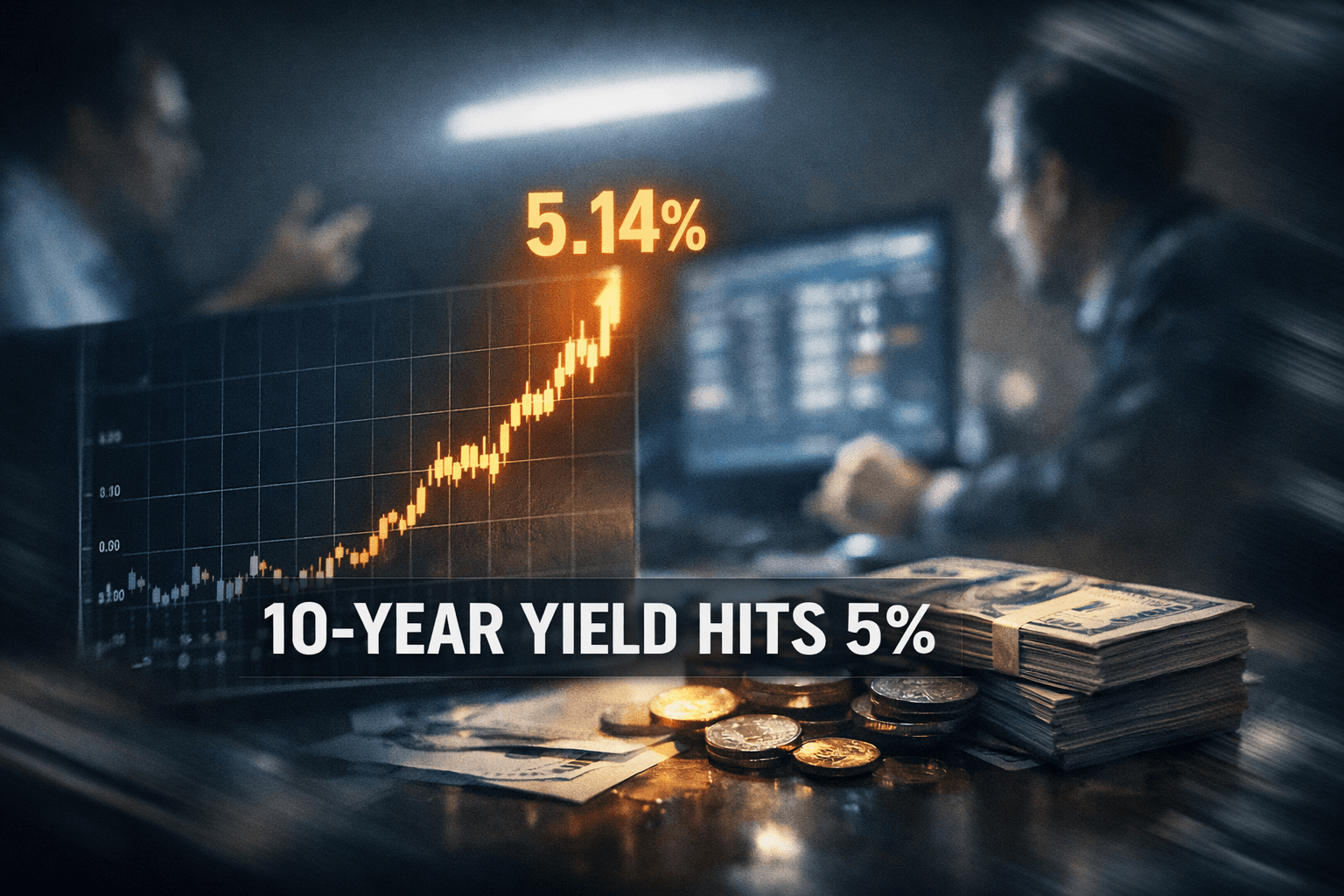
The 10-year Treasury yield climbed to roughly 5.14%, its highest level since 2007, and topped the 5% mark that matters for income and borrowing costs. That rise is reshaping fixed-income returns and borrowing economics, and it should make you rethink how bonds fit in your portfolio.
The immediate implication is straightforward: higher yields mean new bonds will pay more income, but existing bond prices can fall, creating potential short-term losses for holders while offering better entry yields for buyers willing to tolerate volatility.
What's Happening
Markets pushed the benchmark 10-year yield to levels not seen in 19 years, changing the income calculus for investors who rely on fixed income. Here are the key data points and what they mean.
- 10-year yield at about 5.14%, the level reported in market coverage.
- Yields have moved above 5%, a psychological and financial threshold for many bond buyers.
- This marks the highest 10-year yield since 2007, a span of roughly 19 years.
- Higher yields translate to higher coupon income on new issues but lower market prices for existing bonds purchased when yields were lower.
Each number ties directly to investor decisions. The 5.14% reading tells you what new cash can earn. The move above 5% signals a regime where income is meaningfully higher than recent years. The 2007 reference highlights the scale of change versus the post-Great Financial Crisis environment.
Why It Matters For Your Portfolio
Rising 10-year yields affect borrowing costs, equity valuations and bond portfolio returns. If you hold bonds bought when yields were lower, you may be sitting on unrealized losses. If you have cash, the higher yield environment offers a chance to lock in stronger income. Income-focused investors, retirees and laddering strategies will watch this closely, while growth investors may feel pressure if higher yields cool stock valuations.
Analysts note the tradeoff: higher yields increase expected income but also increase volatility. That balance will determine whether fixed income is an allocation that fits your time horizon and risk tolerance.
Risks To Consider
- Price risk for existing bond holders, because yields and prices move inversely and higher yields generally mean lower market prices for older bonds.
- Macro and market spillovers, including muted equity index performance tied to rising yields and higher oil prices, a dynamic cited in market reports about recent market moves 15 hours ago.
- Policy and economic surprises, since further moves in inflation readings or central bank communications could push yields even higher or reverse direction quickly.
The bear case is that yields keep rising, deepening losses for short-duration investors and pressuring interest-rate-sensitive sectors in equities.
What To Watch Next
Key items to monitor will determine whether this level of yields is a temporary spike or a sustained regime shift.
- Near-term inflation readings and employment data, which tend to move long-term rates.
- Central bank commentary and hints about policy path, since guidance can change market expectations for rates.
- Supply dynamics in Treasury auctions and issuance, because higher issuance can put upward pressure on yields.
- Market reaction in equities and corporate debt as yields settle, which will show whether risk assets adjust to the new rate environment.
The Bottom Line
- Yields near 5.14% mark the highest 10-year level since 2007, offering higher income on new bonds but greater near-term price volatility for holders of older issues.
- If you need current income, the higher yield environment is materially better than recent years, but expect price swings if rates move further.
- Investors with short time horizons or who may need to sell soon face elevated risk from rising yields.
- Longer-term or income-focused investors who can tolerate interim volatility may find better entry yields, especially when reinvesting coupons.
- Watch inflation data, central bank comments and Treasury supply to decide if yields are peaking or rising further.
FAQ
Q: How does a 5.14% 10-year yield affect bond prices?
A: Higher yields mean lower prices for existing bonds because yields and prices move in opposite directions. The 5.14% level increases income on new issues but can produce unrealized losses for holders of older, lower-yield bonds.
Q: Is this a good time to buy bonds?
A: The data suggests higher starting yields can be attractive for income, but you must weigh that against possible near-term price volatility if yields rise further. Consider your time horizon and tolerance for interim losses before adding exposure.
Q: What market indicators should I monitor next?
A: Track inflation readings, central bank commentary and Treasury auction results, because those variables have the most direct influence on where long-term yields move from here.