The Big Picture
Heading into the long weekend, the utilities landscape is showing both momentum and caution, as private funding and deployment initiatives push renewable and distributed solutions forward while regulatory and resilience issues create fresh uncertainty. US markets were closed on Saturday, Sep 19, so the last trading session was Friday, Sep 18. This briefing summarizes overnight developments and sector signals you should track before markets reopen on Monday.
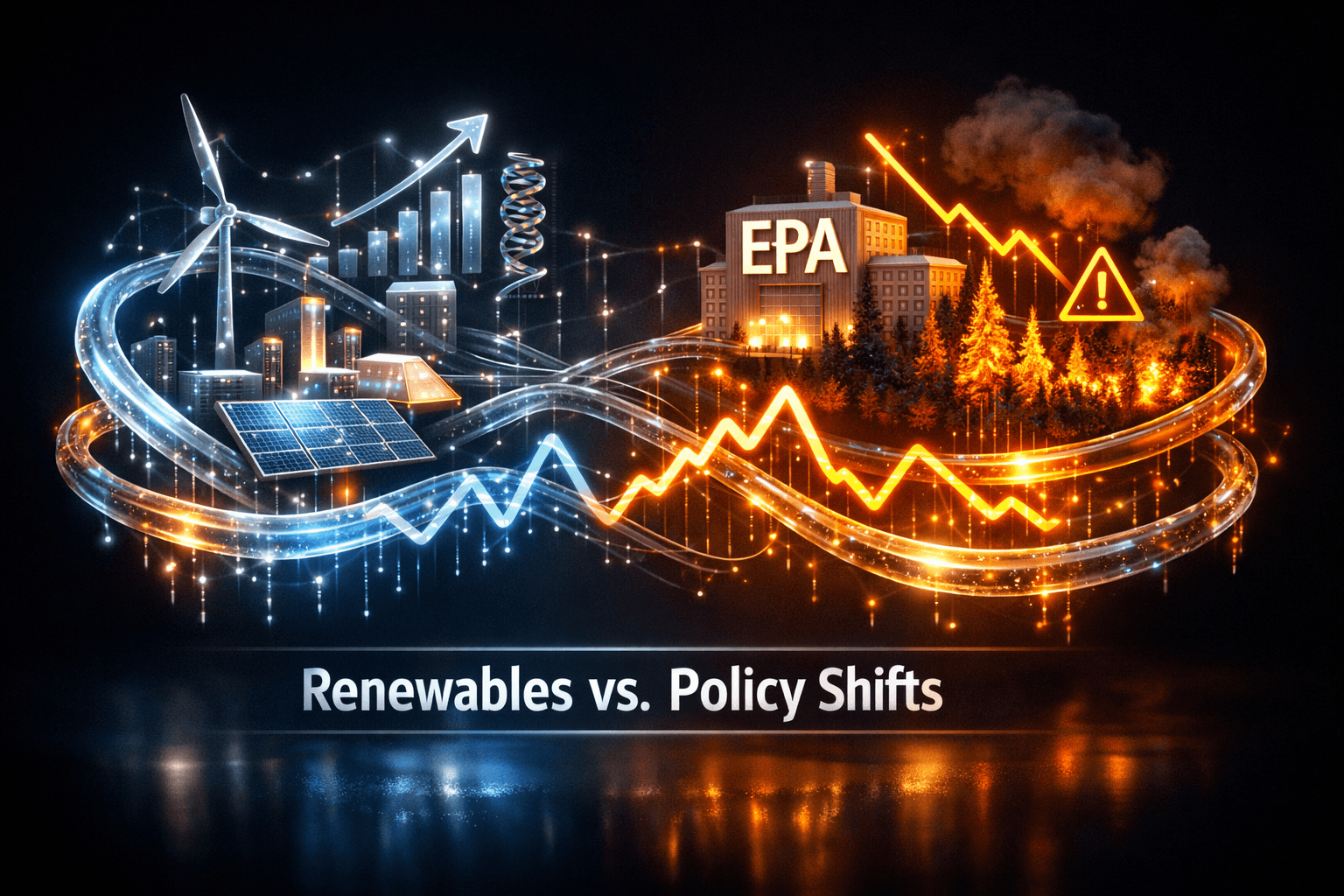
On the positive side, robotics, manufacturing moves, and new integration labs are accelerating solar, marine, and hydrogen deployment. On the other hand, the Biden-era power plant carbon limits are being rolled back by the EPA which raises questions about near-term policy support for clean generation. Where should you place your focus this week, and what could change the risk picture quickly?
Market Highlights
Below are the quick facts and data points from today’s sector headlines. Remember, US equity markets were closed on Sep 19 and the numbers below reflect reported developments rather than intraday price action.
- Startup funding: California startup Planted raised $31.8 million to scale autonomous solar construction for data centers and to expand its robot fleet, with a next-generation robot, Sage, due later this year.
- Manufacturing note: Texas records suggest OCI is bringing Elite Solar to Mission Solar Energy’s San Antonio site, which could boost domestic panel assembly capacity.
- Policy update: The EPA moved to repeal Biden-era carbon limits on power plants, a development covered in Renewable Energy World and discussed on a cleantech podcast, creating regulatory uncertainty for emissions-driven investments.
- Technology and integration: The ARIES platform lab was highlighted for de-risking marine energy hybrid systems, improving prospects for coastal microgrids and offshore power applications.
- Infrastructure needs: Reports flagged gaps in fast EV charging away from Australia’s coastal highways, especially in tourist regions such as Kingaroy, signaling demand for more distributed charging assets.
Key Developments
Planted Raises $31.8M, Aims to Automate Solar Construction
Planted’s $31.8 million raise is the biggest discrete funding item in today’s coverage. The company said funds will expand its robotic construction fleet and accelerate deployments for data centers, a high-demand segment for reliable on-site power. For you, that means investors are seeing more private capital flow into construction automation for renewables, which could help lower installation costs over time and shorten project timelines.
Policy Shift: EPA Repeal Stokes Uncertainty
Republican-led EPA action to repeal Biden-era power plant carbon limits was a central policy story. Renewable advocates warn this may slow some utility decarbonization plans while regulated generators reassess compliance and investment choices. How utilities and merchant developers respond will matter for project economics and demand for clean firming resources in the months ahead.
Resilience, Marine Energy, and Alternative Resources
Several technical and operational stories underscored the sector’s focus on resilience. The ARIES platform lab is working to de-risk marine energy hybrids for coastal microgrids, and a DTECH summit highlighted wildfire and weather-driven response needs. Meanwhile, POWER Magazine argued construction waste is an overlooked renewable resource that could be integrated into local energy strategies. Taken together, these items point to an industry broadening its toolset beyond solar and wind.
What to Watch
Here are the catalysts and risk items to follow before markets reopen on Monday. You’ll want to keep a close eye on policy timelines and deployment milestones, because those factors could shift expectations quickly.
- EPA rule timeline, litigation and state responses, because repeal or modification will affect forward-looking carbon compliance and capital planning for utilities nationwide.
- Planted’s product roadmap and Sage robot launch later this year, plus any pilot deployment announcements, which could indicate installation cost improvements for large-scale solar buyers.
- Mission Solar and OCI filings or local permitting updates, which could signal a meaningful increase in domestic panel manufacturing capacity.
- Rising wildfire risk metrics and utility mitigation reports following the DTECH summit discussions, since wildfire-season operational restrictions can affect reliability and capital allocation.
- EV charging rollouts in tourism corridors, especially inland regions of Australia, because charging availability will influence EV adoption patterns and distributed load growth.
- Hydrogen and fuel cell component wins, like the custom non-return valve, and lubrication best practices, because operational improvements can boost uptime for large assets and fuel cell fleets.
Bottom Line
- Mixed signals dominate the sector, with private capital and technical advances pushing renewable deployment while regulatory shifts raise policy risk.
- Watch policy developments from the EPA closely, legal challenges and state-level responses may change investment incentives quickly.
- Technology and supply chain moves, such as autonomous solar robotics and potential new panel manufacturing in Texas, could improve project economics over time.
- Operational resilience matters more than ever, especially for utilities in fire-prone regions and for microgrid or coastal deployments using marine energy hybrids.
- Keep a selective approach to opportunities, and monitor near-term catalysts like Planted’s robot launch and any Mission Solar facility announcements.
FAQ
Q: How will the EPA repeal affect renewable projects? A: The repeal introduces regulatory uncertainty that could delay some utility decarbonization plans but impacts will vary by state and by company depending on existing contracts and emissions targets.
Q: Is funding for solar robotics a sign of lower installation costs? A: Yes, greater automation funding such as Planted’s $31.8 million round suggests potential for lower labor and time costs, but commercial scale and deployment pace will determine actual savings.
Q: Should I expect more EV chargers in tourist and inland regions soon? A: Reports highlight gaps and growing demand, so you can expect targeted deployments where tourism and local governments prioritize charging, though rollout speed will depend on funding and permitting.