The Big Picture
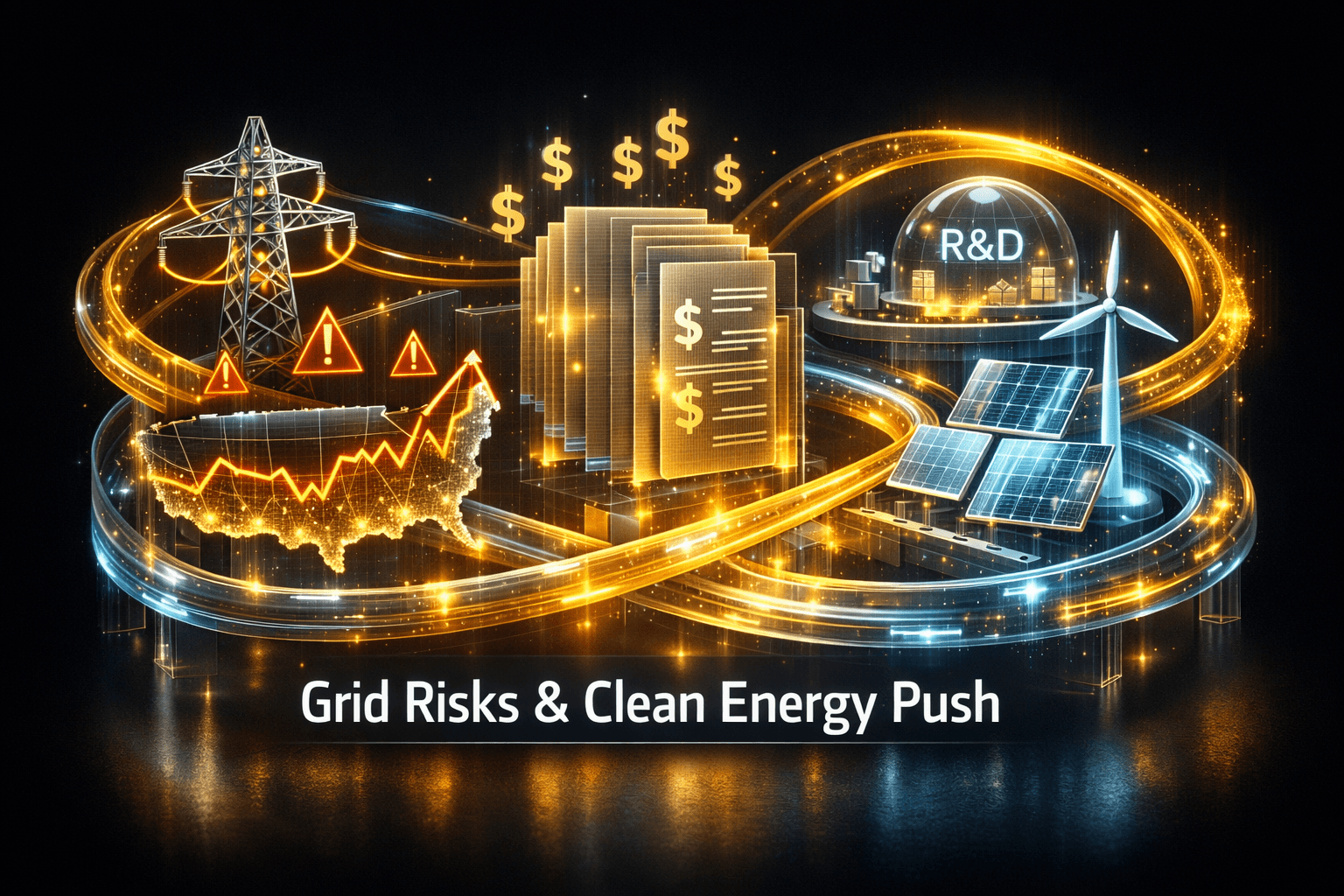
Overnight and in early trading today the utilities landscape shows mixed signals, with fresh clean-energy projects and federal R&D funding offset by reliability and regulatory strains that could pressure existing generation. You’ll want to weigh progress on new technologies and corporate off-take deals against near-term grid stress and policy headwinds.
Why this matters to you as an investor is simple: generation and grid operators face both growth catalysts and new costs. That duality is shaping who wins from the energy transition and who may be vulnerable to rising compliance and interconnection demands.
Market Highlights
Here are the quick facts and numbers to start your day.
- Meta and Apex Clean Energy sign a 144 MW Texas solar PPA, with Meta receiving exclusive environmental attributes, underscoring continued corporate demand for renewables, according to Utility Dive.
- The U.S. DOE launches the Quantum Genesis Q Competition, a $215 million prize program to accelerate fault tolerant quantum computing, with fixed milestone awards up to $1.5 million, a move that could speed materials discovery for batteries and fusion, POWER Magazine reports.
- Grid and reliability warnings are rising: NERC is enforcing a Large Loads Action Plan and a hard 2026 interconnection deadline, while hydropower faces more than 12 GW of relicensing needs over the next decade, per POWER Magazine and Power Engineering.
- Project and industry advances include PacWave, America’s first pre permitted, grid connected open ocean wave energy proving ground on the Oregon coast, and a DOE backed Geothermal Center of Excellence on the NLR campus, as CleanTechnica details.
- Legal and policy developments: First Solar, $FSLR, shifts tactics in its patent campaign by withdrawing a Section 337 complaint while maintaining other suits, and federal political rhetoric is creating EV policy headwinds that states are trying to counter, Utility Dive notes.
Key Developments
Grid Reliability and Interconnection Pressure
NERC’s Large Loads Action Plan and a new registered entity class aim to tackle the surge of data centers and other large customers seeking direct transmission connections. NERC is pushing a hard 2026 deadline to bring practices in line with system needs, and industry participants are already feeling the squeeze.
At the same time, winter storms Fern and Gianna highlighted fuel and supply chain strains. You should ask, how resilient is your local grid to a prolonged cold snap? For utilities and investors, that question is turning into a planning imperative.
Renewables Buildout and Corporate Offtake
Corporate demand remains a clear growth engine for renewables. Meta’s 144 MW PPA with Apex Clean Energy confirms large buyers still lock long term supply and environmental attributes. These deals support project economics and can benefit developers and grid planners.
Meanwhile, hydropower relicensing and First Solar’s legal maneuvering add nuance. Hydropower faces rising regulatory requirements that could raise costs or reduce output, while $FSLR changing fronts in its patent war reduces one legal push yet keeps other claims alive. Data suggests investors will need to be selective within the renewable manufacturing and project developer universe.
Technology and R&D Momentum
Federal R&D actions are notable. The DOE’s $215 million Quantum Genesis Q Competition aims to accelerate quantum hardware that could shorten materials discovery cycles for batteries and fusion. Coupled with a new DOE Geothermal Center of Excellence and the opening of PacWave for wave energy testing, momentum is building in earlier stage tech that could lower costs over the medium term.
These moves are a step in the right direction for long run innovation, though commercial impact will take time and further investment.
What to Watch
Here are the catalysts and risks that could move the sector in coming weeks.
- Regulatory deadlines: Monitor NERC guidance and implementation around the 2026 interconnection rules. Compliance costs and grid upgrades could pressure utilities and developers.
- Hydropower relicensing: Track specific license timelines and cost estimates for more than 12 GW of capacity facing relicensing over the next decade. Reduced hydro output would raise system flexibility needs.
- Corporate PPAs and project pipeline: Watch large buyer announcements and project permitting. Deals like the 144 MW Meta PPA support renewables buildout and RECs markets.
- Federal R&D programs: Follow awardees from the Quantum Genesis competition and development milestones at the Geothermal Center and PacWave. Technology breakthroughs could reshape materials and generation economics.
- Policy and EV adoption: Federal rhetoric is slowing nationwide EV policy, leading states to act. Can state programs offset federal headwinds and keep demand for charging infrastructure growing?
Bottom Line
- Neutral picture today, with growth catalysts in corporate PPAs and federal R&D offset by grid reliability and regulatory cost risks.
- You should watch NERC’s 2026 implementation and hydropower relicensing closely, since both could materially affect supply and operating costs.
- Corporate offtake and new proving grounds like PacWave and DOE centers boost long run renewables and technology prospects.
- Policy headwinds on EVs and ongoing legal fights in solar manufacturing add near term uncertainty for demand and margins.
- Analysts note selectivity will matter, as data suggests winners will be those that manage regulatory risk and capitalize on corporate demand.
FAQ Section
Q: How will NERC’s 2026 deadline affect utilities? A: It raises costs and timelines for interconnection and large load integration, requiring upgrades and clearer planning to avoid delays.
Q: Will corporate PPAs like Meta’s meaningfully boost renewable development? A: Yes, large PPAs improve project bankability and can accelerate buildout, but they do not eliminate permitting and transmission hurdles.
Q: Does federal R&D funding translate into near term investment opportunities? A: Federal funding supports innovation that can lower costs over time, though commercial impacts are likely medium term and uneven across technologies.