The Big Picture
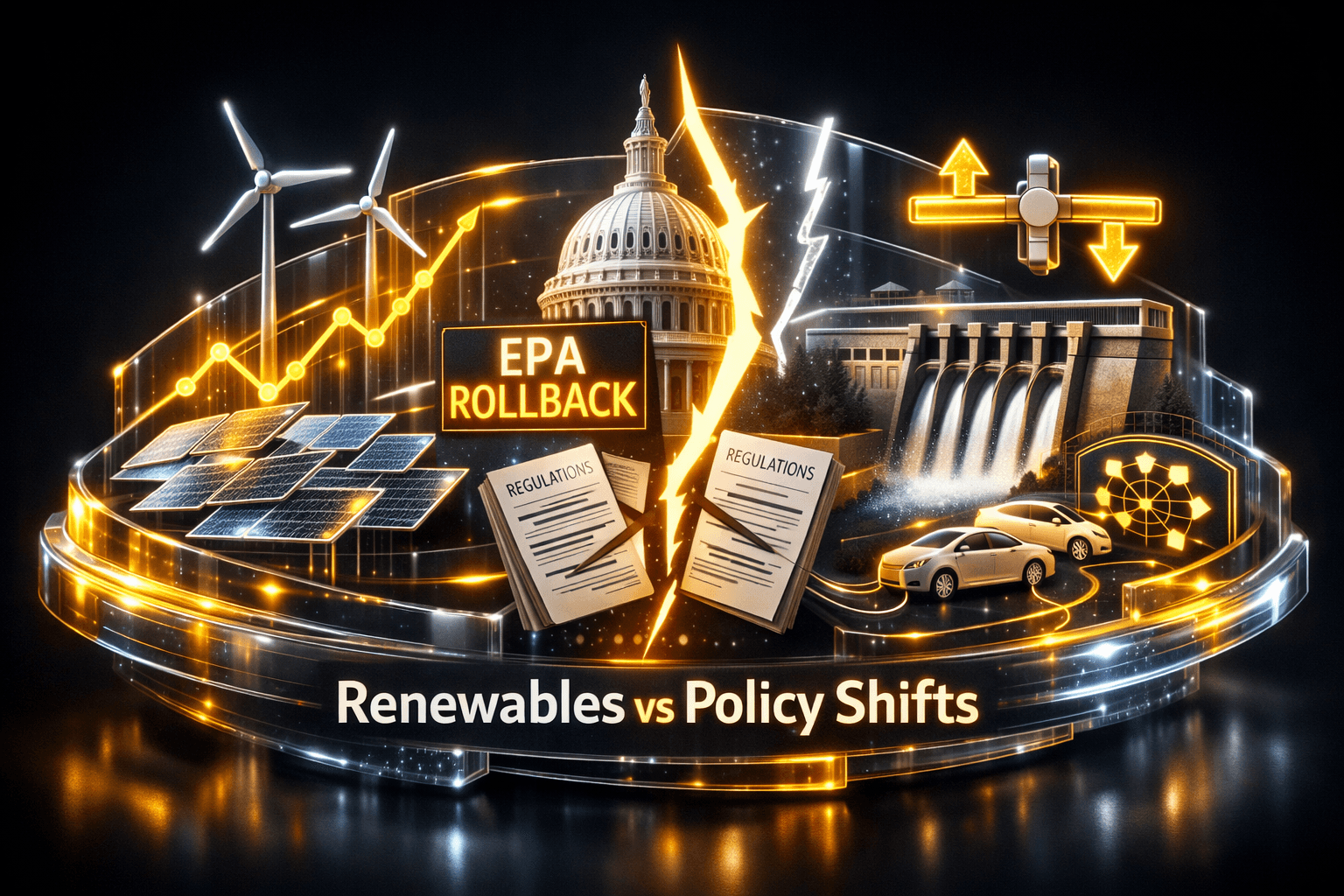
The EPA’s reported move to repeal Biden-era power plant carbon standards is the most consequential overnight development for utilities. That regulatory shift could reshape investment incentives for the entire sector even as renewable buildouts and grid modernization projects keep accelerating.
You’ll want to weigh both sides of that ledger this morning. On one hand, utilities and project developers are expanding hydro, wind, solar and vehicle-to-grid capabilities. On the other hand, federal rule changes raise uncertainty about long-term demand for emissions control and carbon management technologies.
Market Highlights
Key developments surfaced overnight and in pre-market updates. No comprehensive sector price moves were reported in the news wire, so track individual tickers in real time for trading signals.
- EPA policy: Reports say the EPA is poised to scrap federal carbon standards for coal and gas plants, a major regulatory change that could alter long-term planning for utilities and generators.
- Hydro modernization: GE Vernova and SPIC Brasil completed modernization work on Unit 3 at the São Simão hydro plant, a tangible sign of investment in long-life renewable assets, reported by Renewable Energy World. Company reference: $GEV.
- State renewable progress: California supplied more than 56% of electricity demand from wind, water and solar in 2026, highlighting rising clean energy penetration and grid integration challenges.
- Grid innovation: UL Solutions launched a vehicle-to-grid certification program aimed at accelerating V2G devices and standards, an industry infrastructure play that utilities may lean on for flexibility. Company reference: $UL.
- M&A and regulatory scrutiny: Constellation Energy agreed to buy a 609-MW Rhode Island gas plant from Shell, expanding its ISO New England footprint. The transaction and related deals merit regulator attention. Company references: $CEG, $SHEL.
- Deal questions: New Mexico’s DOJ is probing issues tied to TXNM and a related Blackstone transaction, underscoring state-level oversight of utility ownership changes. Company reference: $BX.
Key Developments
EPA poised to roll back power-plant emissions rules
The EPA is reportedly set to repeal greenhouse gas limits that would have required carbon capture at some coal and gas plants in the 2030s. Analysts and city leaders warn the move could undercut local climate goals and increase health and infrastructure risks.
What does this mean for you, the investor? Expect heightened policy volatility. You’ll see states and cities push back or accelerate local rules, which could lead to a patchwork regulatory environment and diverging outcomes across regions.
Renewables and hydro capacity are expanding
On the project front, GE Vernova and SPIC Brasil completed a modernization phase at the São Simão hydroelectric plant, which helps extend plant life and maintain dispatchable renewable capacity. Separately, DOE lab research estimates non-powered U.S. dams could add about 15.2 terawatt-hours of annual generation, a signal that untapped hydro could be a steady source of low-carbon supply.
Those developments matter because they show utilities and developers are still investing in large-scale, reliable renewables even as federal policy shifts. Can grid-scale hydro and untapped resources fill the gap left by weaker federal rules?
Grid-edge tech and M&A reshape operational playbooks
UL’s new V2G certification program aims to standardize vehicle-to-grid equipment, which could make aggregated EV fleets a manageable grid resource. In Australia, JET Charge is accelerating heavy fleet electrification, highlighting global demand for V2G and fleet-as-resource models.
Meanwhile, Constellation’s purchase of a 609-MW gas plant from Shell and Blackstone-related scrutiny of a TXNM deal show that M&A and asset reallocation are ongoing. Regulators remain active and regional outcomes will matter for returns and rates.
What to Watch
Watch the EPA timeline and legal filings closely. Federal rule changes often trigger state actions, litigation and utility regulatory filings, and you’ll want to monitor responses from state public utility commissions.
Follow the rollouts of V2G certification and pilot programs. Certification can accelerate adoption, and UF and utility pilots will reveal whether EVs can reliably supply capacity during peak hours.
Track specific company milestones. Monitor closing details and regulatory approvals for the Constellation purchase of the Rhode Island plant, progress updates from GE Vernova on hydro modernization work, and any enforcement or information requests tied to the Blackstone-TXNM matter.
Consider grid reliability signals and capacity markets. With renewables growing but policy uncertain, capacity needs and wholesale power prices could become more volatile in some regions.
Bottom Line
- Federal policy change raises uncertainty, but renewables and grid modernization investments continue to advance.
- Hydro upgrades and the potential to develop non-powered dams add dispatchable low-carbon capacity, which could help reliability under shifting rules.
- V2G certification is a practical step toward making EVs a grid resource, and you should watch pilots and standards adoption.
- M&A and state-level scrutiny are active themes, so regulatory outcomes will affect valuations and utility strategies.
- Analysts note this is a mixed bag for the sector, so a selective, region-aware approach is likely to be important for monitoring risk and opportunity.
FAQ Section
Q: How will the EPA repeal affect utility investments? A: Repeal increases policy uncertainty, which may slow long-term bets on carbon capture and shift investment toward state-driven clean-energy programs and flexible resources.
Q: Can vehicle-to-grid technology reduce peak stress on the system? A: Yes, certification and pilots suggest V2G can provide dispatchable flexibility, but broad impact depends on standards adoption and compensation structures.
Q: Are hydro upgrades a reliable way to increase renewable supply? A: Modernizing existing hydro plants and adding generation at non-powered dams can provide steady, low-carbon capacity and firming for intermittent renewables.
Analysts note this briefing is informational. It does not recommend trading any specific securities. Data and developments suggest the sector is at a crossroads between policy shifts and continued investment in clean energy and grid innovation.