The Big Picture
Renewables and storage are taking another step from niche solution to mainstream grid insurance, and corporate moves are following suit. As you evaluate the sector this long weekend, consider that operational wins and strategic deals are building a clearer case for investment-grade stability and long-term demand for clean power solutions.
Markets were closed Saturday. Headlines from Friday and the weekend set positioning heading into the next U.S. trading day on Tuesday, September 8. The tone is constructive, but policy and project-level politics still require attention.
Market Highlights
Key facts and figures from the week's biggest Utilities stories, summarized for quick reading.
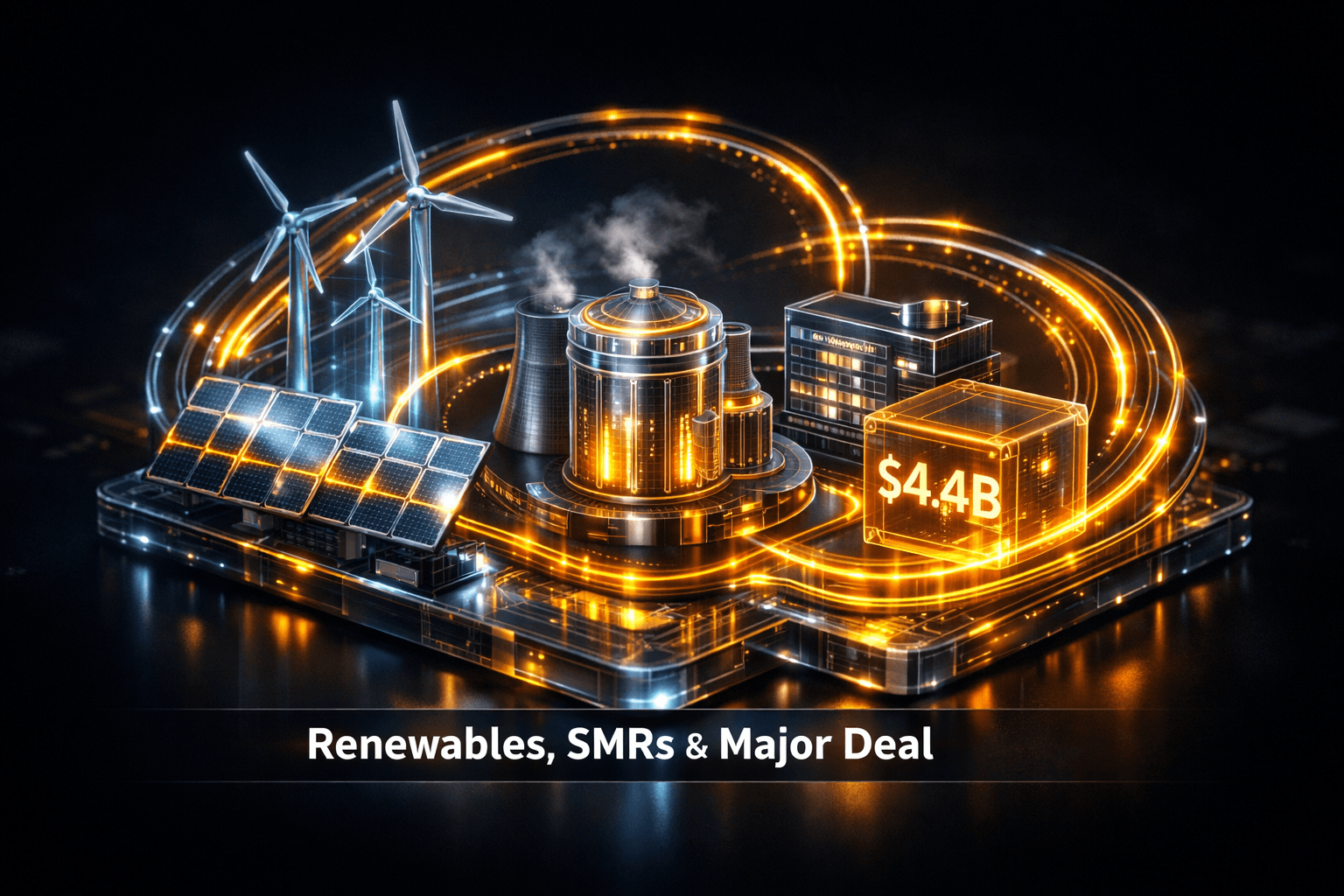
- Flex to acquire EPC Power for $4.4 billion, folding the inverter brand into its Cloud and Power Infrastructure segment, with a planned spin-off of CPI in Q1 2027, transaction expected to close Q4 2026 ($FLEX).
- RWE reached a $1.2 billion settlement tied to offshore wind lease cancellations under the Trump administration settlement, drawing scrutiny and political fallout for the sector ($RWE).
- CleanTechnica reports that renewable generation plus storage helped solve major reliability issues in Texas during extreme heat, demonstrating real world capacity relief and resilience benefits.
- Ball State University research finds no statistically significant negative effect of utility-scale solar or wind on nearby residential property values, easing a common community opposition point for project developers.
- Utilities are actively studying small modular reactors for reliability and resilience, with hyperscalers and defense customers flagged as early demand drivers, while AI planning pilots aim to speed integration and forecasting.
Key Developments
Renewables and storage proving operational value
CleanTechnica reported that renewable energy paired with storage alleviated grid stress in Texas during extreme heat, a concrete example of the resource mix reducing reliability risk. That kind of performance helps utilities and regulators justify more storage procurement and grid investment, and it strengthens the narrative that clean resources can deliver capacity when needed.
Flex buys EPC Power, signaling supply-chain consolidation
Flex announced a $4.4 billion deal to buy inverter brand EPC Power and fold it into a segment it plans to spin into a public company. For you that matters because inverter supply and integration are core to solar and storage economics. The transaction suggests private and public buyers see value in vertically integrating power electronics as deployment accelerates.
SMRs, AI, and incremental fixes for reliability
Utilities are exploring small modular reactors for reliability needs as hyperscalers and mission critical customers express demand, according to Utility Dive. At the same time, Grid operators and vendors discussed operationalizing AI at industry conferences. Those parallel tracks show the sector is planning both near term and long term fixes. Practical measures like gas turbine inlet fogging to recover megawatts during heat events also point to a layered approach to capacity and revenue protection.
Politics, property values, and project headwinds
Not all news is unambiguously positive. The RWE offshore wind lease settlement, which involved a $1.2 billion payment and forced lease abandonments, underscores political risk for large wind projects. On the other hand, Ball State research finding no negative residential property impact for utility-scale solar or wind may blunt local opposition and reduce siting friction going forward.
What to Watch
Expect the coming days to focus on a few concrete catalysts that could change the narrative for utilities and clean energy suppliers.
- Regulatory and legal updates tied to offshore wind cancellations, including whether additional settlements or policy clarifications emerge. How will developers and financiers respond?
- Flex integration progress and the planned CPI spin-off timeline, which could shift supply chain dynamics in Q4 2026 and Q1 2027 for inverter and EPC supply.
- Near-term reliability signals, including heat-driven demand spikes and any follow-up reports on storage performance in Texas, which will influence procurement decisions at the utility level.
- Progress on small modular reactor demonstrations and cost-recovery frameworks at state regulators, which will determine whether SMRs remain prospective or practical for utilities you follow.
- Deployments of AI planning tools and whether pilots deliver measurable savings or faster interconnection outcomes, which could materially lower project execution risk.
Bottom Line
- Renewables plus storage are demonstrating real reliability value, shifting the narrative from intermittency to capacity support.
- Strategic M&A in power electronics, highlighted by Flex's $4.4 billion deal, shows upstream consolidation and vertical integration are accelerating.
- SMRs and AI are emerging as medium to long term reliability levers, but siting and cost recovery remain key hurdles to watch.
- Political and legal risks, especially around offshore wind, can still change project economics quickly, so monitor regulatory developments closely.
- Research that eases local opposition, such as Ball State's property value findings, could remove barriers and unlock more projects in the near term.
FAQ Section
Q: How did renewables perform during recent extreme heat events? A: Data and reporting indicate renewable energy paired with storage helped resolve grid reliability issues in Texas during extreme heat, providing dispatched capacity and reducing stress.
Q: What does the Flex acquisition mean for the solar supply chain? A: The $4.4 billion purchase of EPC Power positions Flex to consolidate inverter capabilities and could affect availability and integration timelines for large solar and storage projects.
Q: Are small modular reactors a near-term solution for utilities? A: Utilities see SMRs as a potential reliability tool, but siting, permitting, and cost recovery need to be resolved before wide adoption occurs.
Analysts note these developments suggest momentum in the utilities transition to cleaner, more resilient resources, but you should keep an eye on policy risks and project-level execution as markets reopen on Tuesday September 8. This article is informational and not personalized investment advice.