The Big Picture
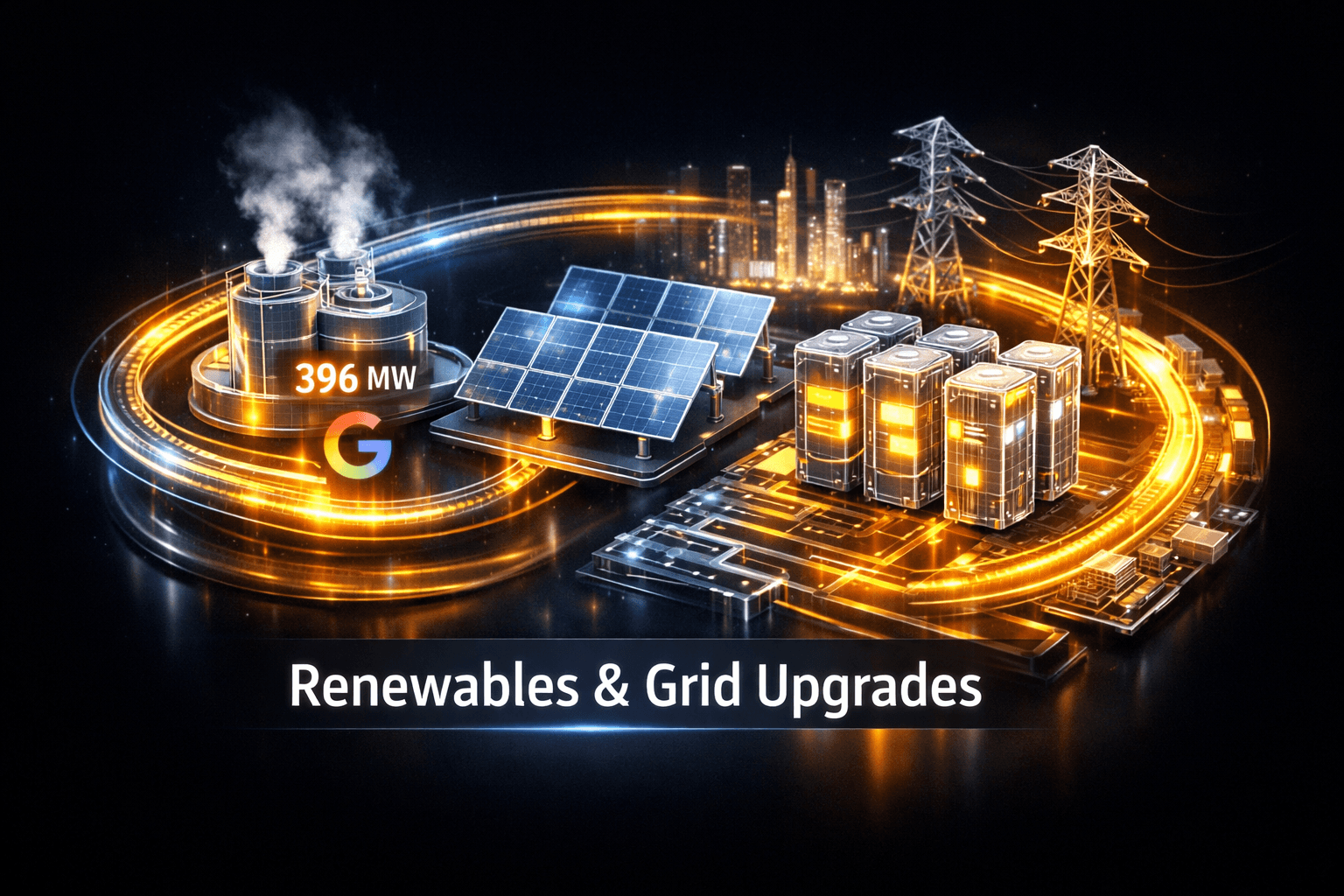
The headline overnight is a major corporate vote of confidence in clean power. Fervo Energy struck a 396 megawatt geothermal power purchase agreement with Google for the Cape Station project in Utah, the largest geothermal PPA to date and a signal that corporations are buying firm renewable capacity at scale.
That deal sits alongside several other developments that matter for you as a utilities investor or watcher: project-enabling software for solar and storage, faster interconnection pilots, transmission studies showing big potential savings, and large capacity builds that mix gas and battery storage. Together these items point to continued capital flow into grid upgrades and dispatchable clean resources.
Market Highlights
Quick facts and the numbers you need this morning.
- Fervo Energy and Google agreed a 396 MW geothermal PPA for Cape Station in Utah, expected online by 2028.
- One Nuclear Energy executed a binding LOI for Project Cayman, a 2.88 GW gas-fired plant plus a 700 MW / 2.88 GWh battery energy storage system sited with a data center campus in Louisiana.
- China's CO2 emissions fell 1% in Q2 2026, driven in part by a 9% drop in oil use and a 16% decline in transport oil consumption amid Strait of Hormuz disruptions.
- $PCG reports rising interest in its Flex Connect interconnection pilot that aims to let large distribution-connected loads energize in months rather than years.
- Project tools launched: Glint Solar's land screening searches a whole U.S. state in minutes and PVFARM pushed its commercial RE PILOT platform for solar plus storage optimization.
- A transmission study found that interregional expansion in the Eastern Interconnection could generate billions in retail rate savings, especially across PJM.
Key Developments
Fervo and Google, a milestone geothermal PPA
The 396 MW PPA with Google marks the largest geothermal corporate offtake on record. Firm, baseload renewable contracts like this help developers secure financing and move projects from planning to construction. For grids facing summer peaks and energy security concerns, geothermal provides a steady complement to variable solar and wind.
Big capacity builds, storage paired with thermal plants
One Nuclear's LOI for a 2.88 GW gas plant combined with a 700 MW / 2.88 GWh BESS shows how new projects pair dispatchable generation with storage to meet data center demand and reliability needs. You should note that this trend means developers are hedging operational risk while meeting immediate capacity needs.
Project tools, interconnection fixes and transmission wins
Glint Solar and PVFARM rolled out software that shrinks early-stage siting and configuration time, which can lower development risk and shorten pipelines. That matters when queue times are long and permitting is complex.
At the same time $PCG's Flex Connect pilot and a study on Eastern Interconnection transmission expansion point to system-level fixes that could unlock capacity faster and reduce consumer bills. Faster interconnection and smarter siting could speed projects into construction and improve deliverability.
What to Watch
Expect several catalysts in the weeks ahead that could move project economics and utility planning.
- Project milestones and offtake announcements. Watch for construction starts or financing closes on Cape Station and similar large PPAs. Those moves indicate whether developers can convert corporate demand into built capacity.
- Interconnection and queue data. You should track how many projects join $PCG's Flex Connect pilot and whether timelines drop materially from years to months. Faster energization changes the economics for distributed and large behind-the-meter projects.
- Transmission decisions in PJM and Eastern Interconnection. Regulatory approvals or funding commitments could trigger portfolio rebalancing for utilities and developers and suggest where rate relief or reliability gains will show up.
- Policy shifts on methane and emissions. Stronger methane controls or greenhouse gas rules would favor clean energy and emissions-mitigation services. How will utilities adapt procurement plans if tighter rules land?
- Data center demand and capacity agreements. Large consumers still need firm power. Will they lean toward geothermal and storage, or keep leaning on gas plus batteries as a bridge?
What are the risks you need to monitor? Permitting slowdowns, supply chain pressures for transformers and inverters, and possible regulatory pushback against large thermal builds could all slow deployment. Are financing conditions stable enough to keep project pipelines moving?
Bottom Line
- Corporate procurement is driving new firm renewable projects, shown by the 396 MW geothermal PPA with Google. Analysts note corporate demand is reshaping offtake markets.
- Software and planning tools from Glint and PVFARM are reducing early-stage development risk, which can lower costs and speed project timelines.
- Grid fixes matter. PG&E's Flex Connect pilot and transmission studies suggest there are practical ways to reduce interconnection lead times and lower retail rates.
- Expect a mixed build environment, with some large gas plants paired with large BESS while baseload renewables like geothermal move forward.
- Data suggests momentum for renewables and storage, but permit and interconnection bottlenecks remain key watch points for you.
FAQ
Q: How does the Fervo Google PPA affect utility planning A: Large firm PPAs provide a template for financing baseload renewables and can shift utility procurement toward more firm clean resources.
Q: Will new software tools speed solar and storage development A: The tools reduce site screening and configuration time which lowers early-stage risk and can accelerate projects into permitting and construction.
Q: What does PG&E's Flex Connect pilot mean for interconnection queues A: The pilot aims to cut wait times from years to months for large distribution-connected loads which could materially improve project timelines and deliverability.