The Big Picture
Rooftop solar got the biggest headline today, as new tariffs and the phaseout of federal tax credits were described as a heavy blow to residential installs. At the same time, large-scale grid bottlenecks and transmission disputes are highlighting a structural need for network investment that could reshape where growth shows up in the utilities space.
You should care because these two forces pull in different directions: they squeeze installation-level margins and demand, yet they increase the importance and potential value of transmission, grid modernization, and long-duration clean resources. What will that mean for your exposure to installers, grid operators, and regional utilities?
Market Highlights
Trading in the utilities complex looked mixed as investors parsed policy and infrastructure signals. Here are the quick facts to scan before you dig deeper.
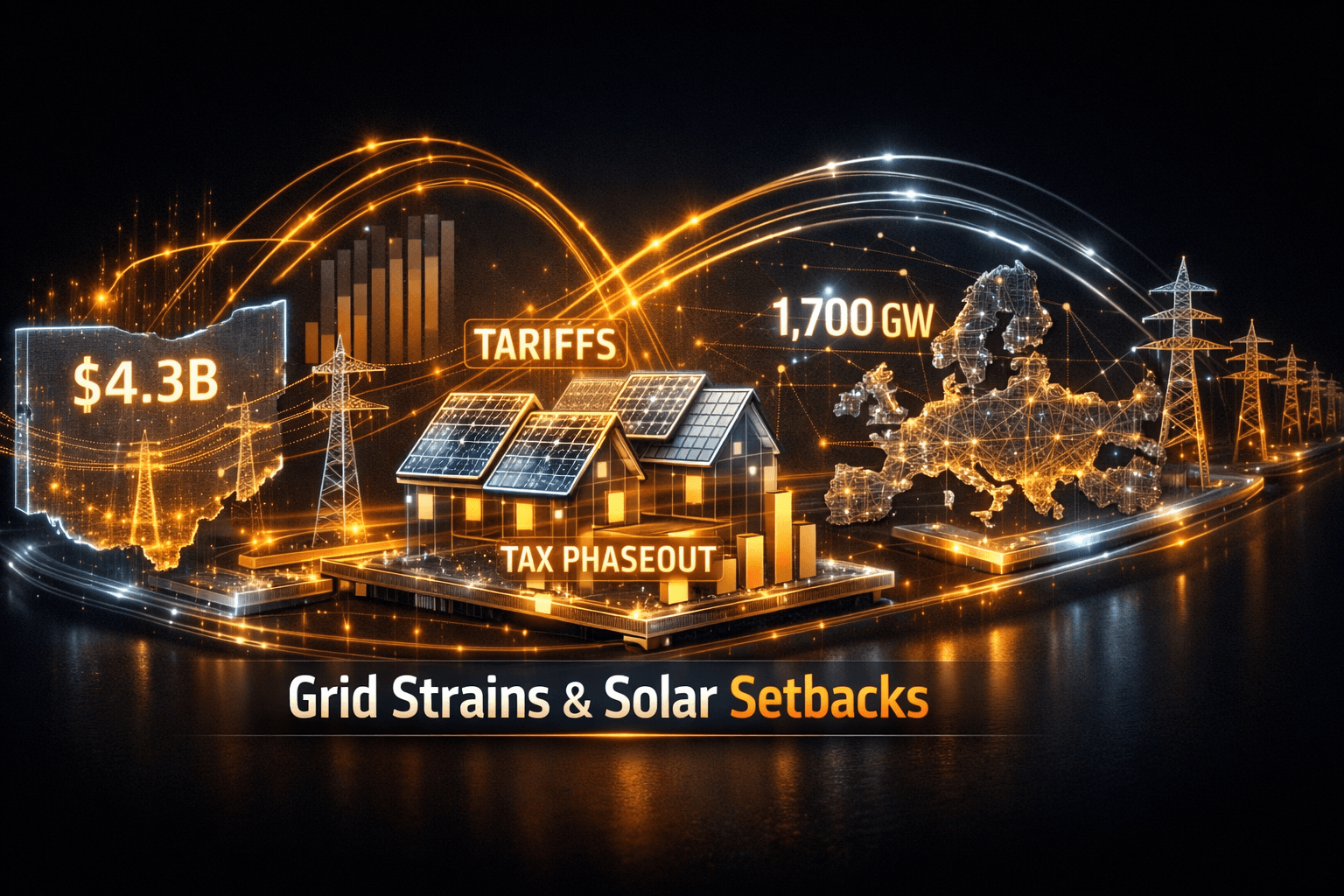
- Rooftop solar: Industry commentary cited new tariffs plus the phaseout of federal tax credits as major headwinds for residential solar volumes and margins.
- Ohio transmission: The Office of the Ohio Consumers' Counsel told FERC that FirstEnergy and American Electric Power among others have planned over $4.3 billion in local transmission projects without adequate oversight, reopening regulatory scrutiny for $FE and $AEP.
- European grid backlog: Analysis flagged a 1,700 GW connection backlog across Europe, a constraint that's reshaping project timelines and financing for renewables and network buildout.
- Consolidation: MARS Energy Group announced it will acquire Citadel Roofing & Solar, adding more than 1,000 employees and expanding its California footprint.
- Policy and tech: California’s AB 1738 passed unanimously and awaits the governor's signature to allow remote inspections for home solar projects, while a long-term enhanced geothermal test began in Utah to probe commercial viability.
Key Developments
Rooftop solar faces immediate policy shocks
Coverage of the rooftop solar sector emphasized two policy blows: newly implemented tariffs and the winding down of federal tax credits. Analysts and industry voices described the combination as a major demand and margin shock for residential installers. That means installers will have to manage tighter unit economics while looking for operational efficiencies or consolidation to protect margins.
Transmission scrutiny and the Ohio complaint
The Office of the Ohio Consumers' Counsel told FERC it has concerns about more than $4.3 billion in local transmission planned by utilities including FirstEnergy and American Electric Power. Regulators may step in or impose new oversight requirements, which could delay projects or shift cost allocation. For you, that raises the chance of near-term regulatory risk for regional utilities and could affect rate cases and cash flows.
Grid bottlenecks, cross-border value, and long-term demand
Two related narratives underlined that networks, not generators, are often the bottleneck. Europe’s 1,700 GW connection backlog highlights that grid access is a key constraint for new renewables. Separate analysis argued that cross-border interconnections and energy security are increasing the value of transmission capacity. Taken together, these stories suggest more investment and policy attention will flow to grid modernization and interconnect projects, even as rooftop installs stumble.
Installers, policy fixes, and clean tech pilots
Not all solar news was negative. M&A in the installer space continued with MARS Energy acquiring Citadel Roofing & Solar, which should help scale operations in Northern California. Meanwhile California’s AB 1738 would permit remote inspections for home energy projects, potentially lowering soft costs and accelerating permitting if the governor signs it. On the technology front, a long-term enhanced geothermal systems test in Utah began, testing variables for commercial viability and adding a new clean firming option for the grid.
What to Watch
Expect a busy news tape around regulation, policy, and project permitting. You’ll want to monitor these catalysts closely.
- FERC action on the Ohio complaint, and any new oversight measures that could change cost recovery or timelines for local transmission projects.
- Washington developments on tariffs and the schedule for federal tax-credit phaseouts, since they directly affect residential solar demand and installer economics.
- California: whether Gov. Newsom signs AB 1738 and how wildfire liability discussions evolve, since both affect permitting speed and utility balance sheets.
- Financing and permitting timelines for projects impacted by Europe’s 1,700 GW backlog, plus announcements around cross-border interconnections and HVDC projects.
- Progress updates from the enhanced geothermal long-term test in Utah, which could influence the roadmap for dispatchable clean resources.
What’s the biggest risk to watch? Policy and regulatory shifts that change cost recovery or incentive structures can move the sector quickly. Who will pay for grid upgrades and wildfire exposure remains a live question.
Bottom Line
- Rooftop solar is under pressure from tariffs and fading federal credits, which is likely to compress installer margins and slow residential volumes in the near term.
- Transmission and grid modernization are front and center, with Europe’s massive connection backlog and U.S. regional disputes signaling more demand for network investment.
- Consolidation and regulatory fixes, like remote inspections in California, could offset some headwinds by reducing soft costs and creating scale advantages.
- Regulatory outcomes in Ohio and wildfire liability debates in California remain key risk monitors for utilities, and analysts note these could affect rate cases and cash flow timing.
- Long-term tech bets, including enhanced geothermal and cross-border interconnects, continue to shape the sector’s transition even as near-term installers face a squeeze.
FAQ Section
Q: How will tariffs and tax-credit phaseouts affect residential solar demand? A: Expect a slowdown in near-term residential installations and tighter installer margins as incentives fall and equipment costs rise, prompting consolidation and efficiency pushes.
Q: What does Europe’s 1,700 GW grid backlog mean for utilities and investors? A: It means project developers and financiers will face delays and higher connection costs, which increases the case for investment in grid upgrades and interconnections that can relieve bottlenecks.
Q: Could California wildfire liability and Ohio transmission oversight hit utility earnings? A: Yes, both issues increase regulatory risk and potential cost exposure for regional utilities, and you should watch regulatory filings and rate cases for timing and scale of impact.