The Big Picture
This weekend brought a string of concrete milestones that matter for utilities and the clean-energy transition, even though U.S. markets were closed. New capacity and clearer policy signals may help ease deployment bottlenecks and move the needle on grid modernization.
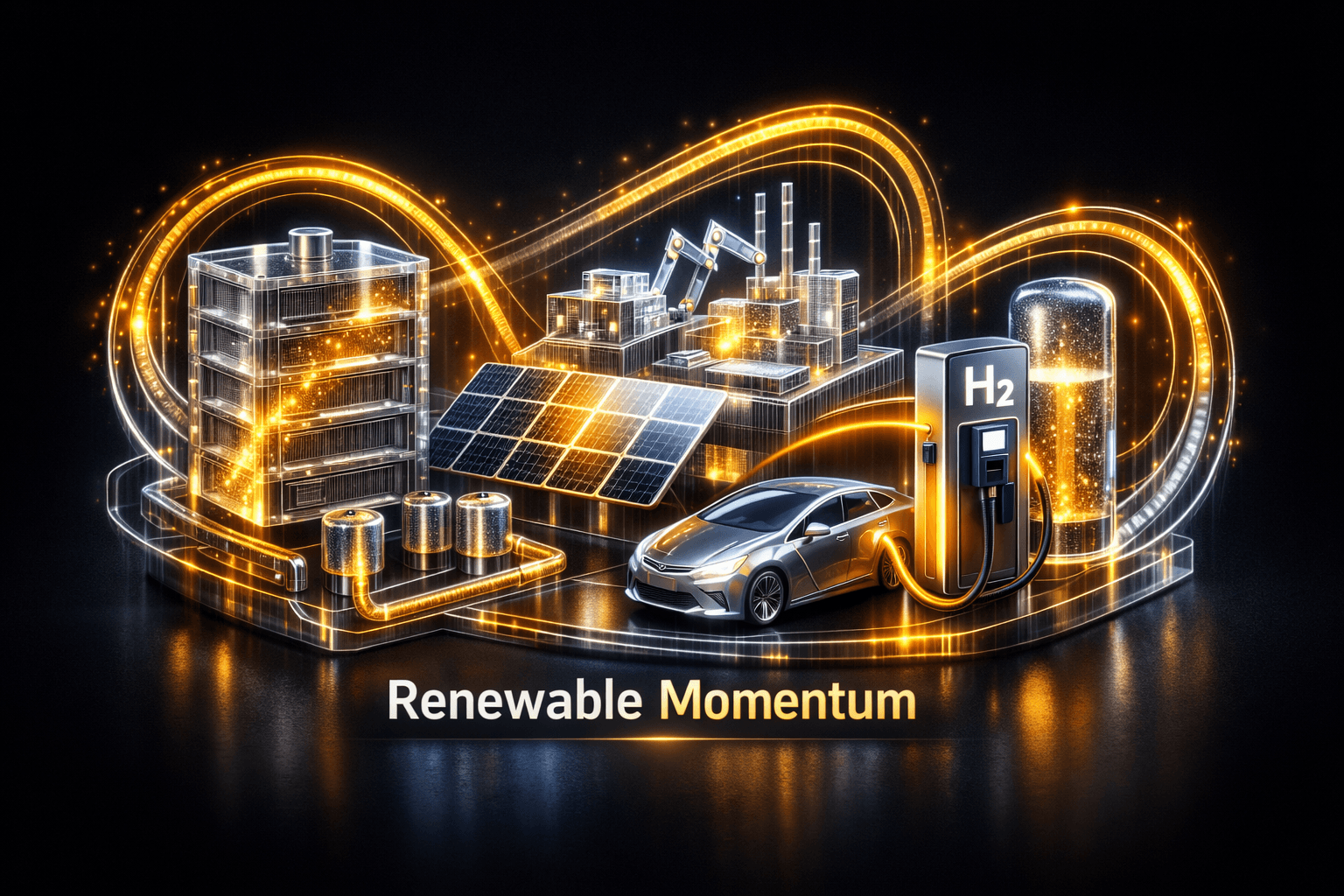
From a 300-MW battery coming online in California to a 1.3-GW solar factory and an on-water hydrogen charging demo, the stories you're seeing point to both supply and demand developments that can affect utilities, independent power producers, and grid operators alike.
Market Highlights
No U.S. equity trading took place on Sunday, and you should check Friday, Aug 21 closing prices before markets reopen on Monday, Aug 24. The headlines below set the tone for what could influence prices when trading resumes.
- Arevon Energy brought the 300-MW Nighthawk Energy Storage Project online in Poway, California, marking one of its largest standalone battery projects this year.
- Translucent Energy added a 1.3-GW solar factory in South Carolina, expanding domestic module and supply capacity for utility-scale deployment and microgrid builds.
- A GeoPura hydrogen power unit delivered 300 kW via five Ballard fuel cells to charge a commercial electric vessel at the Port of Tilbury, showcasing on-site hydrogen-to-electric workflows.
- Regulatory clarity arrived from the FCC, which confirmed that 45X-eligible inverters are not included in its foreign-produced inverter ban, reducing a potential bottleneck for utility-scale solar projects.
Key Developments
Battery Storage Comes Online, Easing Capacity Strain
Arevon's 300-MW Nighthawk project in California achieved commercial operation on Aug 13, giving regional grid operators additional flexibility for peak shaving and renewable integration. That capacity helps address evening ramp needs, and analysts note it could reduce reliance on peaking gas plants in constrained local markets.
For you, that means storage is shifting from pilot to scale, which could change dispatch patterns and capacity market dynamics over the next 12 to 24 months.
Manufacturing and Inverter Clarity Support Solar Growth
Translucent Energy's 1.3-GW solar factory in South Carolina is another example of onshoring module and system manufacturing to support rapid buildouts. Combined with the FCC clarification that 45X-eligible inverters aren't part of the foreign ban, developers face fewer near-term supply-chain roadblocks.
Will the added factory capacity and regulatory clarity speed project timelines? Early indications suggest they will, especially for projects that have been waiting on certified inverters and domestic equipment supply.
Hydrogen and Emerging Charging Models
At the Port of Tilbury, GeoPura deployed a floating hydrogen generator using five Ballard fuel cells to deliver 300 kW to an electric vessel. The demo shows a hybrid approach where hydrogen supports battery charging infrastructure, useful for ports and remote marine operations.
This is an example of how utilities and port operators might layer technologies to meet new load profiles. You should watch how fuel-cell firms and hydrogen project developers partner with utilities on behind-the-meter and microgrid applications.
Grid Access, Interconnection, and Policy Signals
PJM is studying options to jumpstart a surplus interconnection pathway after limited results from current processes. MISO and SPP each studied roughly 15 GW and 14 GW respectively in the first half of the year, highlighting the scale of queue backlogs.
Meanwhile, a federal push to develop nuclear lifecycle campuses has states competing to host used-fuel solutions, suggesting political momentum for long-term baseload planning. These policy moves can reshape where and how new clean capacity gets sited.
What to Watch
Here are the catalysts and risks that could influence utility stocks and project timelines when markets reopen and in the coming weeks.
- PJM rulemaking and interconnection reform progress, which could unlock gigawatts of delayed solar and storage projects and affect capacity markets.
- Certifications and approvals for inverters and balance-of-system gear, following the FCC clarification, which may shorten supply lead times for developers and utilities.
- State decisions on nuclear lifecycle campuses and the permitting environment for battery and solar projects, where you should track procurement and siting announcements.
- Local resistance to large-scale data centers, which could slow demand growth in certain regions and change utility load forecasts.
- Hydrogen pilot scalability and fuel-cell partnerships, including announcements from suppliers such as Ballard, that may create new revenue streams tied to ports and infrastructure.
Bottom Line
- Infrastructure additions this week, including a 300-MW battery and a 1.3-GW solar factory, reinforce a constructive trend for clean-energy capacity.
- FCC clarity on 45X-eligible inverters reduces a key supply-chain risk for solar deployments, which could accelerate project timelines.
- Interconnection reforms at PJM remain a pivotal risk and opportunity, since unlocking queues will determine near-term buildout pace.
- Hydrogen and fuel-cell demonstrations show broader technology stacking for ports and microgrids, which could shift utility service models for distributed loads.
- This briefing is for informational purposes only. Analysts note these developments influence markets, but this is not investment advice.
FAQ Section
Q: How will new battery projects affect grid reliability and costs? A: Large battery projects like the 300-MW Nighthawk add flexibility for peak management and can lower short-term marginal costs, but their long-term impact depends on dispatch rules and capacity market design.
Q: Will FCC inverter guidance speed up solar buildouts? A: The FCC clarification that 45X-eligible inverters are not covered by the foreign ban should ease procurement uncertainty and help some projects move from planning to construction sooner.
Q: Does the hydrogen charging demo change utility planning? A: The GeoPura test shows hydrogen can augment battery charging for niche applications, so utilities and ports may evaluate hydrogen as a complementary option for resilience and decarbonization.