The Big Picture
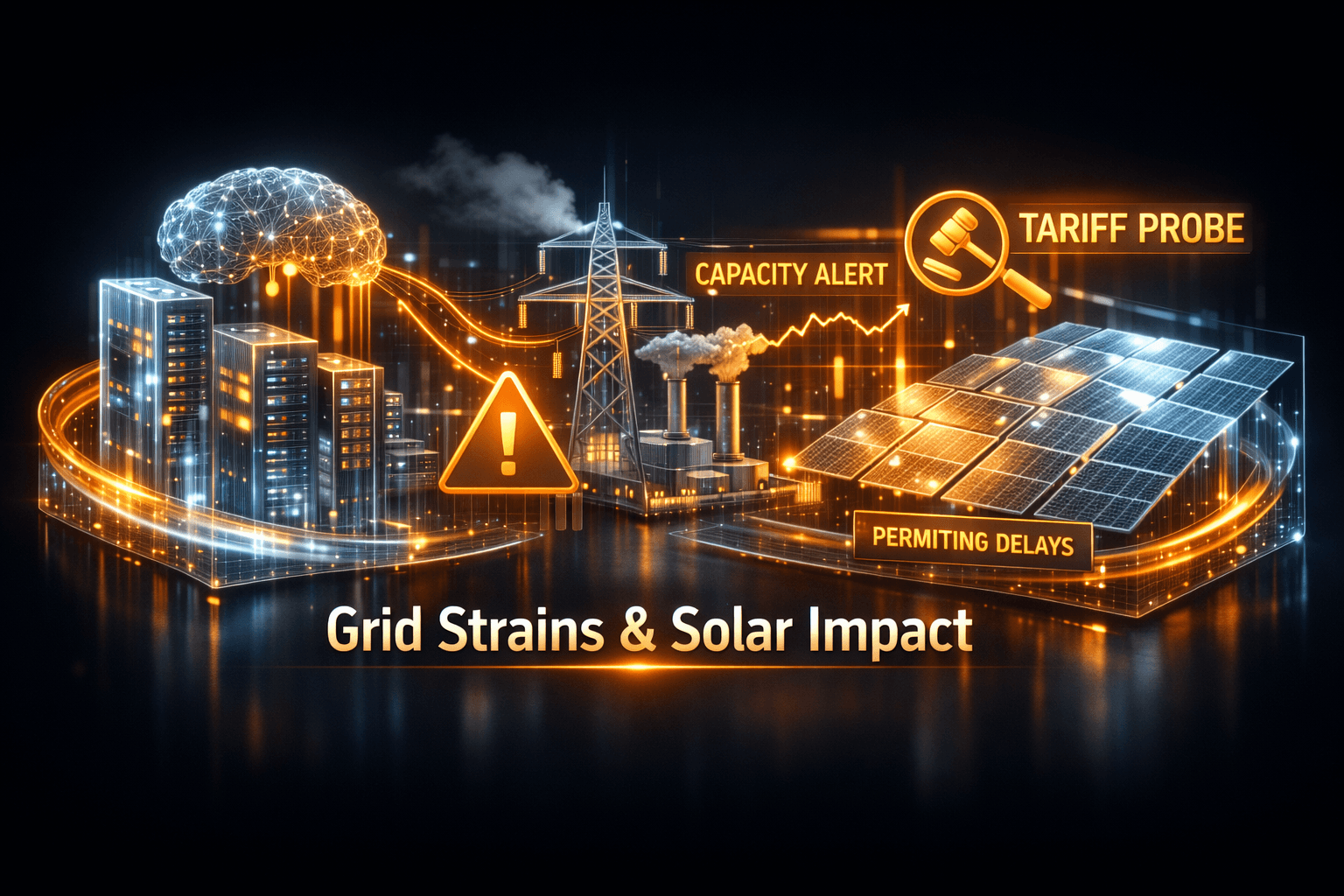
Utilities face a classic case of growth meeting growing pains heading into the long weekend. Rapid demand expansion from AI data centers and continued policy momentum for solar and storage are creating sizeable opportunities, but supply-chain scrutiny and capacity shortfalls are raising near-term risks.
That mix leaves you with important near-term items to watch, and some strategic questions about grid investment, permitting reform and procurement. Markets are closed on Saturday, so these stories will likely shape sentiment when trading resumes on Monday, Jul 20.
Market Highlights
Here are the quick facts you should note as of Friday, July 17 and items that could move quotes when markets reopen.
- Data center demand: Bank of America warns AI data center load could exceed planned utility additions by more than 100 GW through 2030, a forecast that points to accelerated capacity planning and potential on-site generation and storage investments.
- Solar and storage policy push: CleanTechnica and other outlets are calling for permitting reform to accelerate solar and storage buildouts, a development that could speed project pipelines if enacted.
- Supply-chain risk: The U.S. Department of Commerce has opened an investigation into imports of silicon solar cells from Ethiopia for possible tariff circumvention, a development that may affect module supply and pricing for U.S. developers.
- M&A: ARRAY Technologies, ticker $ARRY, announced an acquisition of Affordable Wire Management to broaden its balance-of-system portfolio, a move that could strengthen its role in utility-scale projects.
- Reliability alarms: FERC commentary after PJM's capacity auction flagged concerns about resource adequacy and governance, signaling possible regulatory action that could affect capacity markets and project economics.
Key Developments
AI Data Centers Force a Rethink of Generation
Bank of America analysts estimate that projected data center demand will outpace planned utility capacity additions by more than 100 GW through 2030. That gap increases the likelihood utilities and customers will rely more on on-site gas generation, battery storage and prioritized interconnection for hyperscale loads.
For you as an investor, this means more opportunities for companies providing grid-scale batteries, interconnection services and flexible generation. It also raises near-term reliability questions in regions with tight capacity markets.
Solar Momentum Meets Supply-Chain and Policy Tests
CleanTechnica and industry outlets are pushing for permitting reform to accelerate solar and storage buildouts, arguing these technologies are cost-effective and quick to deploy. At the same time the Department of Commerce opened an investigation into whether solar cells from Ethiopia are circumventing duties on Chinese imports.
Policy and permitting changes could speed projects and improve demand visibility, but the tariff probe is a counterweight that could tighten supply and lift costs, at least temporarily. How regulators rule will matter for project timelines and margins.
Grid Governance, Capacity Auctions and Local Solutions
FERC chairman comments after the PJM capacity auction raised red flags about resource adequacy and market design. Separately, industry commentary stresses that while distributed energy resources are proliferating, utilities need upgraded infrastructure and dispatch tools to integrate and control these assets at scale.
That suggests near-term spending on grid software, advanced meters and distribution upgrades, and longer-term work on market reforms to accommodate two-way flows and reliability needs.
What to Watch
Several catalysts could change sentiment quickly. Which items should you monitor closely?
- Dept. of Commerce probe updates, and any preliminary determinations on Ethiopian solar cell imports. Outcomes could affect module supply and near-term pricing for developers and EPC firms.
- Legislative or regulatory movement on permitting reform at the federal and state level. Fast-tracked permitting would accelerate project pipelines and could benefit balance-of-system providers like $ARRY.
- FERC and RTO/ISO actions after PJM auction results. Rule changes or emergency measures could shift capacity market payouts and planning obligations.
- Large data center announcements and contracts. New long-term offtake or buildout commitments will highlight where utilities need to add capacity or enable behind-the-meter solutions.
- Quarterly updates from major renewable developers and storage manufacturers. Watch commentary on margins, supply constraints and project backlog.
Don't forget workforce constraints. Training initiatives and integrated vocational models are crucial if you expect the industry to scale at pace. How will developers cover both labor and component gaps?
Bottom Line
- The sector is at an inflection point, with strong demand drivers from AI and renewable targets offset by supply-chain and capacity risks.
- Permitting reform could unlock faster deployment, but the Department of Commerce probe into Ethiopian cells adds uncertainty to near-term module supply and costs.
- Grid investment needs are rising, so look for spending on storage, distribution upgrades and software to dispatch distributed resources.
- ARRAY Technologies' acquisition of Affordable Wire Management signals consolidation and BOS focus as companies chase project scale and margin improvement.
- This summary is informational only. Analysts note these developments will influence sector dynamics, and you should consult professional advice before making investment decisions.
FAQ Section
Q: Will the Commerce investigation stop solar projects in the U.S.? A: Not immediately. Investigations can lead to tariffs or restrictions that raise costs, but many projects already in advanced stages are likely to proceed while developers seek alternative sourcing.
Q: How quickly will AI data centers force utilities to add capacity? A: Projections suggest rapid growth through 2030, but capacity additions and interconnection timelines vary by region. Expect a mix of on-site generation, batteries and prioritized grid upgrades to fill gaps.
Q: Should I expect regulatory changes after PJM auction alarms? A: FERC commentary indicates scrutiny. Rule changes or requests for reports from ISOs are possible, so monitor FERC filings and regional updates for potential impacts on capacity market outcomes.
Note: U.S. markets were closed on Saturday, Jul 18. The items above summarize reported developments and are not investment advice. Data suggests momentum and risks coexist in the utilities sector heading into next week.