The Big Picture
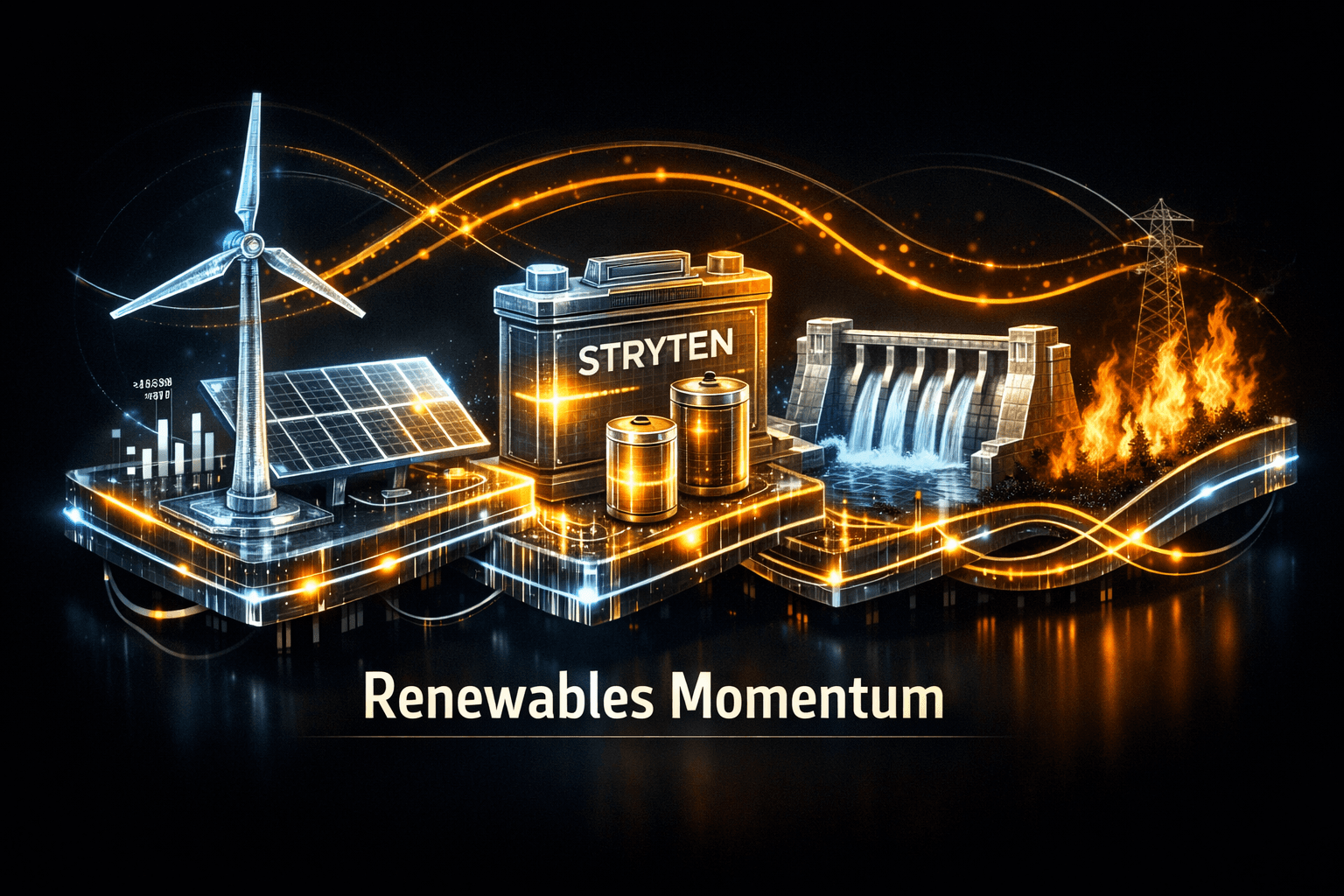
Renewable technologies and energy storage drove the most consequential headlines for the utilities sector today, with Lazard’s latest LCOE+ report reinforcing wind and solar economics and corporate moves pushing battery brands into a stronger competitive position. You saw project wins, preservation investments in legacy hydro facilities, and fresh technology pitches that suggest the industry is accelerating on multiple fronts.
That momentum matters because it influences capital allocation, policy debates, and grid planning, and it will shape how utilities and developers prioritize investments over the next several years. But you should also watch the policy and liability stories closely, since regulatory outcomes can alter timelines and costs for fossil and renewable projects alike.
Market Highlights
Here are the quick facts and numbers that moved today’s headlines.
- Lazard’s 19th LCOE+ update reinforced that wind and solar offer faster "speed-to-power" deployment, a key driver for developers and utilities aiming to meet near-term targets.
- Stryten Energy said it will acquire C&D Trojan, a storied US battery brand, with the deal expected to close in Q3 2026, consolidating domestic storage supply chains.
- Aker Solutions won a contract for Norway’s Tussa II hydropower plant, specifying two 75 megawatt Pelton turbine units for a total of 150 MW installed capacity.
- Drax committed £2 million to preserve the 90-year-old Tongland hydro plant, a move that sustains local hydro capacity and heritage infrastructure.
- PG&E faces a proposed $22 million penalty tied to the 2022 Mosquito Fire, highlighting ongoing wildfire liability exposure for utilities. PG&E is referenced as $PCG in markets.
- Texas regulators approved "ride-through" rules for data centers to address voltage and frequency excursions as large computational loads seek new interconnections.
Key Developments
Lazard’s LCOE+ Report Puts Renewables in the Fast Lane
The latest Lazard analysis gave renewables an edge on speed-to-power and cost metrics, particularly for wind and solar. That reinforces why utilities and independent power producers are accelerating procurement and permitting for renewables, since faster projects lower near-term exposure to fuel price swings.
For you as an investor, the report signals continued demand for renewables services, project developers, and balance-of-system suppliers, though execution risk around interconnection and permitting remains a limiting factor.
Storage Consolidation: Stryten to Acquire C&D Trojan
Stryten Energy’s planned acquisition of battery maker C&D Trojan creates a larger US-focused storage supplier and is expected to close in Q3 2026. Management said the combined company will continue under Stryten’s CEO and president Mike Judd.
This consolidation could improve scale, distribution, and product breadth for behind-the-meter and grid-scale storage customers. You’ll want to track supply chain integration and whether the merged firm can preserve brand trust among installers and legacy customers.
Grid and Regulatory Pressure: Wildfire Liability and Hydropower Credit Debates
Two regulatory stories added friction to today’s otherwise constructive headlines. California’s proposed $22 million penalty for PG&E tied to the Mosquito Fire reminds you that wildfire liability remains a material operational and regulatory risk for investor-owned utilities. That fine reflects findings of infrastructure design and maintenance violations.
In New York City, a debate over hydropower credits has emerged as building owners seek compliance pathways under local climate law. City officials are under pressure to limit the use of out-of-jurisdiction credits that could allow large building owners to avoid real emissions cuts. That policy question could affect how renewable energy credits and contracted resources are valued for compliance programs.
What to Watch
Expect attention to shift to several catalysts in the coming days and weeks. You should follow these items closely so you know when sector risk or opportunity changes.
- Policy decisions in New York City on hydropower credits, since they could reshape demand for bundled renewable contracts and local decarbonization strategies.
- The closing timeline for Stryten’s acquisition in Q3 2026 and any guidance on synergies or product road maps, which will affect competitive dynamics in storage markets.
- Regulatory proceedings related to the Mosquito Fire penalty for $PCG, and whether enforcement actions increase or remain contained, since outcomes influence utility capital planning and insurance costs.
- Adoption signals for newer technologies, including Mainspring’s linear generators and split heat pump water heaters, because they change resource mixes and demand patterns. Which of these technologies will scale first for commercial use?
- Grid rule adjustments like Texas PUC’s ride-through standards, given rising computational loads and the need for reliability changes to interconnection requirements.
In short, you’ll want to watch regulatory decisions and M&A integration milestones. They’ll determine whether the tailwinds for renewables and storage turn into durable gains or temporary flurries.
Bottom Line
- Renewables and storage headlines dominated today, with Lazard’s LCOE+ and several corporate deals signaling continued sector momentum.
- Project wins and preservation investments show both new builds and legacy hydro remain relevant to the transition.
- Regulatory and liability stories such as the PG&E penalty and NYC hydropower credit debate inject caution for near-term investor sentiment.
- Expect market focus to pivot to deal closings, policy rulings, and technology adoption metrics in the weeks ahead.
- Analysts note that while momentum is building, execution risk around interconnection, permitting, and regulatory outcomes remains the key wildcard.
FAQ Section
Q: How should I interpret Lazard’s LCOE+ findings for utilities? A: Lazard’s report highlights that wind and solar can be quicker to deploy and cost-competitive, which supports greater procurement of renewable capacity by utilities seeking near-term decarbonization.
Q: Will the Stryten and C&D Trojan deal change battery prices? A: Consolidation can improve manufacturing scale and distribution but it won’t instantly lower end-customer prices; supply chain effects and integration success will determine eventual cost impacts.
Q: Does the PG&E penalty mean broader rate or policy changes? A: The proposed $22 million penalty underscores ongoing wildfire liabilities, and regulators could pursue additional measures; you should monitor proceedings for any implications on utility cost recovery or capital plans.