The Big Picture
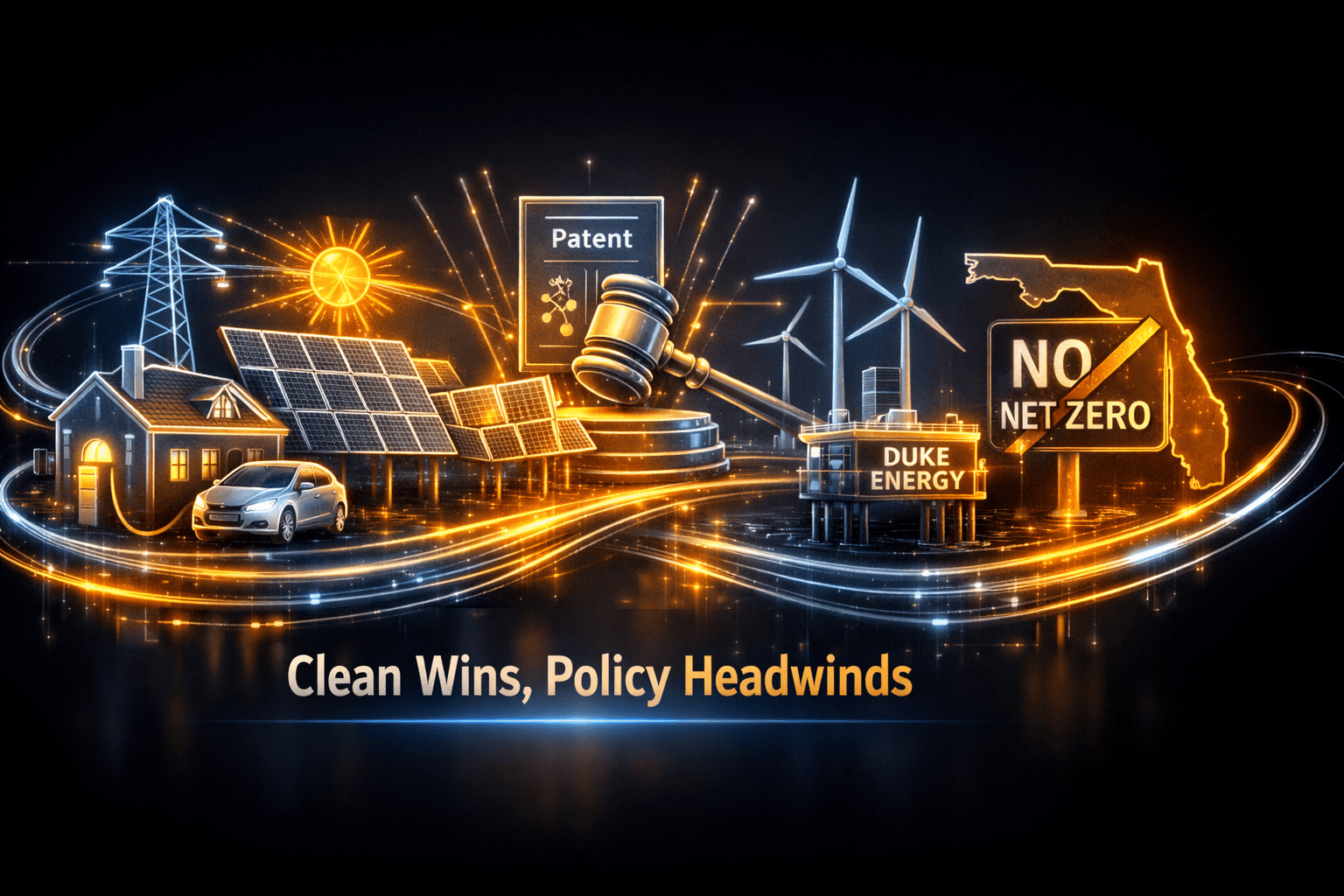
Today the Utilities sector saw a blend of regulatory momentum for electrification and renewables plus some concrete setbacks that undercut near-term project pipelines. Court rulings and state budget moves in large markets like New York and California are reinforcing demand trends for clean power and electrified buildings, while a major utility gave up an offshore wind lease and a handful of states continue to push back on net-zero policy.
Why should you care? Policy and permitting remain the main drivers of project timing and corporate capital allocation in utilities. Those forces are moving in different directions depending on the state, and that split will determine where development dollars flow next.
Market Highlights
Here are the quick facts and price-action items you should note from today.
- Duke Energy subsidiary confirmed it will relinquish an offshore wind lease it bought for $155 million in 2022, saying it will redirect roughly $129 million to other projects. The lease had been expected to support up to 1.6 GW.
- New Energy Equity energized a 5.5 MW community solar project in Illinois, which is expected to produce about 8.3 million kWh and fund a local scholarship program.
- The U.S. International Trade Commission found Voltage infringed Shoals patents, a ruling that favors Shoals Technologies and could affect module/ BOS supply chains for solar projects, with implications for $SHLS customers and competitors.
- California reached a budget agreement to expand zero-emission vehicle incentives for light- and heavy-duty vehicles, while the California Air Resources Board delayed SB 253 emissions reporting deadlines by three months.
- The U.S. Court of Appeals for the Second Circuit upheld New York laws limiting fossil fuel appliances in new buildings, solidifying a pathway for building electrification demand.
Key Developments
State policy and court rulings tilt toward electrification
Two important policy items landed today. California’s budget deal to bolster zero-emission vehicle incentives shows continued state-level support for electrification of transport. In addition, the Second Circuit affirmed New York city and state limits on fossil-fuel appliances in new buildings. Together these moves strengthen expected long-term load growth for utilities focused on electrification and distributed resources.
So what does that mean for you? If you follow utilities with large footprint in electrifying states, you should expect regulatory-driven demand to support grid investment and customer electrification programs, even as national policy remains uneven.
Project and corporate shifts: Duke Energy yields offshore lease
$DUK’s decision to give up an offshore wind lease it paid $155 million for in 2022 is a notable corporate realignment. The company said it will seek roughly $129 million in partial reimbursement under an Interior Department deal and refocus capital toward new nuclear, natural gas and grid upgrades.
This development underscores that while policy and permitting can create opportunity, project economics and political risk still influence utility capital plans. Expect near-term supply and capacity forecasts to be adjusted where large projects are canceled or delayed.
Supply chain and legal rulings affect solar deployment
The ITC finding that Voltage infringed Shoals patents could alter procurement and installation timelines for trunk bus cable assemblies on solar projects. $SHLS may gain leverage with developers and original equipment manufacturers if exclusion orders or settlements follow the decision.
Meanwhile, op-eds and whitepapers calling for leaner construction and state policy reform highlight efforts to reduce costs and speed buildouts. That could move the needle on utility-scale solar margins and schedule risk over time.
What to Watch
Focus on catalysts and risks that will shape the utility landscape into the summer and beyond.
- Regulatory calendar: Watch for implementation guidance from the Second Circuit ruling and California’s updated ZEV incentive programs. Rules and timelines matter for permit approvals and project cash flows.
- Project reallocation: Track how $DUK deploys the roughly $129 million it plans to refocus. Will that capital accelerate grid modernization or pivot back toward fossil assets?
- Battery technology support: The zinc-battery story underscores the need for DOE support. Will federal funding or demonstration projects emerge that give lithium alternatives scale?
- Supply chain disruptions and litigation: The ITC ruling could spur licensing deals or exclusion actions. Keep an eye on procurement notices and vendor shifts for solar developers you follow.
- State policy divergence: Florida’s anti-net-zero law takes effect July 1, while California and New York tighten electrification policies. Which states will drive real demand for utilities and clean energy developers?
Bottom Line
- Policy is the dominant theme today, with major wins for electrification in California and New York and meaningful pushback in other states. Analysts note this patchwork will keep development uneven.
- Corporate capital is shifting. $DUK’s offshore lease exit shows utilities will reallocate funds to where execution risk is lower or returns are clearer.
- Solar supply chain and legal rulings matter. The ITC decision in the Shoals Voltage dispute could affect equipment sourcing and project timing.
- Technology alternatives are still in search of scale. Zinc-based batteries need federal support to compete with lithium at grid scale.
- For you, that means being selective and watching state-level policy, project permits, and major litigation that can move project economics quickly.
FAQ Section
Q: How will state policies affect utility earnings? A: State incentives and mandates change load forecasts and capital spending, which can boost regulated utility returns in states that support electrification and slow development where policy is hostile.
Q: Does the ITC ruling stop solar projects now? A: Not immediately. The ruling favors Shoals on patent infringement, but outcomes depend on follow-up remedies and whether buyers secure alternate compliant components.
Q: Will new battery chemistries replace lithium soon? A: Data suggests alternatives like zinc need demonstration funding and scale to be competitive. DOE support could speed adoption but widespread replacement is not imminent.