The Big Picture
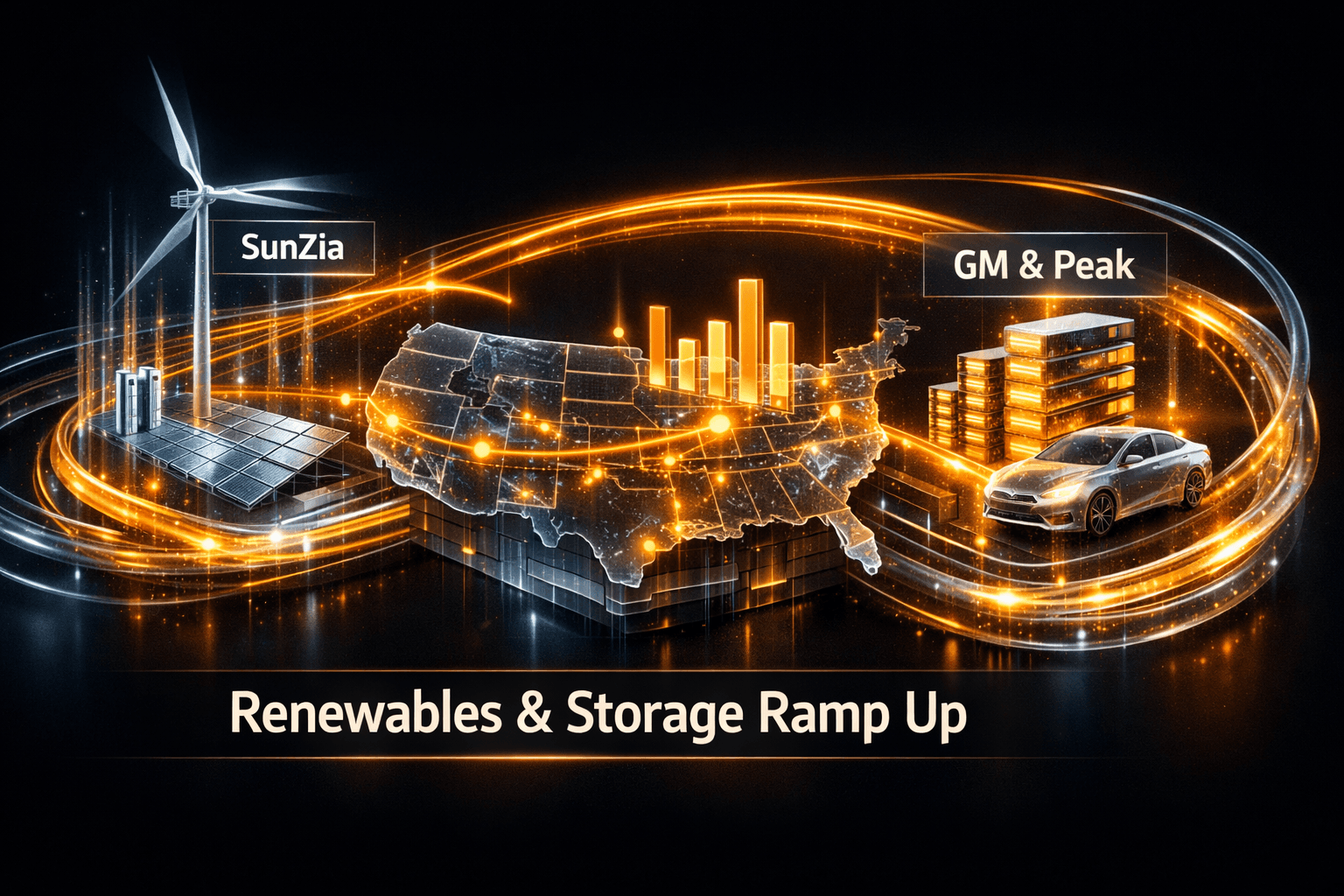
Renewables and grid-scale storage took center stage in the utilities sector today, with large projects moving from planning into construction and near-term operation. That matters because utility-scale capacity and domestic battery supply will shape generation mix, reliability, and investment flows for years to come.
You saw several concrete wins for clean energy, from the U.S. largest wind farm approaching operation to state-backed solar funding and new battery partnerships. These developments point to increasing project delivery and greater resilience as priorities for utilities and communities.
Market Highlights
Quick facts and numbers to keep on your radar.
- SunZia Wind, developed by Pattern Energy, will add about 3,650 megawatts of capacity, exporting power to Arizona and California.
- Maryland is deploying $2.7 million via the Maryland Clean Energy Center to install solar and storage at 25 affordable housing sites.
- Verogy began construction on solar projects at four Connecticut municipal landfills, converting closed sites into energy assets.
- Peak Energy and $GM announced a partnership to scale domestic sodium-ion battery supplies aimed at grid-scale and AI data center applications.
- Data center construction could speed by about 30% with modular approaches, a factor that raises near-term demand for reliable, scalable power solutions.
- Clean shipping analysis points out fossil fuels account for 40% of freight tonnage but about half of maritime fuel use, underscoring complex decarbonization needs.
Key Developments
SunZia Nears Online Status, Large-Scale Wind Capacity Ramps
The SunZia Wind project in New Mexico is now almost online and will provide roughly 3,650 megawatts to western markets. For utilities and offtakers, that adds a major tranche of clean generation that can lower wholesale emission intensity and support renewable portfolio goals.
Infrastructure this large also tests transmission capability and scheduling. Will grid operators be ready for seasonal and hourly variability? You should watch interconnection timelines and power purchase agreements tied to SunZia.
Local Solar Moves: Maryland Funding and Connecticut Landfill Projects
State-backed funding is targeting community-level deployment. Maryland’s $2.7 million for solar and storage at 25 affordable housing sites is aimed at cost reduction and resilience for low-income residents. That’s a clear example of policy enabling distributed energy investment.
Separately, Verogy started work on four municipal landfill solar projects in Connecticut. Turning closed landfills into generation assets shows how developers and regulators are squeezing value from underused sites. If you track developers or municipal utility partnerships, these projects are worth noting.
Storage and Supply Chains: Peak Energy and $GM Partner on Sodium-Ion
Peak Energy’s agreement with $GM to scale sodium-ion battery supplies is notable because it targets domestic capacity for grid-scale and data center uses. Sodium-ion is being pitched as cost-effective for large-format energy storage, not just transportation, and the partnership signals momentum for non-lithium chemistries.
Scaling domestic supply chains could reduce procurement risk for utilities and hyperscalers. That may also change competitive dynamics among storage vendors and influence long-term contracts for reserve and capacity services.
What to Watch
Here are near-term catalysts and risks that could move utilities names and project economics, and what you may want to monitor as an investor or observer.
- SunZia commissioning schedule and transmission approvals, including any curtailment or ramp constraints, which will affect delivered energy and revenues.
- Procurement and interconnection timelines for the Connecticut landfill builds and Maryland affordable housing installs, since local permitting often drives project dates.
- Progress and scale targets from the Peak Energy and $GM sodium-ion partnership, including announced production volumes and offtake agreements.
- Policy shifts such as the UK’s reported plan to roll back the ZEV mandate, which could slow electrification demand in Europe and alter long-term load forecasts for utilities.
- Wildfire-driven resilience measures and microgrid uptake, especially in high-risk states, where calls for undergrounding and household microgrids could change spending priorities for utilities and customers.
- Data center construction trends, where modular buildouts might increase demand for predictable, scalable power and on-site storage solutions.
How should you weigh these items? Consider project timelines and regulatory risk. Are contracts in place, and when does revenue actually start flowing?
Bottom Line
- Large renewables projects are moving from pipeline to delivery, boosting generation capacity and support for decarbonization goals.
- State and municipal programs are unlocking distributed solar and storage, improving resilience for vulnerable communities and creating new offtake opportunities.
- New battery supply partnerships, including sodium-ion, indicate a broadening of storage options that could ease supply-chain pressure for grid-scale deployments.
- Policy and market crosscurrents, like the UK EV mandate news and shipping fuel debates, create mixed demand signals you should watch closely.
- For your planning, focus on delivery risk, contract structures, and regulatory timelines rather than headlines alone.
FAQ Section
Q: How soon will SunZia start delivering power? A: Developers say the project is almost online, but delivered volumes depend on final commissioning and transmission scheduling, so monitor operator updates for firm dates.
Q: What is sodium-ion storage good for? A: Sodium-ion is aimed at cost-effective, grid-scale and data center applications where cycle life and low-cost materials matter, analysts note it may complement lithium systems rather than replace them outright.
Q: Will rooftop and landfill solar meaningfully affect utility revenue? A: Distributed projects can lower local demand and change load shapes, but utility revenue impact depends on rate design, compensation mechanisms, and the scale of deployments in a given service territory.