The Big Picture
Clean energy momentum showed up overnight in multiple corners of the utilities world, with EV market share rising, automakers enabling bidirectional charging, and new solar manufacturing coming online. You should note that these moves are not just headlines, they change demand patterns for electricity and the types of grid investment utilities will face.
At the same time, a stark reminder arrived about transmission limits, as congestion cost PJM about $1 billion in May. That gap between ambition and grid capacity is driving a wave of modernization projects and opportunites for upgrades today.
Market Highlights
Quick facts and price action to watch this morning.
- EV adoption: Plugin EV share in the UK rose to 35.2% in Q1 2026, up from 30.0% a year earlier, with total Q1 auto volume at 614,854 units, up 6% YoY. Tesla remains the top BEV brand.
- Automakers: General Motors announced V2G activation for existing customers and wider plans around sodium-ion batteries, pressuring traditional demand curves for utilities, while $GM stock may reflect growing energy services ambitions.
- Manufacturing: Qcells began cell production at its Cartersville, Georgia facility, targeting full output by Q3 2026, a milestone for U.S. solar supply chains.
- Grid stress: Software tracking shows PJM paid about $1 billion in congestion costs in May, drawing attention to transmission capacity and upgrade needs.
- Infrastructure work: Tetra Tech was selected by Chelan County PUD to modernize spillways at Rock Island and Rocky Reach dams, and turbine upgrades are boosting 7F unit output at gas plants, highlighting incremental capacity gains.
Key Developments
EV Adoption Accelerates, Automakers Turn Into Energy Players
UK plugin EV share climbed to 35.2% in Q1, showing steady demand for BEVs and PHEVs. Tesla remains the leading BEV brand, a detail that keeps charging demand growth squarely in utilities' crosshairs.
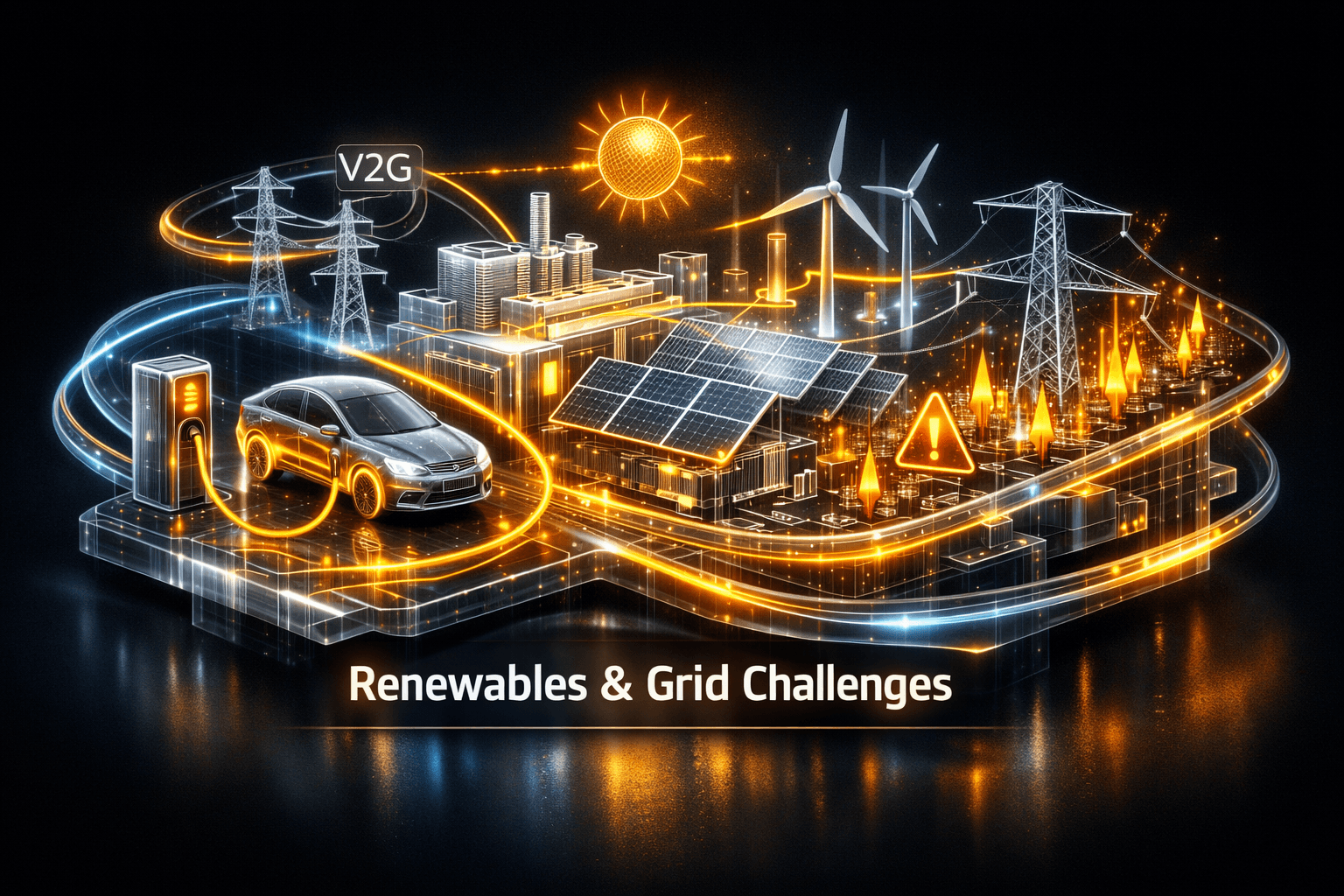
At the same time, GM announced it will activate Vehicle to Grid, or V2G, for existing customers with no new hardware required, and it pushed sodium-ion batteries for grid-scale storage. What does that mean for you as an investor, or for utility load profiles? More distributed resources and two-way flows are coming faster than many forecasts predicted.
Solar Supply Chains and Competition Heat Up
Qcells opened U.S. cell manufacturing at Cartersville and expects full production by Q3 2026, creating domestic capacity that should help ease module cost pressure and shorten lead times. Brigham Young University Hawaii moving to 100% solar is another sign that large buyers are locking in renewable supply.
Solar salespeople report rising competition, with 54% saying markets are more competitive and 30% calling it much more so. That dynamic favors trusted brands and service models, and it will influence margins and customer acquisition costs across installers and manufacturers.
Grid Congestion, Modernization and Incremental Capacity
PJM congestion costs hitting about $1 billion in May shows transmission is a critical bottleneck as renewables scale. That figure underlines why utilities and operators are prioritizing upgrades and better congestion management tools.
On the supply side, projects range from hydropower spillway modernization on the Columbia River to turbine upgrades that squeeze more output from existing plants. These moves are practical ways to unlock capacity while longer term transmission projects proceed. Are you ready for a utility sector where upgrades matter as much as new generation?
What to Watch
Focus on catalysts that will steer utilities and clean energy companies over the coming weeks. Watch announced timelines and early production figures from Qcells as Q3 2026 approaches. You should also track uptake of GM's V2G activation, which could change evening and peak load patterns if adoption scales.
Keep a close eye on regulatory and transmission developments inside PJM and at state regulators. Grid congestion numbers could drive new policy moves or funding for projects, and you will want to know which utilities win modernization contracts like the Tetra Tech-led dam work in Washington.
Finally, monitor solar sales metrics and installer margins as competition intensifies, and follow any follow-on announcements from automakers about energy services or storage, since those will affect utility revenue streams and grid planning.
Bottom Line
- Clean energy deployment is accelerating across EVs, solar manufacturing, and storage, creating new electricity demand patterns and grid integration needs.
- Automakers like $GM enabling V2G and making battery bets will push two-way energy flows, which utilities and grid operators must plan for.
- Domestic solar cell production at Cartersville adds supply and could ease module constraints by Q3 2026, but intense competition may pressure installer margins.
- PJM's roughly $1 billion congestion bill in May is a clear sign that transmission must keep pace with generation growth, and that creates near-term opportunities for upgrades and modernization.
- For you, selectivity matters. Focus on companies exposed to grid modernization, domestic manufacturing, and energy services, and watch near-term catalysts closely.
FAQ Section
Q: How will V2G activation affect utility demand curves? A: V2G turns EVs into two-way resources, which can reduce peak demand if aggregated, but it requires coordination, new tariffs, and grid-ready management systems.
Q: Does the solar tax credit still benefit homeowners in 2026? A: The tax credit shifted rather than disappeared, and homeowners can still access incentives depending on project timing and local rules, so check current guidance before you act.
Q: What does PJM's congestion cost mean for investors? A: High congestion costs signal transmission constraints, which can spur regulatory action and capital spending on upgrades, highlighting companies that deliver grid solutions and project execution.