The Big Picture
Today reinforced a clear theme for the Utilities sector: the transition to an interactive, decarbonizing grid is moving from concept to scale. Major milestones in distributed solar, solar equipment shipments, energy storage commissioning, and corporate procurement together signal broad momentum that could reshape utility planning and customer interactions.
If you follow utilities and clean energy, you saw tangible signs that investment and deployment are accelerating, even as permitting and program design remain constraints. That dynamic matters because it's changing where and how utilities deliver capacity and reliability.
Market Highlights
Quick facts and numbers you need to know from today's headlines.
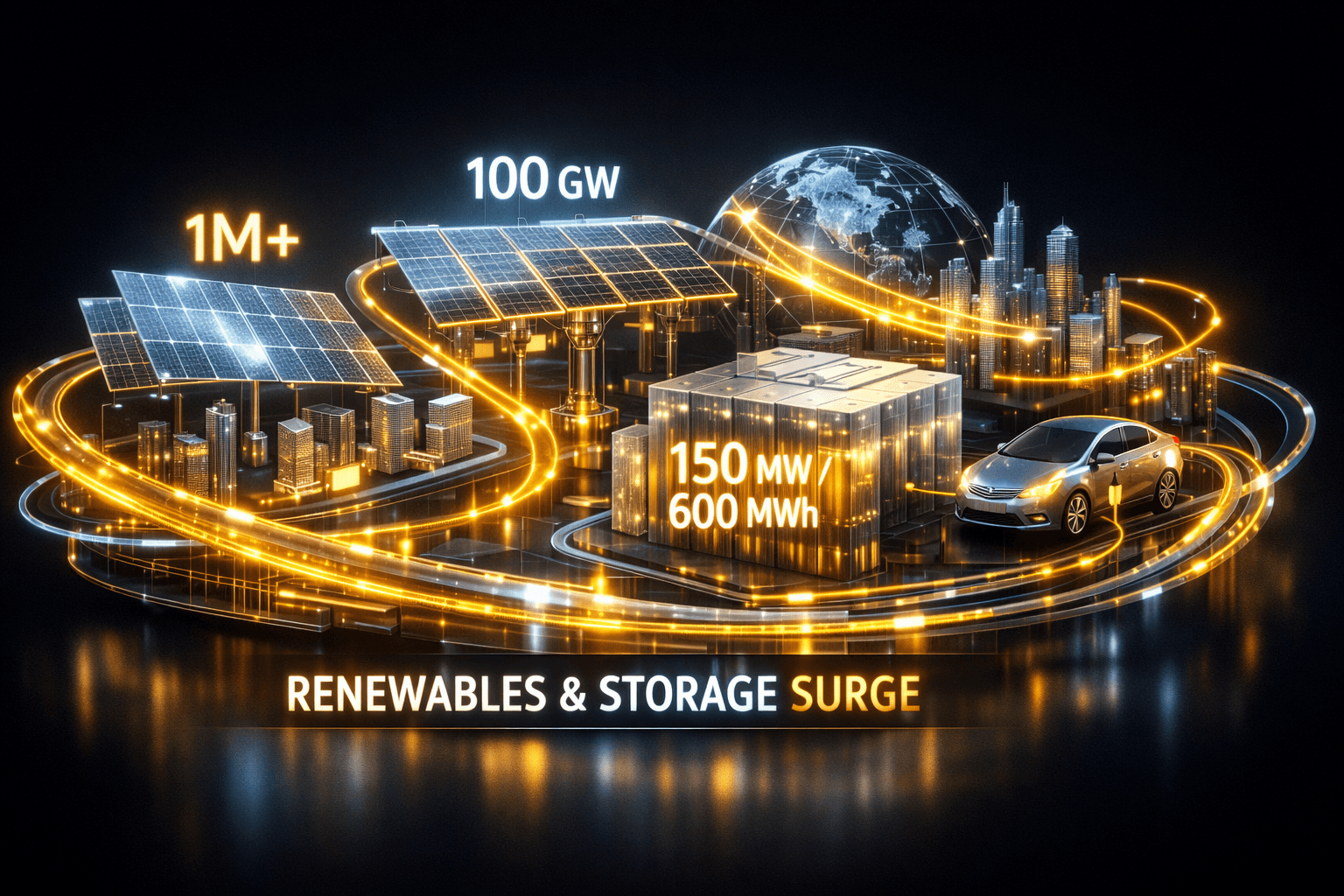
- PG&E reports more than 1,000,000 customers have interconnected solar to its distribution system, reflecting the shift to two-way grid operations, $PCG.
- ARRAY Technologies says it has shipped 100 GW of solar trackers globally since founding, underscoring supply-chain scale for utility and commercial solar developers, $ARRY.
- RWE signs a long-term corporate PPA with Meta for the 298-MWAC Rabbit's Foot Solar project in Texas, a sign of continued tech-sector demand, $RWE and $META.
- Elevate Infrastructure and ArcLight place the 150-MW / 600-MWh Prospect Power battery project into operation in Virginia, adding large-scale dispatchable storage to the grid.
- General Motors presses utilities to adopt vehicle-to-grid technologies and is investing in sodium-ion batteries for grid use, highlighting cross-industry moves into grid services, $GM.
Key Developments
Distributed Solar Hits a Million Connections
Pacific Gas and Electric said more than 1 million customers have interconnected rooftop or behind-the-meter solar to its system. That milestone marks a practical shift from a one-way distribution model to an interactive platform where customer resources participate in grid operations.
For you that means utilities will increasingly balance distributed generation, storage, and demand programs while updating interconnection and tariff frameworks. Expect more investment in distribution automation and hosting capacity analysis.
Storage Comes Online, Corporate Buyers Keep Buying
The Prospect Power battery project, at 150 MW and 600 MWh, began operations in Virginia, adding substantial flexible capacity to a region that values resilience and peaking support. Separately, RWE's PPA with Meta for the 298-MWAC Rabbit's Foot Solar project reiterates that corporate offtakers remain a major demand driver for new build renewables.
Data suggests storage and corporate procurement will continue to underpin utility-scale deployment, and that system operators will need clearer rules for how batteries and corporate-sourced energy integrate into capacity markets.
Grid Integration Pushes and Policy Frictions
General Motors is urging utilities to adopt vehicle-to-grid solutions while investing in sodium-ion technology for grid batteries. That push, combined with microgrid examples such as the Firestorm Books installation in Asheville, shows private and public actors experimenting with new DER roles.
At the same time, the U.S. solar industry continues to flag permitting bottlenecks, and Virginia facilities are finding hurdles when trying to use generators for demand response. Progress is tangible, but policy and implementation gaps remain.
What to Watch
Look for how regulators and utilities address interconnection and permitting backlogs. Permitting reform was called out as a major impediment by a CEO in the solar sector, and lawmakers or regulators could propose changes that speed project timelines.
Will vehicle-to-grid pilots scale beyond test programs, and can utilities operationalize bidirectional charging at scale? Those are critical questions for any investor tracking grid flexibility, because V2G could create a new distributed capacity source for you to monitor.
Also watch for more corporate PPAs and tracker manufacturers reporting volume milestones, which would confirm supply-chain maturity and continued demand for large solar installations. Weather and extreme events also remain a wild card for reliability and project timelines.
Bottom Line
- Distributed resources are shifting utility planning from one-way delivery to interactive operations, and more than 1 million customer solar connections exemplify that change.
- Large-scale storage projects and corporate PPAs continue to accelerate deployment of grid-scale renewables and flexible capacity.
- Manufacturing scale, shown by ARRAY's 100 GW of trackers shipped, reduces execution risk for developers and signals industry maturation.
- Permitting and program design remain the chief constraints, so policy developments and interconnection reforms will be important near-term catalysts.
- Cross-industry moves like $GM's V2G push and community microgrids point to diverse pathways for resilience and grid services you should keep on your radar.
FAQ Section
Q: How does 1 million rooftop solar connections affect utility operations? A: It increases the need for two-way distribution planning, hosting capacity studies, and investments in distribution automation to manage voltage and reliability.
Q: Will corporate PPAs continue to drive solar development? A: Yes, large buyers like $META remain a major source of demand for new solar capacity, helping finance projects and reduce merchant risk.
Q: What are the main barriers to faster clean energy deployment? A: Permitting delays, interconnection backlogs, and program design issues for demand response and DER integration are the primary constraints to watch.