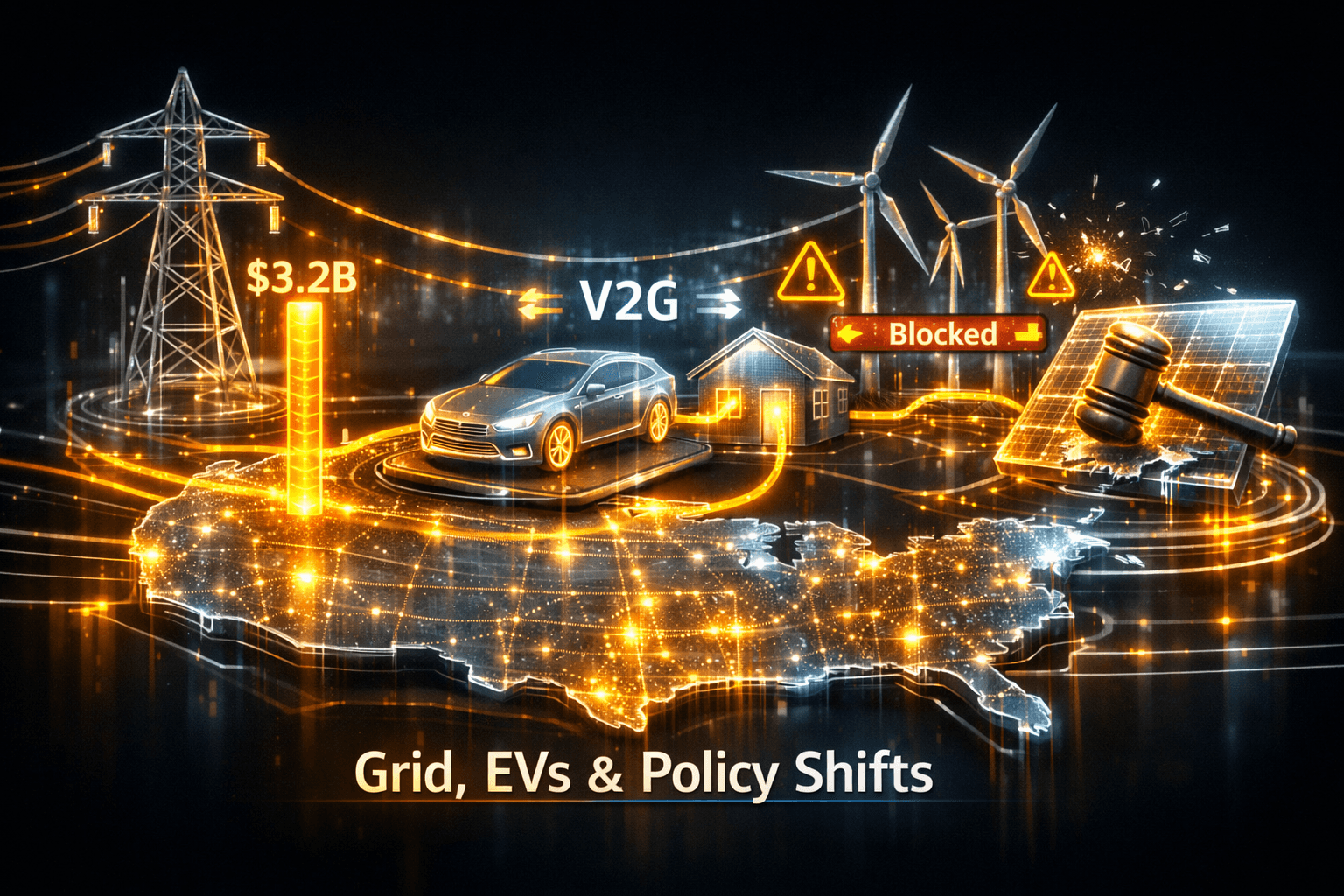
The Big Picture
Utilities headlines this morning paint a sector of contrasts, with clear momentum on electrification, grid investment, and new revenue streams from vehicle-to-grid programs, while policy and legal battles are creating headwinds for some renewable players. You should know that the story is not one-sided, so expect selective opportunities and risks across the space.
The wins include strong EV model sales, an HVDC transmission addition worth $3.2 billion, and trials showing EV batteries can earn thousands for owners. On the flip side federal actions have blocked a large number of wind projects and a patent lawsuit has landed in solar manufacturing, so you need to stay selective.
Market Highlights
Quick facts to start the day, so you can scan what moved overnight and in premarket activity.
- Kia EV6 US sales were 708 in May, down 13% from 801 in May 2025, but Kia and Hyundai models are showing broader EV demand resilience.
- Hyundai IONIQ 5 sales rose 28% year over year in the US in May, signaling pockets of growth amid talk of a broader EV slowdown.
- Waymo is rolling out the Ojai robotaxi, produced by Zeekr, for passenger trips, a notable EV-related mobility deployment tied to $GOOGL technology leadership.
- The North Plains Connector HVDC transmission project is a $3.2 billion build and just added Minnkota Power Cooperative with 150 megawatts of capacity reserved, operations expected in 2032.
- A Massachusetts vehicle-to-everything demonstration shows light duty EVs could earn about $3,000 per summer and school buses about $12,000 by joining a virtual power plant.
- The federal government has reportedly blocked 165 wind projects while funding oil, gas, LNG and microreactor initiatives with nearly $2 billion, a major policy shift for the renewables pipeline.
Key Developments
EV demand and grid value of batteries
May sales show a mixed but constructive picture for electric vehicles. Kia's EV6 slipped to 708 units in May from 801 a year earlier, a 13% decline. At the same time Hyundai's IONIQ 5 posted a 28% increase in the US for May, suggesting model level dynamics matter more than broad headlines.
Meanwhile a Massachusetts vehicle-to-everything demonstration quantified grid value for EV batteries. The state program manager said some light-duty vehicles could earn roughly $3,000 per summer and school buses up to $12,000 by participating in a virtual power plant. If you own or follow companies integrating V2G, this helps underline a potential recurring revenue stream and new asset optimization for utilities and fleets.
Transmission investment and regional capacity
The North Plains Connector HVDC project continues to gather partners. Minnkota Power Cooperative joined the consortium and secured 150 megawatts of capacity. The $3.2 billion project, with operations expected in 2032, shows utilities and co-ops are still committing to long lead time grid upgrades to move renewable power across regions.
Transmission builds like this can unlock more wind and solar on the system, but you should keep in mind the timing and regulatory approvals will determine when benefits hit revenue lines for public companies such as $NEE and $DUK that are active in grid expansion.
Policy, legal and cybersecurity headwinds
Policy choices are creating headwinds for wind developers. Reporting shows federal actions have blocked 165 wind projects while agencies are simultaneously backing oil, gas, LNG and microreactor projects with nearly $2 billion in support. That shift is likely to delay some renewable deployments and change the competitive landscape for developers and utilities contracting renewable capacity.
On the legal front Nextpower filed a patent infringement suit against GameChange Energy in the District of Delaware over single axis solar tracker technology. Litigation can slow procurement and raise costs for project owners and suppliers until resolved. At the same time industry experts are warning utilities to adopt AI tools for cybersecurity rather than resist them. Data suggests reluctance could leave control systems vulnerable, so cyber preparedness remains a key operational risk.
What to Watch
If you want to track where the sector heads next, here are the catalysts and red flags to follow today and in the coming weeks.
- Policy updates and permitting news, especially regarding the 165 blocked wind projects and any further federal incentives favoring oil, gas or microreactors. Which approvals get restarted could change supply plans for developers and utilities.
- Transmission project milestones for the North Plains Connector. Watch for interconnection agreements, financing updates and state regulatory filings that will determine timing and cost recovery prospects.
- Legal developments in the Nextpower v GameChange suit. Expect discovery and potential injunction motions that could affect tracker deliveries and project schedules.
- Further EV sales releases from OEMs and more V2G pilot results. You should watch whether more states or utilities scale payments like the Massachusetts program, because repeated payouts would alter fleet economics.
- Cybersecurity guidance and EEI conference takeaways on labor and AI. Staffing shortages and AI adoption will influence operations and capex choices across utilities you follow.
Bottom Line
- The sector shows mixed signals, with tangible progress on grid infrastructure and electrification, but significant policy and legal risks that could slow certain renewable builds.
- EV market nuance matters, since model-level strength like the IONIQ 5 can coexist with declines at other nameplates, and V2G pilots point to new revenue streams for fleets and utilities.
- Large transmission projects such as the $3.2 billion North Plains Connector are positive for long term renewable integration, though benefits are long dated and hinge on approvals.
- Regulatory shifts blocking many wind projects and a high profile patent suit in solar mean you should watch permitting and litigation timelines closely.
- Operational risks around cybersecurity and labor are rising topics at industry conferences, and AI adoption may be a double edged sword for utilities if it's not managed well.
FAQ Section
Q: How will transmission projects like the North Plains Connector affect renewable capacity? A: They increase the ability to move renewable power between regions and can unlock new capacity, but effects depend on interconnection timelines and regulatory approvals.
Q: Should EVs joining V2G programs change how fleets are valued? A: V2G payments can add recurring revenue and lower net operating costs for fleets, but outcomes depend on program design and battery degradation assumptions.
Q: What immediate risks should you monitor after the wind project blocks and solar lawsuit? A: Track permitting updates for blocked wind projects and legal filings in the Nextpower case, along with any supply chain or contracting delays for developers and utilities.