The Big Picture
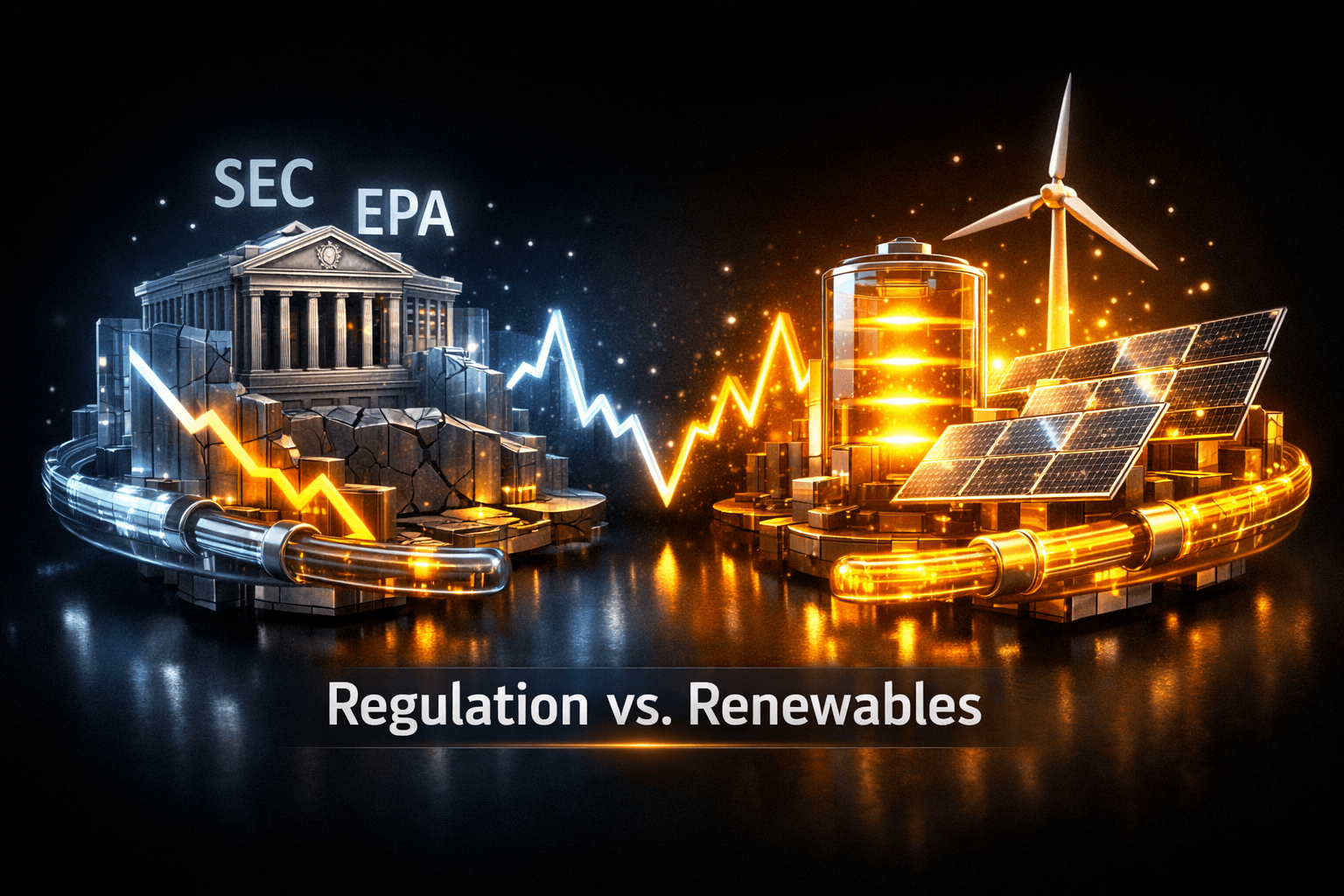
Regulatory developments and private investment are pulling the utilities sector in opposite directions, leaving investors with mixed signals as markets head into the long weekend. On one hand, the SEC has proposed rescinding a climate disclosure rule and the EPA faced pushback at a coal ash hearing, developments that reduce mandated transparency about environmental risks.
On the other hand, companies and project developers are advancing utility-scale solar and long-duration battery projects, while strategic acquisitions are accelerating the move into energy storage. What does this mean for your exposure to utilities and clean energy investments?
Market Highlights
U.S. equity markets are closed Saturday. The last trading session was Friday, May 29, and the next session opens Monday, June 1. Below are the top takeaways heading into the holiday.
- Regulatory risk: The SEC formally proposed rescinding a climate disclosure rule, a move critics say would reduce investor information about climate-related risks.
- Environmental pushback: Residents and advocates testified at an EPA coal ash public hearing in Jacksonville, urging stronger protections and opposing rollbacks.
- Storage and project wins: ContourGlobal brought a major solar-plus-storage facility online in Chile, touting Latin America’s longest-duration battery system.
- M&A in storage: Nextpower agreed to acquire Prevalon Energy for up to $365 million to build out its battery energy storage platform.
- Grid and gas trends: The EIA expects U.S. natural gas generation to average about 43.7 Bcf per day this summer, and Entergy’s gas projects account for roughly 70% of its MISO fast-track interconnection pipeline.
Key Developments
Regulatory Rollbacks and Local Pushback
The SEC’s proposal to rescind the climate disclosure rule was published on May 30 and has drawn criticism for reducing mandated climate risk reporting. CleanTechnica and other outlets note that rescinding the rule could limit investor access to forward-looking emissions and risk data, which analysts say has broader implications for corporate disclosure standards.
At the same time, local residents and environmental groups spoke at an EPA public hearing on coal ash rules in Jacksonville, pushing back against potential rollbacks. These actions suggest regulatory uncertainty will remain a key risk factor for companies with fossil fuel or legacy ash liabilities, and they raise questions about legal and reputational exposure for utilities.
Solar-Plus-Storage Momentum
ContourGlobal announced commercial operations at a large solar-plus-storage project in Chile, highlighting a long-duration battery that the company says is the longest of its kind in Latin America. Developers and utilities are increasingly pairing solar with extended storage to firm output and support grid reliability.
Smaller scale but locally relevant projects are also progressing, like the rooftop solar installation at IKO’s Blair Rubber facility in Seville, Ohio. These projects demonstrate both large and small players are still investing in distributed and utility-scale solar.
Storage M&A and Commercialization Paths
Nextpower’s deal to acquire Prevalon Energy for up to $365 million signals consolidation and technology acquisition in the battery energy storage market. The move expands Nextpower’s platform and underscores the commercial appetite for integrated storage solutions.
Utility partnerships are another avenue to commercialize new tech. CEBA noted that large-load customers can help de-risk deployments by taking on commercial demand or contract structures. That means you may see more bundled offtake or customer-driven projects, rather than reliance solely on utility procurement.
What to Watch
Regulatory decisions and project execution will drive near-term sector headlines. Keep an eye on the SEC and EPA rulemaking timelines and comment periods, because those will shape disclosure and compliance obligations for years to come. How will asset owners and utilities adapt if disclosure requirements are loosened?
On the project side, watch the rollout of DOE SPARK funding and whether recipients can execute quickly. The success of transmission and interconnection upgrades depends on readiness to deploy once funds arrive, and bottlenecks could slow grid modernization.
Also monitor natural gas demand trends. The EIA expects gas-fired generation to average 43.7 Bcf per day this summer, with a potential record peak in 2027. Entergy’s fast-track gas projects, largely tied to data centers, highlight continued reliance on gas in certain regions. Will storage and renewables scale fast enough to offset that demand growth?
Bottom Line
- Policy uncertainty is rising, with the SEC and EPA proposing rollbacks that could reduce investor-facing environmental disclosures and protections.
- Private investment in storage and solar is accelerating, from ContourGlobal’s Chile project to Nextpower’s $365 million acquisition of Prevalon Energy.
- Execution risk matters: DOE SPARK funds and transmission buildouts will only help if grant recipients and utilities are prepared to deploy quickly.
- Natural gas remains a key bridge fuel, with flat summer generation expected but record demand possible in 2027, especially where data center growth is clustered.
- You should watch rulemaking timelines, major project commercial operations, and M&A activity to gauge sector momentum and risk.
FAQ Section
Q: How will the SEC proposal affect utilities? A: The SEC proposal to rescind climate disclosure requirements could reduce mandatory reporting on climate risks, making it harder for market participants to compare companies on those metrics.
Q: Is storage growth a meaningful offset to regulatory rollbacks? A: Storage and solar deployments, along with M&A in the battery space, are increasing capacity and flexibility, but policy changes could still affect investor confidence and long-term capital flows.
Q: What short-term indicators should you monitor? A: Track SEC and EPA comment periods, DOE SPARK award announcements and execution updates, large project commercial operations, and regional gas demand trends from the EIA.