The Big Picture
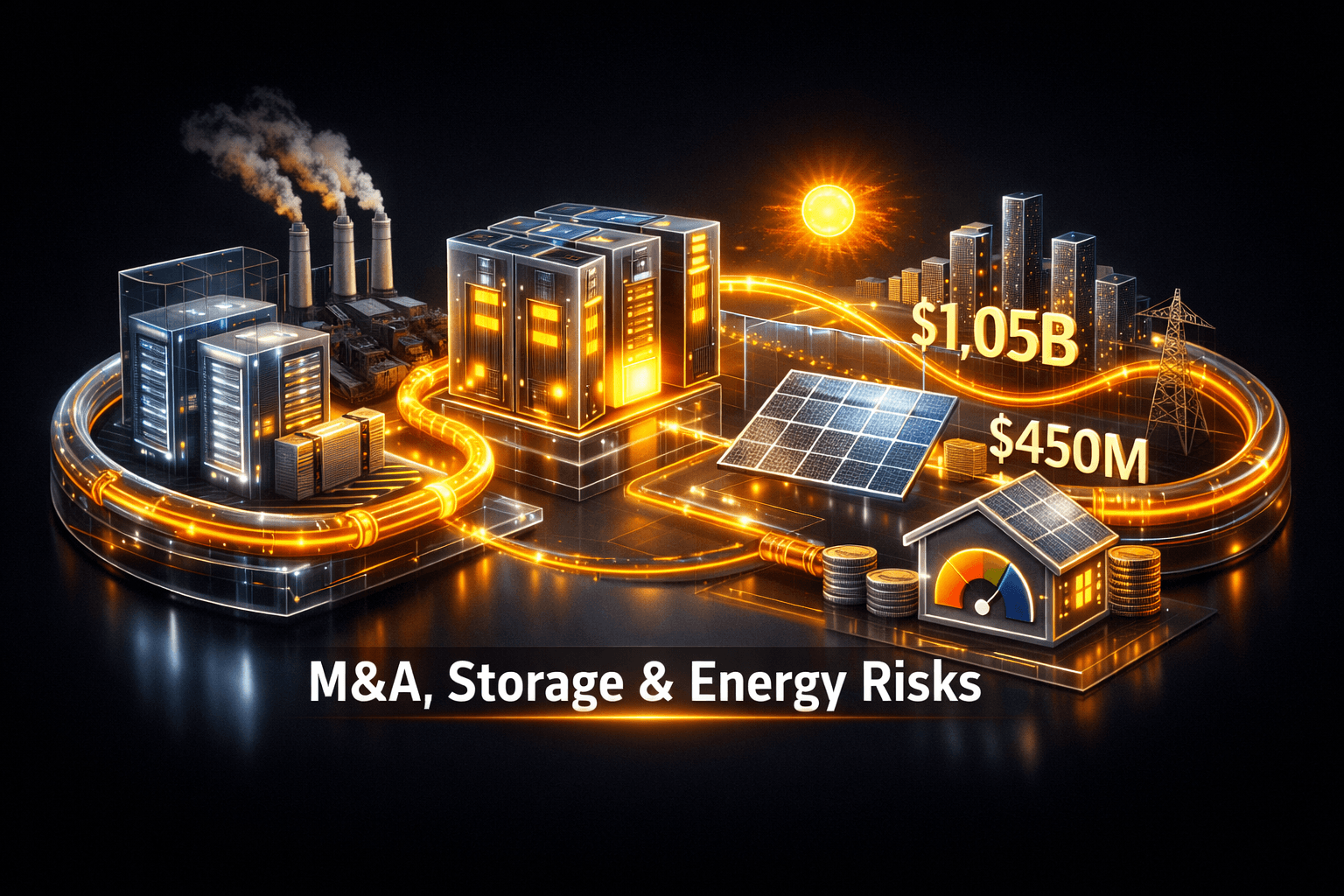
Major capital is moving into power infrastructure and grid resources, and that's the headline investors should note this morning. DigitalBridge's agreement to acquire ArcLight for up to $1.05 billion and a $450 million financing close for a Texas battery energy storage system together show momentum in capacity, storage and investor appetite.
At the same time you should be aware that the sector faces social and policy friction. A new Sierra Club analysis highlights heavy energy burdens for low income households, and a controversial 12 year contract will have a coal plant providing capacity to new data centers for $GOOGL and $AMZN, creating potential political and regulatory fallout.
Market Highlights
Quick facts and figures to start your trading day.
- DigitalBridge, via a definitive deal, will acquire ArcLight Capital Partners for up to $1.05 billion, combining infrastructure assets under management that push scale and dealflow for the buyer, reported by Power Engineering and POWER Magazine.
- Spearmint Energy closed a $450 million financing package to support a standalone BESS project in Texas, signaling continued investor interest in grid-scale storage and capacity markets.
- University of Colorado Boulder commissioned a 1.1 MW ground-mounted solar array on two acres, operational after breaking ground in April 2025.
- Sunstall launched Sunformance, a recovery division for underperforming solar assets, offering diagnostics, repair and repowering services to asset owners.
- Sierra Club analysis notes the Department of Energy’s threshold for a high energy burden is 6 percent of income, and finds low income households are carrying the heaviest burdens nationwide.
- NIPSCO GenCo signed a 12 year contract to supply capacity from the Merom coal plant for data centers that will serve $GOOGL and $AMZN customers in Michigan City, Indiana, a move flagged by CleanTechnica.
Key Developments
M&A and Capital Flows: DigitalBridge Acquires ArcLight
DigitalBridge’s planned purchase of ArcLight for up to $1.05 billion is the standout M&A event. The deal brings together specialized power infrastructure assets and expands DigitalBridge’s footprint in energy and power investments, creating scale that can lower financing costs and speed project deployments.
For you, that means analysts note the sector is attracting strategic buyers and dry powder, which often precedes more project activity and consolidation in transmission, generation and storage markets.
Storage and Project Finance Power Growth
Spearmint Energy’s $450 million financing for a Texas BESS shows lenders and sponsors are still backing large storage builds. Standalone BESS projects are proving bankable in merchant markets and capacity auctions, and that trend supports utility-scale reliability upgrades and peak management tools.
Sunstall’s Sunformance launch and the CU Boulder 1.1 MW solar bring operational and resiliency stories into focus. You’ll see more attention on asset performance and post-construction services as owners try to protect returns and extend asset life.
Social, Policy and Grid Integration Pressure
Not all headlines are constructive. Sierra Club’s interactive analysis highlighting energy burdens puts pressure on utilities and regulators to consider affordability programs, especially since households spending 6 percent or more of income on energy are classified as highly burdened.
Then there’s the Merom coal plant contract to power $GOOGL and $AMZN data centers. That deal could attract public scrutiny, and raise political and regulatory risks for local utilities and ratepayers. Can utilities balance project economics with growing demands for cleaner supply and social equity? It’s a question communities and regulators will be asking.
What to Watch
Here are the catalysts and risks to track through the week and into the summer.
- Regulatory responses and public reaction to the Merom coal contract, including potential state-level hearings or legislative scrutiny in Indiana.
- Integration and execution milestones for the DigitalBridge-ArcLight transaction, which will influence confidence in similar infrastructure deals.
- Progress and commercial operations timeline for the Texas BESS backed by the $450 million financing, since timely commissioning impacts revenue streams from capacity and ancillary services.
- Interconnection reforms and state grades from the Freeing the Grid initiative, which affect how easily you can expect distributed solar and storage to connect at scale.
- Asset performance metrics and warranty remediation demand that Sunformance aims to address, a trend that could shift returns for rooftop and utility scale owners.
Bottom Line
- Big capital is flowing into power infrastructure and storage, driven by M&A and project financing, which supports sector momentum.
- Operational and asset-recovery services are becoming more important as owners focus on protecting returns and optimizing production.
- Social equity and environmental scrutiny are rising, highlighted by energy burden data and the coal contract for major tech data centers, creating reputational and regulatory risks.
- State interconnection rules and workforce training initiatives will shape the pace of distributed clean resource deployment and grid integration.
- Analysts note these developments suggest growth opportunities, but expect selective exposure and attention to regulatory outcomes and project execution.
FAQ Section
Q: How does the DigitalBridge-ArcLight deal affect utilities exposure? A: The acquisition expands investor-backed infrastructure capacity, which can speed project financing for transmission, generation and storage that utilities and regulators rely on.
Q: Will the Merom coal contract change data center sourcing trends? A: The contract is notable because it ties large cloud customers to coal-sourced capacity, and it may prompt closer scrutiny of corporate procurement and local policy responses.
Q: What does the $450 million BESS financing mean for grid reliability? A: Large-scale storage financing supports more capacity for peak management and ancillary services, which helps reliability and creates new revenue streams in capacity markets.