The Big Picture
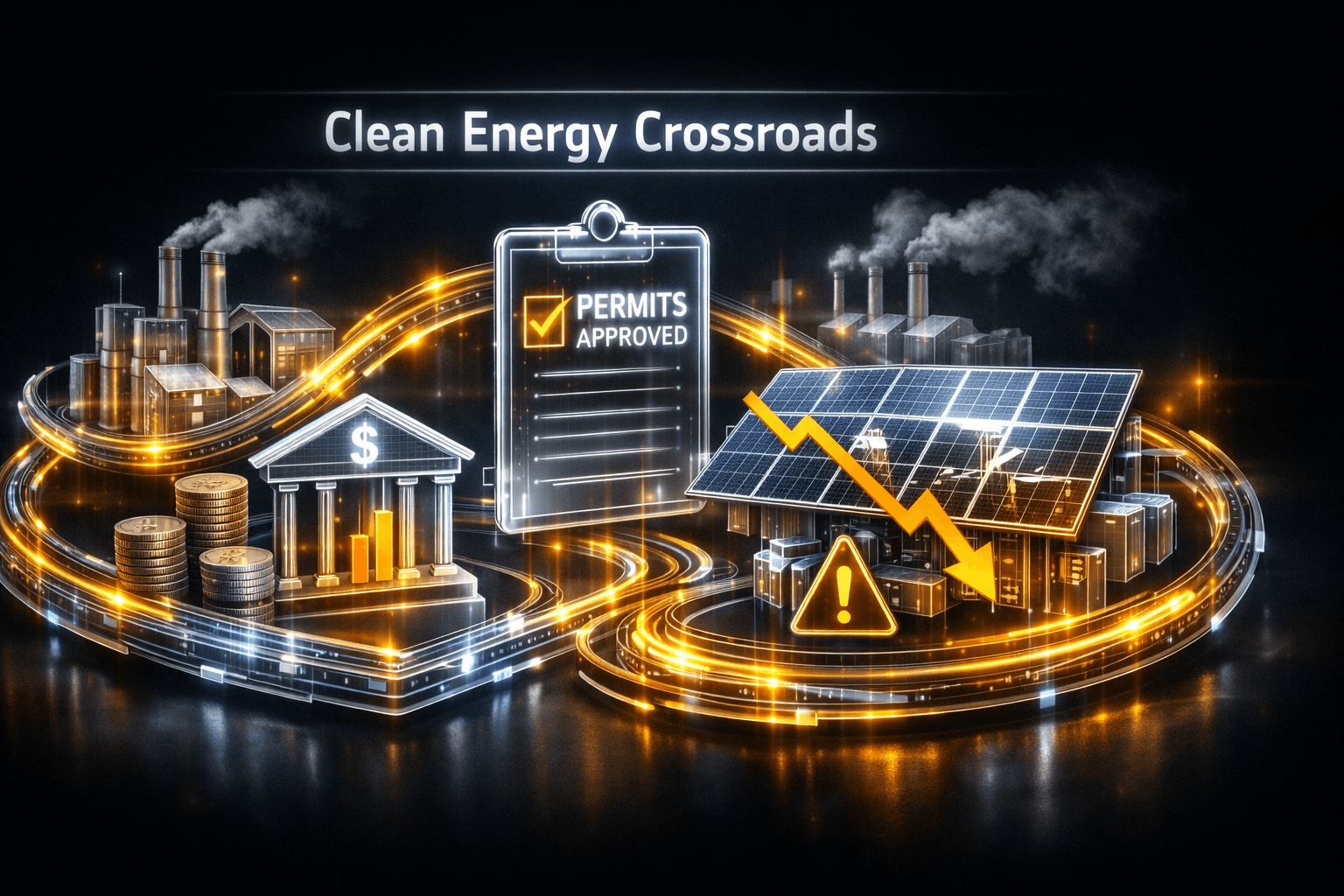
Project financing and policy moves are helping keep utility-scale clean energy projects moving, but emerging technical and policy headwinds mean the sector is sending mixed signals to investors today. You can see capital flowing into new solar capacity and U.S. permitting reform, while studies and data show coal pollution and canceled investments are slowing some renewable outcomes.
This balance matters because your portfolio exposure to utilities depends on both near-term demand drivers and longer-term efficiency and regulatory risks. Which trends will dominate this summer, and how should you follow them?
Market Highlights
Key facts and figures to scan quickly before the open.
- Canadian Solar $CSIQ plans to double its Texas panel assembly from 5 GW to 10 GW, a 100% capacity increase announced in its Q1 results.
- Sunraycer Renewables closed a $901 million project financing facility to support three Texas solar projects, signaling robust capital availability for development.
- Crux secured a $500 million debt facility to finance tax-driven clean energy investments, including hybrid tax equity structures.
- A new study mapped more than 140,000 PV installations and found coal emissions are reducing solar output where plants co-locate with solar arrays.
- U.S. natural gas demand is forecast to hit a record 117 billion cubic feet per day this summer, with 111.7 Bcf/d of dry gas production cited as absorbing much of that growth.
- The Environmental Defense Fund reported a net loss of 5,900 renewable energy manufacturing jobs in Q1 and cited about $1.4 billion in canceled renewable investments connected to federal policy shifts.
Key Developments
Solar efficiency under pressure from coal pollution
New research from University of Oxford and UCL mapped over 140,000 solar PV sites and showed coal-fired plant pollution reduces solar output, especially where coal plants and solar arrays sit side by side. That means in some regions you may see lower-than-expected generation from existing solar assets, which can affect merchant project revenues and capacity factors.
For utilities and independent power producers, this is a reminder that siting and local air quality matter as much as panel counts and capacity. Could lower output force more reliance on gas generation this summer?
Big financing deals and capacity buildouts keep projects moving
Capital markets are clearly active in the clean-energy space. Sunraycer’s $901 million financing and Crux’s $500 million debt facility point to continued investor appetite for tax-driven and project-level finance. Canadian Solar’s plan to double Texas panel assembly to 10 GW shows manufacturers are scaling U.S. production capacity.
These deals help move projects from shovel-ready to operating, and they reduce some supply chain risk. Analysts note that tax equity and debt liquidity remain critical for project timelines, so you’ll want to track whether these structures keep pace with demand.
Gas demand surge and regulatory tweaks shape summer supply
POWER Magazine flagged a projected record U.S. gas burn this summer, driven by coal retirements, growing data center load, and LNG exports. That points to higher utilization of gas-fired plants and potential price sensitivity if supply tightens during peak demand.
At the same time the EPA said it is expediting Clean Air Act permit reviews to remove delays by allowing concurrent public comment and review. Faster permitting could accelerate new gas or clean-tech projects, but it may also raise public scrutiny and legal challenges. Will permitting reform speed project in-service dates enough to meet summer load?
What to Watch
Here are the catalysts and risks to monitor through the trading day and into the summer season.
- Permitting and regulatory updates from the EPA, watch for guidance implementation that may change project timelines.
- Summer gas demand and price moves, weekly EIA storage reports, and any regional pipeline constraints that could affect generation costs.
- Capital market activity in tax equity and project finance, including additional facilities like the $901 million and $500 million deals reported this week.
- Manufacturing and employment signals, specifically follow any updates tied to the $1.4 billion of canceled investments and the 5,900 job decline reported by EDF.
- Operational data and forecasts from large project owners about capacity factors, especially in regions indicated by the coal-pollution study.
You'll want to read earnings and developer updates closely. Quarterly results and guidance will give you a clearer view of near-term cash flows and project timelines.
Bottom Line
- Project finance and factory expansions show capital and capacity are lining up to support new clean-power builds.
- Technical and policy headwinds, including coal pollution reducing solar output and canceled investments, are creating uneven execution risk.
- Record summer gas demand suggests higher utilization for gas-fired generation, which could tighten margins or raise prices in peak periods.
- Faster EPA permitting may accelerate projects but could also invite legal or public challenge, so timelines remain uncertain.
- Follow permit rules, financing announcements, and operational capacity factors to track which utilities and developers navigate these mixed signals best.
FAQ Section
Q: How will coal pollution affect solar project returns this summer? A: The new study shows localized reductions in solar output where coal plants are nearby, which can lower capacity factors and near-term revenues for affected installations.
Q: Does faster EPA permitting mean projects will come online sooner? A: Expedited reviews may reduce administrative delays, but court challenges and public comments can still affect actual timelines, so the impact will vary by project.
Q: Should I expect higher electricity prices this summer? A: Data suggests stronger gas burn and tighter supply could put upward pressure on wholesale power prices in peak periods, though regional conditions and storage levels will determine the extent.