The Big Picture
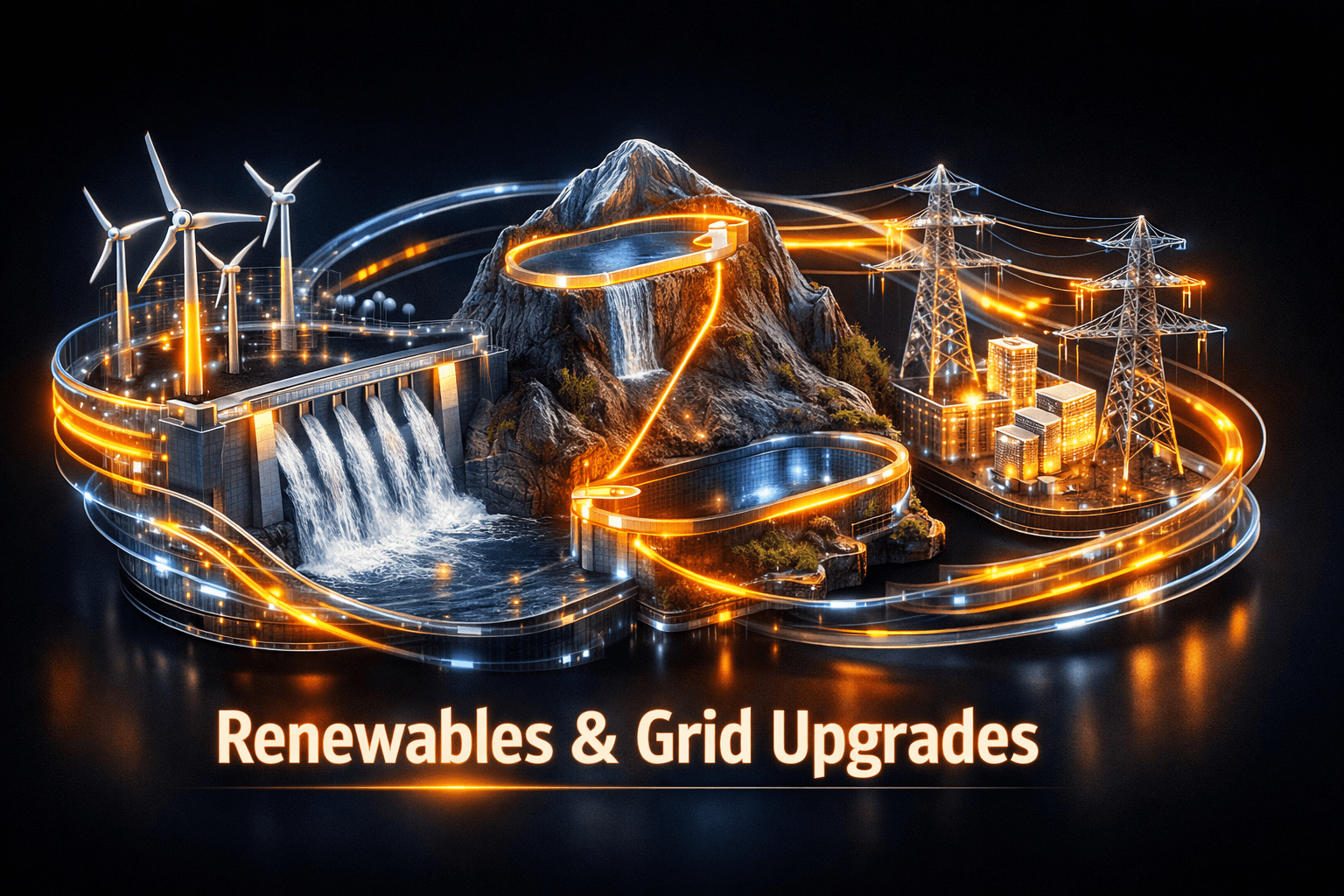
Renewables and grid technology led the headlines in utilities on May 4, as federal funding, large equipment orders, and advancing offshore projects reinforced a transition toward cleaner, flexible capacity. That momentum matters because it signals growing capital deployment into storage and grid modernization, which can influence utility planning, rates, and long term demand patterns.
Investors had several concrete data points to parse today, not just commentary. You saw government money earmarked for hydropower, a major pumped storage equipment award in India, and utility-level progress on offshore wind. Taken together these items suggest execution is accelerating across multiple clean-power vectors.
Market Highlights
Here are the quick facts and headline numbers that moved the tape and the storylines you should know about.
- Dominion Energy $D, updating investors, said its 2.6 GW Coastal Virginia Offshore Wind farm began producing power in March and should be fully operational by 2027, with the company estimating roughly $5 billion in fuel savings over 10 years. Dominion also reported fuel and other energy related costs rose 67% in Q1.
- The U.S. Department of Energy will negotiate release of nearly $430 million in payments to 212 hydropower facilities, supporting the domestic hydro fleet and operations across multiple states.
- GE Vernova secured an order from Megha Engineering & Infrastructures for nine 150 MW units at Upper Sileru, a pumped storage project in Andhra Pradesh totaling 1,350 MW of units to be delivered by 2030, underlining global demand for long duration storage.
- Tigo Energy added real time spot market pricing to its Predict+ platform, claiming forecasting accuracy up to 97.5 percent for ISO customers, a relevant upgrade for utilities and aggregators managing variable renewables.
- Regulatory and safety focus intensified in Michigan, where a House panel took testimony on dam safety reforms as heavy rains strain aging structures, reminding you that infrastructure risks remain in play.
Key Developments
Dominion’s Offshore Wind Progress and Cost Context
Dominion’s updates offered a mix of optimism and realism. The Coastal Virginia Offshore Wind project is now supplying electricity and is expected to be fully online by 2027, with projected fuel savings of about $5 billion over a decade. At the same time Dominion disclosed a sharp 67 percent jump in fuel and energy related costs during Q1, a near term headwind that analysts note will shape earnings and rate conversations.
For you as a watcher of regulated utilities, the implication is clear. Offshore can deliver long term value but utility earnings and near term cash flow will reflect legacy fuel volatility and project ramp costs.
Hydropower and Pumped Storage Move From Plan to Procurement
The DOE's nearly $430 million restart for hydropower payments is a direct lift for the U.S. hydro fleet, covering 212 facilities. In parallel, GE Vernova's win for nine 150 MW units at Upper Sileru in India shows the global appetite for pumped storage, which helps balance high renewables penetration.
These items together mean you should expect more policy and private capital aimed at long duration storage. That's a critical piece for integrating variable wind and solar at scale.
Grid Intelligence and Mobility Trends Boost Electrification Tailwinds
Grid technology got a lift from Tigo’s Predict+ update and a Utility Dive piece calling for mixed fleet transmission planning in the AI era. Predict+ now integrates real time spot pricing for ISOs and claims forecasting up to 97.5 percent accuracy through machine learning. Analysts note that enhanced forecast precision reduces operational costs and improves renewable dispatch.
Meanwhile broader mobility stories from CleanTechnica highlighted EV momentum in markets from Thailand to Manila, plus regional scooter trends outside China. You might ask, how quickly will increased EV uptake translate into higher residential and commercial load? The short answer is it will vary by market and policy, but grid planners are clearly factoring electrification into near term modeling.
What to Watch
Expect a busy runway of catalysts and risks that could change sentiment quickly. Watch these items closely so you can follow how the sector narrative evolves.
- Operational milestones for large projects, especially Dominion’s 2.6 GW offshore site as it progresses toward full operation in 2027, which will drive forward looking cost and savings assumptions.
- DOE implementation details for the $430 million hydropower package, including timing of payments and eligibility, since cash flow to facilities could affect maintenance and capacity availability.
- Deliveries and contract execution for GE Vernova’s pumped storage units, because on time and on budget delivery will validate the commercial case for large scale storage in emerging markets.
- Regulatory responses to dam safety in Michigan. Can state and federal regulators accelerate upgrades and funding to mitigate failure risks? That will influence insurers and local utility operations.
- Adoption of advanced forecasting tools like Tigo’s Predict+ by utilities and market operators. Implementation pace will affect marginal dispatch, market prices, and renewable curtailment levels.
Bottom Line
- Renewables and storage are gaining tangible traction today, with federal support and large equipment orders reinforcing the transition.
- Grid intelligence upgrades are becoming operational levers, not just theory, which could reduce costs tied to renewable variability.
- Short term risks remain, including higher fuel costs for some utilities and infrastructure safety concerns such as dam resilience.
- Execution matters more than headlines, so track project timelines, payment flows, and regulatory actions for the clearest signals.
- Analysts note the sector shows momentum, but outcomes will hinge on delivery and cost management, so stay selective and data driven.
FAQ Section
Q: How will DOE’s $430 million affect hydropower operations? A: The payments should help 212 facilities shore up operations and maintenance, improving reliability and capacity availability while easing short term cash flow pressures.
Q: Does GE Vernova’s pumped storage order matter for global storage supply? A: Yes, a large order for nine 150 MW units signals strong demand for long duration solutions, which supports grid flexibility as renewables scale.
Q: Will better forecasting tools like Tigo’s Predict+ lower electricity costs? A: Improved forecasting can reduce imbalance costs and curtailment, but savings depend on adoption, market rules, and how utilities integrate the data into operations.