The Big Picture
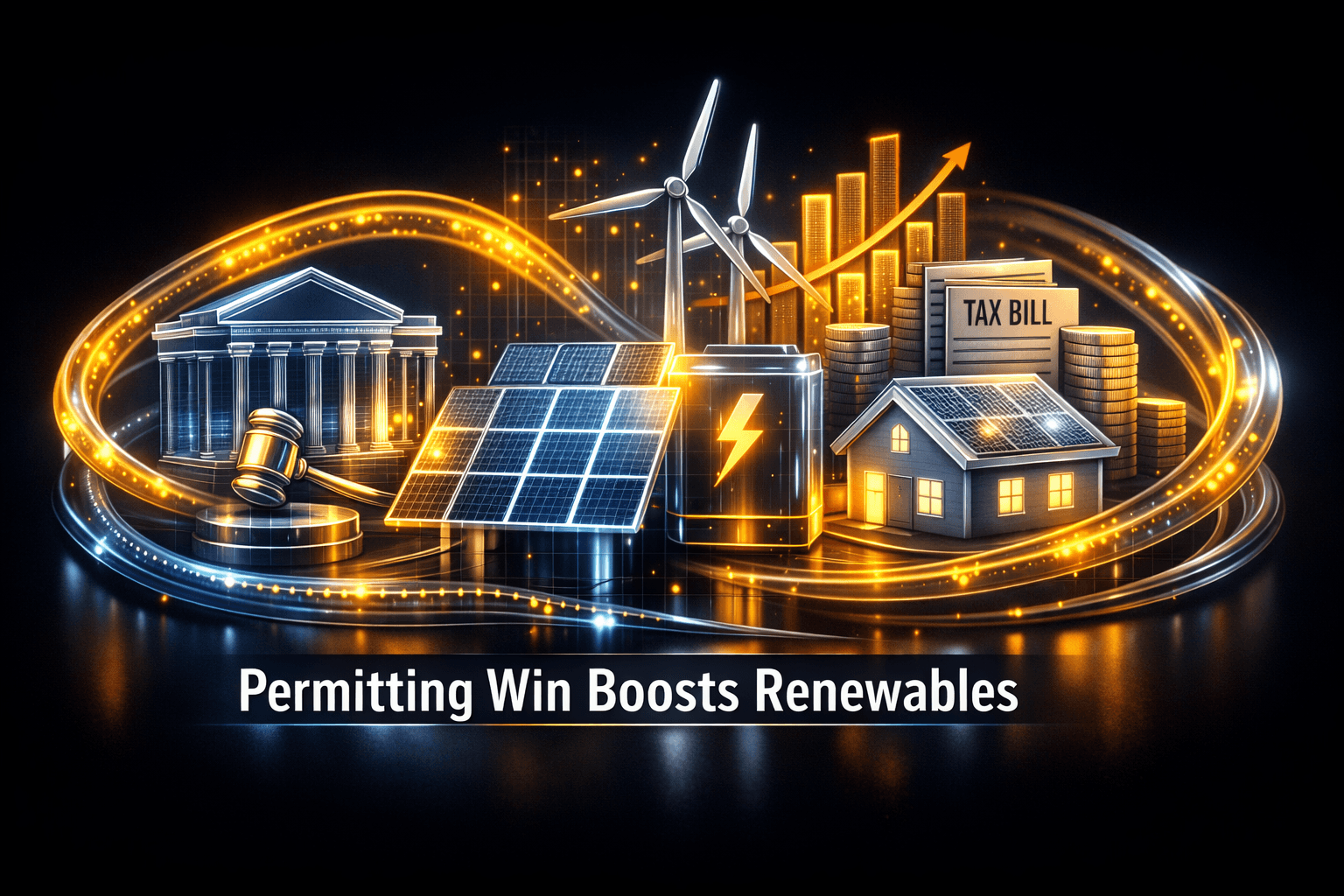
The most consequential utilities development overnight was a federal court order blocking enforcement of the Department of the Interior memo that had been slowing permitting of solar and storage projects. That ruling clears a major procedural roadblock for utility-scale renewables and storage, and industry groups hailed it as a near-term catalyst for stalled projects.
This matters because permitting delays have been one of the largest soft spots for project pipelines over the past year. If more projects move forward, you could see faster capacity additions and more procurement by regulated utilities and merchant developers. The market was closed on Saturday, but these developments set the tone heading into the next trading week.
Market Highlights
Quick facts and figures for investors to scan.
- Federal court blocks Interior memo, industry says it lifts months of permitting uncertainty for solar and storage projects.
- Average U.S. electricity prices rose 9 percent year over year in February, according to EIA data, with Virginia up 26.3 percent, Ohio up 21.9 percent and Pennsylvania up 19.5 percent as of Friday, April 24.
- Advanced Green Technologies completed a 2.2 MWDC rooftop solar system at the Orange County Convention Center in Orlando, one of Florida's largest rooftop installs.
- Republican lawmakers introduced the American Energy Dominance Act to extend commercial clean energy tax credits, signaling bipartisan attention on incentives.
- Data center project cancellations quadrupled to 25 in 2025 from six in 2024, as public opposition and power access issues mount, a Baird analyst told Utility Dive.
- Developments in fusion, geothermal and EV supply chains continued, with private fusion investment topping $10 billion and oil and gas tech being repurposed for geothermal growth.
Key Developments
Court blocks Interior memo, permitting uncertainty eases
A federal judge blocked enforcement of the Interior Department memo that had slowed approvals for solar and storage projects. The Solar Energy Industries Association called the decision a win for clean energy deployment. For developers and utilities this removes a procedural choke point that had delayed interconnection and land use approvals.
For you as an investor, that may translate into clearer timelines for projects that were in limbo. It won't change every project's economics overnight, but it should help move shovel-ready capacity toward construction.
Policy momentum: lawmakers push to protect commercial solar credits
Four Republican lawmakers introduced legislation aimed at preserving commercial renewable tax credits, including sections of the investment tax credit and production credit framework. The move broadens support for keeping long-term incentives intact, which is important for project finance and corporate offtake agreements.
Tax policy like this can directly influence capital flows into commercial and utility-scale projects, so you'll want to watch congressional progress. If enacted, the bill would reduce policy risk that has been cited by some developers and lenders.
Deployments and technology advances reshape demand
On the project front, Advanced Green's 2.2 MW rooftop system at the OCCC is a tangible example of local-scale deployments that double production without expanding footprint. At the same time, private capital for fusion has topped $10 billion and oil and gas firms are transferring tech to geothermal development.
These technology threads raise longer term capacity and cost questions. Will fusion ever reach a target like $50 per MWh? Not this quarter, but the investment trend suggests the sector is chasing that price point with serious capital behind it.
What to Watch
Where should you focus in the coming days and weeks?
- Regulatory follow up: monitor appeals or additional rulings related to the Interior memo. A definitive court outcome will determine how quickly permitting resumes at scale.
- Congressional action on the American Energy Dominance Act. Progress or setbacks on tax credits will affect project economics and financing availability.
- Utility and developer announcements on restarted projects. Watch companies such as $NEE, $DUK, $SO and $AEP for procurement updates or revised construction timelines.
- Grid stress signals and demand shifts. Rising retail electricity prices and data center delays create both revenue and risk implications for utilities. Could higher rates push more customers to efficiency and distributed generation?
- Commodity and geopolitical risk. Aluminum price moves and Middle East tensions have already pushed prices and could change industrial demand patterns that affect grid loads.
Bottom Line
- Permitting clarity from the court is a meaningful near-term positive for solar and storage pipelines and could accelerate projects that were previously stalled.
- Bipartisan attention on preserving commercial tax credits reduces a key policy risk and supports financing for utility-scale and commercial deployments.
- Rising retail electricity prices are boosting utility revenue metrics, but affordability and public pushback create political and growth risks you should monitor.
- Technology advances in fusion and geothermal are long-term positives, but they remain capital intensive and will take time to move the needle on costs.
- Expect headlines and company-level updates early next week as the market reopens, so plan to check regulatory filings and developer statements on Monday.
FAQ Section
Q: What does the court ruling mean for utility-scale solar projects? A: The ruling blocks enforcement of a memo that slowed permitting, so many projects that were delayed could see approvals and construction timelines clarified.
Q: Will proposed tax credit legislation reach the finish line? A: It is early stage, but bipartisan sponsorship increases the chance for progress. Analysts note legislative language and committee movement are the key items to watch.
Q: How should I watch grid risk from data centers and price spikes? A: Track project cancellations, utility procurement plans and EIA price updates. Rising retail rates and public opposition to new builds are near-term risks to demand growth.