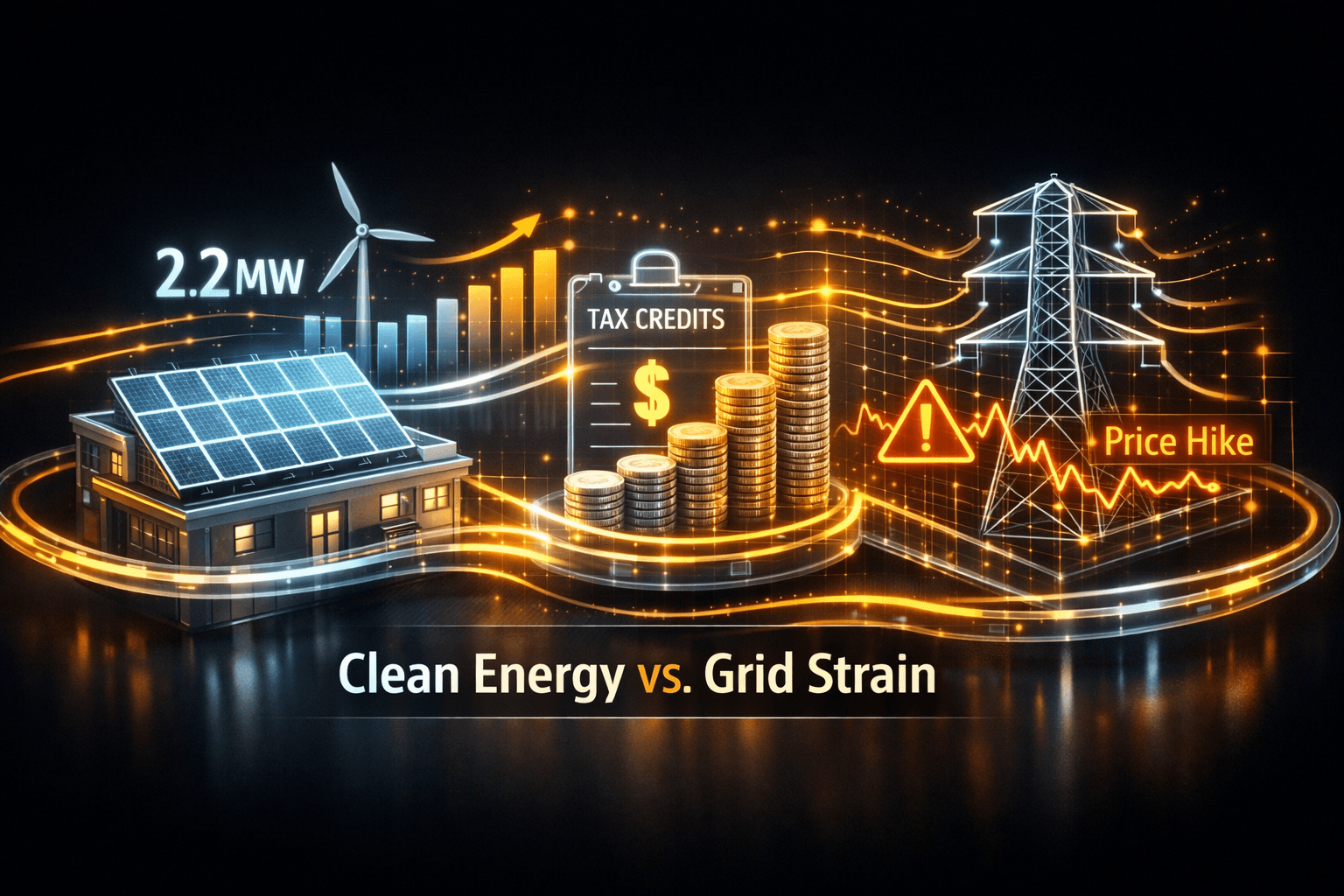
The Big Picture
Today saw a mix of encouraging clean-energy growth and reminder signs of strain across the U.S. power system. A major rooftop solar install in Orlando and renewed policy interest in preserving commercial tax credits highlight deployment momentum, while rising retail electricity prices and data center build cancellations underline near-term affordability and permitting challenges.
Why does this matter to you, the retail investor? These stories indicate both opportunity in renewable project pipelines and risk from grid constraints and public pushback, so you’ll need to be selective about exposure to different parts of the utilities chain.
Market Highlights
Quick facts and numbers to keep in mind from today’s coverage.
- Advanced Green Technologies completed a 2.2-MWDC rooftop solar system at the Orange County Convention Center in Orlando, more than doubling the center’s solar output on the same rooftop footprint.
- Republican lawmakers introduced the American Energy Dominance Act, aiming to preserve commercial clean-energy tax credits, including provisions tied to the 48E investment tax credit and 45Y production tax credit.
- Hyundai revealed manufacturing scale plans and a partner deal with Waymo that could involve as many as 50,000 IONIQ 5-based robotaxis over several years, signaling rising EV fleet demand.
- Data center project cancellations quadrupled to 25 in 2025 from six in 2024, a trend tied to local opposition and power access limits, according to Baird analyst Justin Hauke.
- Average U.S. retail electricity prices rose 9% year over year in February, with revenue per kilowatt-hour up 26.3% in Virginia, 21.9% in Ohio and 19.5% in Pennsylvania, per the EIA.
- Private investment in fusion has topped $10 billion globally, while analysts and developers are discussing a target of around $50 per MWh as the threshold for commercial competitiveness.
Key Developments
Rooftop solar scale-up at a major convention center
Advanced Green Technologies’ 2.2-MWDC installation at the Orange County Convention Center is one of Florida’s largest rooftop systems and supports the center’s LEED Gold aims. That kind of on-site deployment shows you how commercial-scale customers can cut grid demand and profile as long-term offtakers for renewables.
Policy and long-term clean-energy bets
The American Energy Dominance Act aims to extend or preserve commercial tax credits that underpin many utility-scale and commercial solar projects. At the same time, fusion and geothermal coverage underscores investor interest in next-generation generation technologies, though economics and regulatory pathways remain under discussion. Combined, these developments suggest policy and innovation are keeping the clean-energy pipeline alive, but timelines vary.
Grid constraints, data center pushback and rising rates
Not everything is moving smoothly. Data center cancellations surged in 2025 as public opposition and power access concerns delayed or stopped projects. You should note that rising retail electricity revenue per kWh in key states signals higher bills for customers and mixed outcomes for utilities, which may see higher topline revenue but also face affordability and regulatory scrutiny.
What to Watch
Looking ahead, these are the catalysts and risks that could move utilities and related clean-energy names in the coming weeks.
- Policy action: Watch for legislative movement on the American Energy Dominance Act and any state-level decisions on tax-credit interpretation, since changes could affect commercial project economics and new-build pipelines.
- Permitting and transmission: Keep an eye on state moratorium proposals and transmission permitting timelines, which are shaping data center outcomes and broader project interconnections.
- Wholesale and retail price signals: The EIA’s monthly reports and regional wholesale power trends will tell you whether the cost pressures that lifted retail rates are continuing into spring and summer.
- Technology milestones: Fusion cost modeling, geothermal projects leveraging oil-and-gas tech, and large-scale battery ferry deployments could change long-term demand and capacity planning, but these are multi-year stories to watch.
- Corporate demand drivers: Big fleet and industrial orders, like Hyundai and Waymo’s robotaxi plans, will affect long-run electricity demand patterns in certain regions, so follow procurement announcements.
What should you monitor first? Track near-term policy headlines and state permitting developments, because they will likely determine which projects advance or stall.
Bottom Line
- The sector is a mixed bag today: deployment and policy support coexist with cost and permitting headwinds, producing a neutral near-term outlook.
- Commercial and municipal projects, exemplified by the 2.2-MW Orlando rooftop install, show practical demand for on-site renewables and sustainability commitments.
- Policy proposals to preserve tax credits could shore up project economics, but legislative outcomes and timelines remain uncertain.
- Rising retail electricity revenue and data center cancellations are immediate risks that can pressure regulatory relations and demand forecasts.
- For your portfolio, analysts note that selective exposure to contractors, grid upgrades, and long-duration storage may capture growth while avoiding permits-heavy projects.
FAQ Section
Q: How will the proposed tax-credit bill affect commercial solar projects? A: The bill aims to preserve or extend key credits such as 48E and 45Y, which would support project economics if enacted, but passage and specific provisions remain uncertain.
Q: Should you expect lower bills as more renewables come online? A: Not immediately, because retail electricity prices rose about 9% year over year in February and transmission, fuel and capacity factors still influence near-term bills.
Q: What are the main risks to renewable project pipelines right now? A: The main risks are permitting and power access constraints, local opposition to large builds, and policy uncertainty, all of which have already contributed to recent data center cancellations.