The Big Picture
A federal judge on Apr 22 temporarily blocked five Trump administration orders that were restricting federal oversight of renewable projects, a development that could accelerate U.S. solar and wind permitting. That legal win landed alongside a string of project announcements and storage deployments that together point to stronger demand for clean generation, corporate renewable contracting, and grid upgrades.
If you follow utilities, today looks like a potential turning point for project pipelines and corporate procurement, but the sector still faces safety and infrastructure challenges, especially after a deadly coal-plant explosion in India. What does this mean for your view of the sector going into tomorrow?
Market Highlights
Key moves and numbers you need from today.
- Federal court action: U.S. District Judge Denise Casper issued a preliminary injunction on Apr 22, pausing five orders that had limited renewable project approvals.
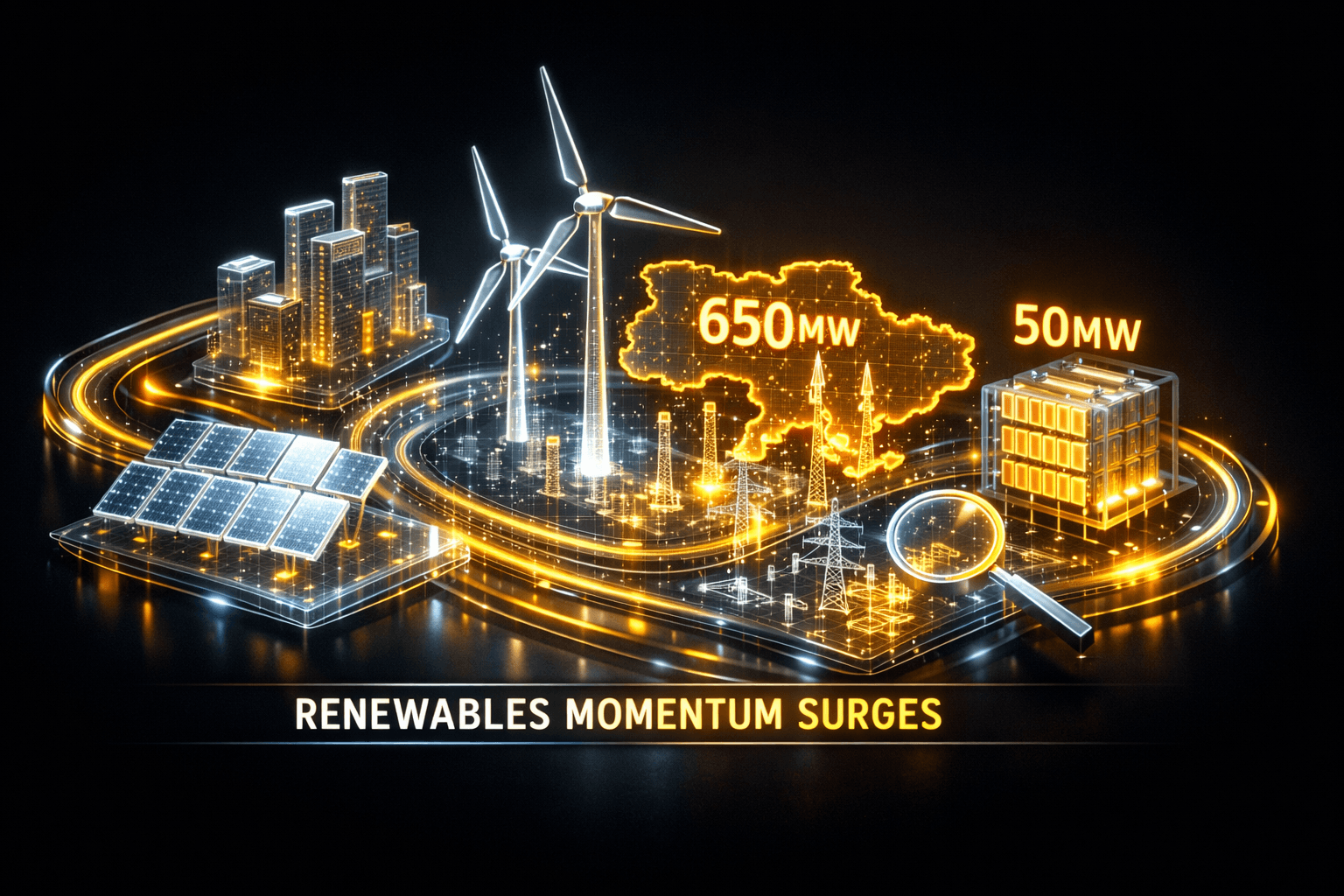
- Big wind project: DTEK announced a €1.2 billion investment to build the 650 MW Poltavska wind farm in Ukraine, the company’s largest private renewables push to date.
- Distributed storage: Base Power signed for a 50 MW battery deployment to help Guadalupe Valley Electric Cooperative manage price spikes and peaks in South Texas, according to Utility Dive.
- Corporate-backed solar: Ever.green completed a 5 MW Baron solar project in North Carolina, financed largely by Microsoft suppliers including Slalom and Visionet, with long-term REC contracts.
- Electrification strength: India sold nearly 191,000 electric two-wheelers in March, up 45% year over year, signaling rising EV adoption in major emerging markets.
- Safety alert: The death toll at Vedanta’s Chhattisgarh coal plant in India rose to 24, prompting criminal and technical probes.
Key Developments
Federal court ruling lifts federal permitting cloud for renewables
The Massachusetts court’s preliminary injunction halts five administration orders that had made federal review more restrictive, according to Solar Power World. The decision is procedural for now, but it removes a near-term legal barrier that developers and utilities say increased uncertainty around siting and timelines.
For project developers and co-ops, that means some stalled projects could resume permitting work, and corporate buyers may move faster on REC and power purchase agreements. Will permit timelines shorten in practice? Regulators and agencies will set the pace next.
Storage and corporate procurement expand grid flexibility
Base Power’s 50 MW distributed battery deployment for Guadalupe Valley Electric Cooperative is a good example of how utilities and co-ops are using storage to blunt price spikes and manage peaks. Distributed batteries reduce exposure to volatile wholesale prices and can defer some transmission upgrades.
Meanwhile, a 5 MW solar project in North Carolina shows corporate REC demand remains a firm source of capital for smaller projects. You should expect more vendor-backed and corporate-backed deals as companies like $MSFT and suppliers lock in clean supply.
Global buildout, electrification gains, and a stark safety reminder
DTEK’s €1.2 billion, 650 MW wind farm in Ukraine underscores continued large-scale investment in renewables outside core Western markets. At the same time, India’s EV two-wheeler market is growing rapidly, with March sales near 191,000 units and a 45% year-over-year jump, a bullish sign for electricity demand and vehicle-to-grid opportunities.
That said, the fatal boiler explosion at Vedanta’s coal plant that killed 24 workers is a harsh reminder of legacy generation risks and the regulatory scrutiny coal operations can draw. Safety probes may accelerate decommissioning or stricter oversight in some markets.
What to Watch
Tomorrow and the coming weeks will hinge on a few clear catalysts. First, follow developments in the federal injunction and any agency responses or appeals, since administrative rulings and timelines will shape U.S. permitting capacity.
Second, track announcements of project financing and offtake deals. Are more supplier groups and corporates following the Microsoft suppliers’ lead on RECs and direct procurement? That matters for smaller developer economics.
Third, monitor grid upgrade plans and interconnection queues that affect when projects can actually deliver power. Can utilities accelerate interconnection? Also watch safety and regulatory outcomes from the Vedanta probes, and policy debates on Alaska energy modernization and federal infrastructure priority setting.
Bottom Line
- The sector’s tone is optimistic today, driven by a court win for renewables and several fresh project commitments, suggesting momentum for new builds and storage deployments.
- Corporate procurement and distributed storage are playing an increasingly visible role in project finance and cost management for co-ops and utilities.
- Global investments like DTEK’s 650 MW wind farm and India’s EV surge point to rising power demand and long-term structural growth for clean generation.
- Risks remain, especially around operational safety at legacy plants and potential policy shifts; you should watch regulatory outcomes and interconnection backlogs closely.
- Short-term market moves may hinge on permit clarifications and the pace of project financing, not just supply fundamentals.
FAQ Section
Q: Will the federal court injunction immediately speed up U.S. solar and wind projects? A: The injunction removes a legal constraint, but actual timelines depend on agency actions, permitting resources, and interconnection capacity.
Q: How material is the 50 MW battery deal for utilities? A: It’s a modest but meaningful example of distributed storage lowering price risk and peak exposure for a local co-op, and similar projects can scale across regions.
Q: Should the Vedanta accident change how you view coal assets? A: The accident raises safety and regulatory risk for coal operators and may accelerate scrutiny and potential costs for upkeep and liability.