The Big Picture
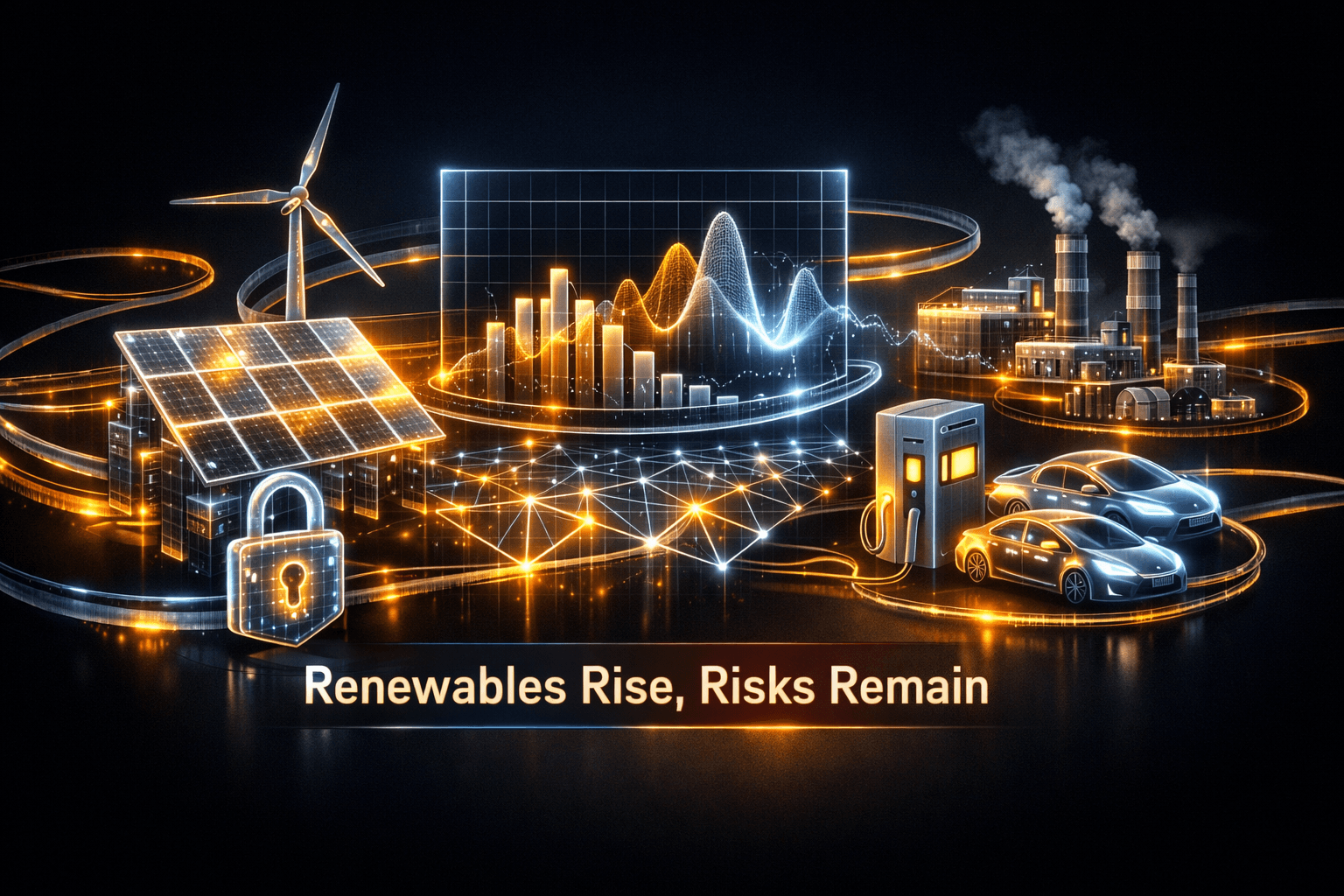
Today the utilities space showed both momentum and caution, as renewable technology moved closer to commercial scale while systemic risks and legacy fuels reasserted themselves. You saw concrete steps toward bankable solar production and better risk modeling, but you also saw warnings on cybersecurity, fleet electrification hurdles, and a major fossil-fuel project revival in China.
Why does this matter to you as an investor or watcher of the sector? These developments affect project economics, grid planning, and regulatory direction, and they can move valuation expectations for utilities, suppliers, and technology providers into tomorrow’s trading session.
Market Highlights
Quick facts and market-moving items from today that you can act on in your due diligence.
- Solar modeling gets more sophisticated: PowerUQ’s Monte Carlo uncertainty engine is now available inside Terabase Energy’s PlantPredict platform, improving project-term generation risk analysis for developers, financiers, and asset managers.
- Perovskite manufacturing scales up: Tandem PV started demonstration production in a 65,000-square-foot Fremont facility with roughly 40 MW of annual capacity, moving R&D results toward repeatable output.
- Grid demand trends: MISO expects load to rise about 35% by 2035 driven by data center growth, raising planning uncertainty for transmission and generation.
- Regional market benefits: La Plata Electric expects about a 20% reduction in greenhouse gas emissions after joining the Southwest Power Pool, a concrete outcome for decarbonization via market changes.
- Fossil-fuel policy shift: China is reviving a multibillion-dollar coal-to-gas project after a decade-long pause amid reported global gas supply disruptions tied to recent Middle East conflict dynamics.
Key Developments
Solar technology and commercial readiness
Tandem PV’s move into demonstration manufacturing is a headline you shouldn’t miss. The company’s Fremont line, built for 40 MW a year, marks a pivot from laboratory performance to repeatable production, which is essential if perovskite-silicon tandems are to lower levelized costs and improve panel efficiency at scale.
At the same time, PowerUQ’s extension for Terabase’s PlantPredict gives developers and financiers a Monte Carlo-based tool to quantify generation uncertainty across project life cycles. That kind of analytics can move the needle when lenders assess revenue risk and when owners price long-term contracts.
Grid planning, demand growth, and regional markets
MISO’s projection of a 35% load increase by 2035, driven largely by data center buildout, highlights a structural demand story for utilities, transmission developers, and battery providers. But the operator also warned that data center planning widens long-term uncertainty, so planning models will need to be more dynamic.
Meanwhile, La Plata Electric’s transition into the Southwest Power Pool reportedly delivers roughly a 20% immediate emissions reduction and lower wholesale costs. That’s an example of how market architecture and regional seams can materially change outcomes for local utilities and their customers.
Risks: cybersecurity, EV adoption, and fossil-fuel policy shifts
Advances in inverter functionality and DER connectivity are positive for flexibility, but industry outlets flagged a rising cybersecurity imperative. Greater device connectivity expands attack surfaces, so utilities and vendors will need to invest in hardened firmware and network defenses.
Fleet managers meanwhile remain cautious about EVs, citing limited options for larger trucks and range and charging concerns, even as roughly a third of states adopt zero-emission fleet requirements. And on the fossil side, China’s decision to restart a large coal-to-gas project underscores how geopolitics and supply shocks can push investment back toward carbon-intensive solutions.
What to Watch
Expect several catalysts and pivot points in the coming days and months that will affect valuations and sector narratives.
- Supply chain and scale-up signals from perovskite makers, including production yields and degradation rates, which will determine commercial viability.
- Adoption metrics for PlantPredict’s PowerUQ extension, where faster uptake could influence underwriting standards for solar projects and financing spreads.
- Regulatory and cybersecurity developments, including NERC and state initiatives, that could force capital spending on hardened inverters and grid controls.
- Data center build approvals and corporate commitments, which will shape MISO load forecasts and transmission upgrade needs; will these projects align with interconnection timelines?
- Policy reactions to China’s coal-to-gas restart, which could alter global fuel markets and near-term emissions trajectories, and might affect commodities prices you track.
Bottom Line
- Renewable technology is maturing, with perovskite manufacturing and improved modeling enhancing project bankability, but commercial proof points still matter.
- Grid demand is set to rise meaningfully, yet planners face widening uncertainty from data center growth and DER integration.
- Cybersecurity and EV fleet limitations are practical headwinds that could require near-term capital and operational fixes.
- Geopolitics can still shift policy and investment back toward fossil projects, as shown by China’s coal-to-gas revival.
- Analysts note mixed signals across the sector, so you’ll want a selective approach and to track the upcoming operational and regulatory milestones closely.
FAQ Section
Q: How soon will perovskite-silicon panels affect utility-scale solar costs? A: Demonstration manufacturing is the next step, but broader cost impact depends on yields, longevity data, and scale—expect multi-quarter to multi-year timelines for material price effects.
Q: Does MISO’s 35% load growth mean utilities must build more generation now? A: The projection signals higher demand, but it also increases the need for flexible planning and transmission upgrades; utilities and planners will likely phase investments as customer commitments firm up.
Q: Should cybersecurity concerns change how I view DER and inverter investments? A: Cyber risk raises both operational and capital considerations, so analysts suggest tracking vendor security certifications and network hardening plans when assessing DER-related exposure.