The Big Picture
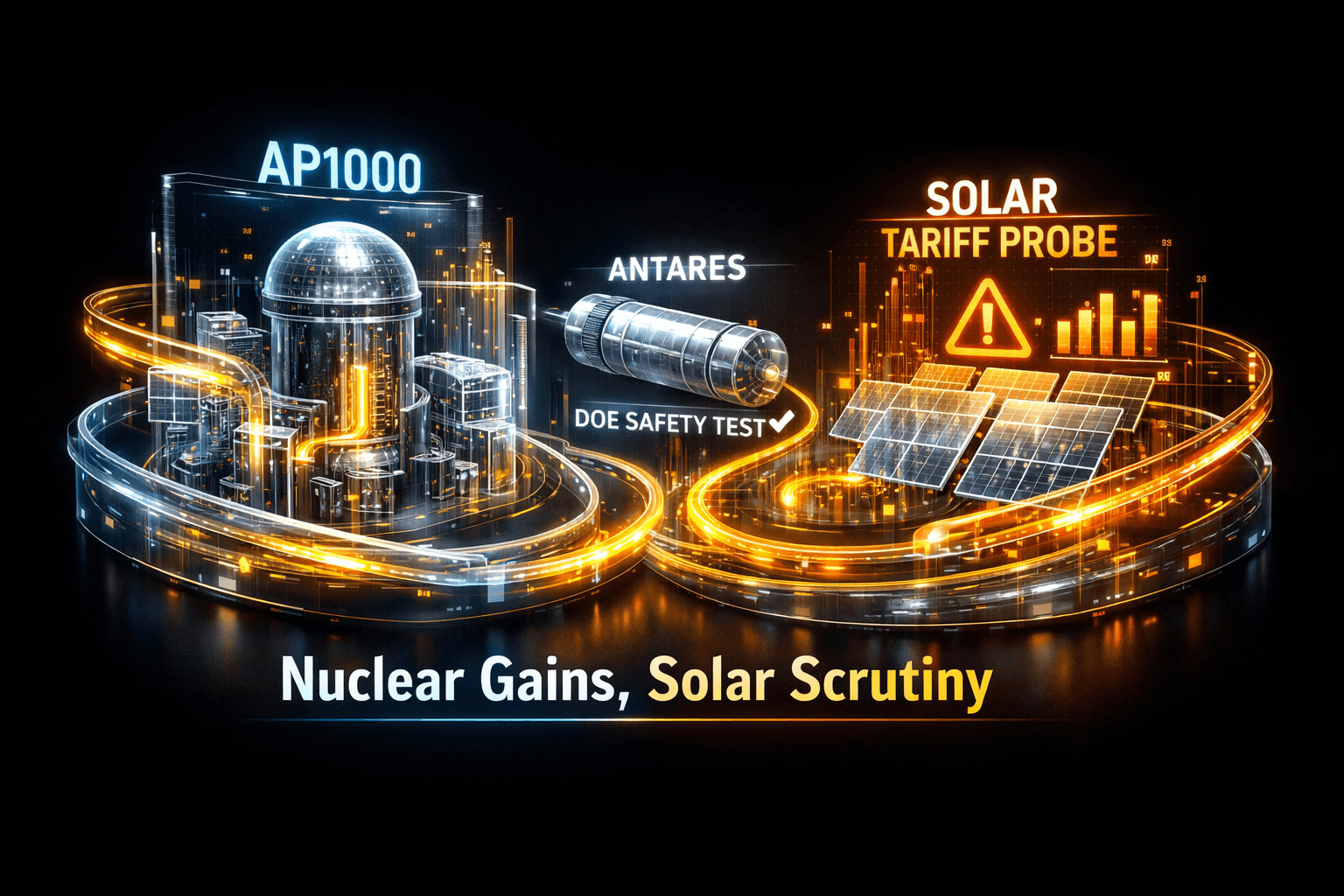
Today the utilities sector is seeing clear momentum in nuclear technology and approvals, while rooftop solar and electrified transport are showing fresh signs of strain. Westinghouse's filing to update the AP1000 design and the DOE signoff for Antares' Mark-0 reactor are the biggest regulatory developments overnight, but policy and market headwinds for solar and EVs temper the outlook.
Why does this matter to you as an investor? Nuclear milestones could reshape capital plans for regulated utilities and developers, but state investigations, tariff changes, and weakening EV demand create near-term uncertainty for distributed generation and electrification growth assumptions.
Market Highlights
Quick facts and price signals to start your trading day.
- Westinghouse filed Revision 20 of the AP1000 Design Control Document with the NRC, proposing Vogtle Unit 4 as the U.S. reference plant, a development with direct implications for projects tied to $SO (Southern Company) and other utilities.
- Antares received DOE approval of its Documented Safety Analysis for the Mark-0 demonstration reactor, advancing private advanced nuclear efforts that could attract utility partnering and long-term offtake interest.
- Solar sector scrutiny: Texas Attorney General Ken Paxton issued civil investigative demands to residential solar firms, naming companies including Sunrun, $RUN, among others after more than 100 complaints surfaced.
- Automotive signals: Honda is offering up to $8,000 off the Prologue EV, and Tesla, $TSLA, is down 2.15% today and about 20% over six months, indicating softer consumer EV demand that may affect long-term electricity load growth.
- Trade policy: The White House reaffirmed Section 232 metal tariffs with some new exceptions effective today, a change that introduces new cost and supply dynamics for solar racking and utility infrastructure.
Key Developments
Nuclear: Regulatory momentum and practical projects
Westinghouse's filing to renew and update AP1000 design certification, naming Vogtle Unit 4 as the U.S. reference plant, is a material regulatory step. If docketed by the NRC, Revision 20 could smooth permitting and standardization for future AP1000 builds, which matters if your utility exposure includes regulated nuclear projects or vendors tied to the fleet.
Separately, Antares' DOE approval of the Mark-0 Documented Safety Analysis advances commercial demonstration of advanced reactors. Together these items suggest nuclear is moving from policy talk to actionable approvals, and data suggests the sector could see higher developer activity over coming years.
Solar: Consumer protections and tariff noise
Texas' AG launched an investigation into residential solar sales practices after more than 100 complaints and issued CIDs to installers including $RUN and other firms. That raises short-term legal, compliance, and reputational risk for rooftop installers operating at scale in Texas and elsewhere, and it could slow new installs in a key growth market.
At the same time, the administration reaffirmed metal tariffs from 2018 but rolled out limited exceptions that take effect today. These tariff dynamics complicate supply chains and could push costs for racking and mounting systems higher, depending on how manufacturers and distributors respond.
Demand signals from EVs and corporate accounting changes
Auto industry headlines show softer EV retail demand, with Honda offering substantial discounts on the Prologue and Tesla shares continuing a multi-month slide. If EV adoption growth slows, your long-term load forecasts may need re-examination, especially for utilities targeting distribution upgrades and grid capacity expansion tied to vehicle charging.
On corporate climate claims, changes to the Greenhouse Gas Protocol and calls for better accounting aim to restore trust in 100% renewable claims. That matters for utilities and corporate purchasers negotiating clean energy contracts and for how you assess renewable procurement pipelines.
What to Watch
Keep these catalysts and risks on your radar today and through the quarter.
- Watch the NRC docket: If Westinghouse's Revision 20 is accepted and docketed, early adopter utilities and vendors could gain clarity on AP1000 specs and timelines.
- Follow Antares’ next steps and partner announcements, since private advanced reactor approvals may spur utility partnerships or vendor contracts.
- Monitor filings from Texas AG probes and any enforcement actions, because investor sentiment toward residential solar providers could shift quickly if fines or consumer remedies are imposed.
- Track tariff implementation details and vendor responses, as changes to metal duties will influence equipment costs and project economics for distribution and solar builds.
- Reassess load forecasts and capex plans if EV demand signals stay weak, and ask whether your utility exposures assume aggressive electrification that may be delayed.
Which of these will move stock prices most in the near term? Regulatory filings and legal probes often produce the biggest immediate market reactions, while adoption and load shifts tend to play out over quarters.
Bottom Line
- Nuclear is advancing: Westinghouse AP1000 revision and Antares DOE approval point to regulatory and demonstration momentum that could influence utility capital planning.
- Solar faces near-term headwinds: Texas investigations and tariff complexity introduce execution risk for residential installers and supply chains.
- Demand side uncertainty: EV sales weakness and discounting may soften expected load growth, affecting long-term investment assumptions for grid upgrades.
- Policy and accounting changes matter: Corporate climate accounting updates and trade policy shifts will affect procurement strategies and project economics.
- Stay selective: You should weigh regulatory exposure, counterparty risk, and practical project timelines when assessing utilities sector positions.
FAQ Section
Q: How could Westinghouse's AP1000 filing affect utility project timelines? A: If the NRC accepts Revision 20 and adopts Vogtle Unit 4 as the U.S. reference plant, it could standardize engineering inputs and reduce lead time uncertainty for future AP1000 projects.
Q: Should you worry about the Texas AG probe into solar sales? A: The probe raises compliance and reputational risks for installers operating in Texas, and large-scale enforcement could slow new residential installs in key markets.
Q: Do EV discounts change grid demand forecasts? A: Softer EV demand and manufacturer discounting suggest you should recheck electrification assumptions, because lower near-term EV uptake can reduce expected load growth and defer some grid investments.