The Big Picture
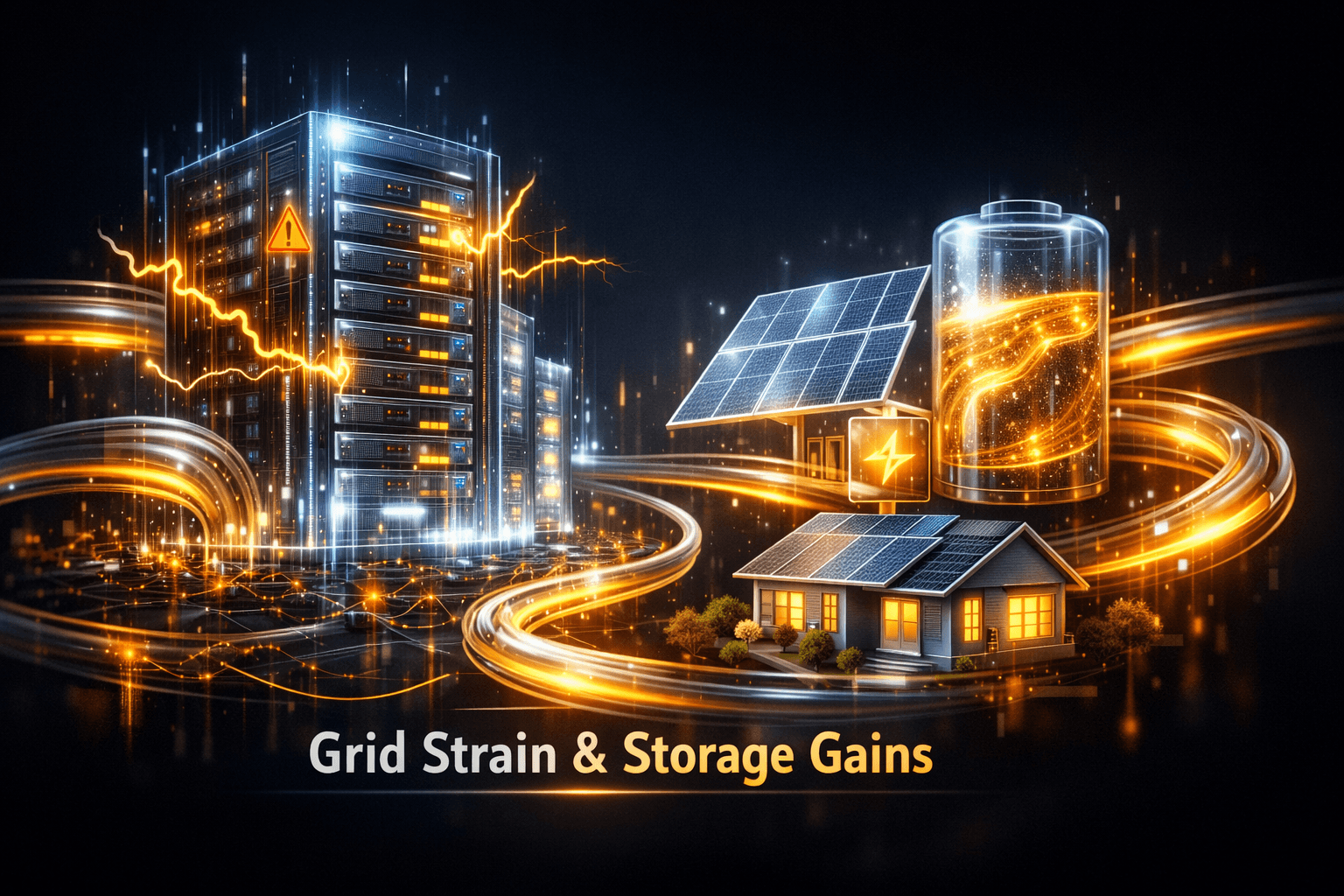
Overnight coverage makes one thing clear, the utilities sector is at a crossroads this morning: rapid growth in data centers and AI workloads is stressing local grids, while storage, solar innovations and state-level clean energy action are pushing capacity and solutions forward.
That tension matters for you because it shapes near-term reliability and the pace of clean energy deployment. Expect a mixed set of winners and losers, and more debate about where investment and policy should flow next.
Market Highlights
Quick facts and figures to keep on your radar before the open.
- Wood Mackenzie warns policy and load uncertainty could shift up to 52 GW of energy storage deployments by 2031, tempering a banner 2025 for the sector.
- Private equity deal: ArcLight agreed to buy 2.2 GW from InfraBridge, with about 1.1 GW in PJM. ArcLight already owns roughly 9.7 GW in that region.
- Residential and distributed energy moves: Bluetti launched the EnergyPro 13K with 13.2 kW continuous output and a 150 LRA surge rating. Qcells rolled out a New Homes division aimed at builders.
- Solar operations tech: Terrasmart released Peak Production Package for its PeakYield tracker software to boost performance and streamline O&M.
Key Developments
Grid protection amid data center and AI growth
Power industry leaders and analysts are sounding the alarm about data center expansion, especially AI-focused facilities, placing new stress on distribution networks and reserve margins. POWER Magazine and Utility Dive coverage highlights utility concerns about capacity, reliability and the need for clearer rules and investment timelines.
For you that means reliability and interconnection timelines could become a near-term driver of utility capex and regional price dynamics. Where large loads land will matter more than ever.
Storage momentum meets policy and forecast uncertainty
Reports show 2025 was a big year for U.S. storage but Wood Mackenzie cautions that uncertainty on future load growth and federal guidance on foreign-sourced battery materials could move deployment forecasts by as much as 52 GW by 2031. That’s a wide swing that investors and planners can’t ignore.
Can storage fill the gap created by variable renewables and rising data center demand? Data suggests storage is central to the solution, but policy clarity and supply chain rules will shape the speed and cost of deployments.
Solar and distributed innovation picking up pace
On the product and project side, TerraSmart’s PeakYield tracker software aims to boost utility and distributed generation output while reducing downtime. Qcells’ new homes platform and Bluetti’s EnergyPro 13K product target residential and builder markets, signaling more vertical integration in rooftop and home battery markets.
These moves put more tools in your toolbox if you follow distributed energy trends, and they suggest installers and builders are gearing up for higher-volume deployments.
What to Watch
Here are the catalysts and risks to monitor through the coming weeks and months.
- State policy and legislative action, which CleanTechnica coverage flags as critical. States remain a primary driver of deployment timelines and incentives.
- FERC and regional interconnection filings tied to the ArcLight deal and other capacity shifts in PJM. Those filings will affect market capacity, price signals and transmission planning.
- Federal guidance on battery material sourcing and tariffs. Any change could alter costs and the pace of storage projects.
- Local utility reports on data center interconnections and reliability projects. If more AI loads request service, upgrades or curtailments could become more common.
- Commercial deployments of tracker software and residential bundles from Qcells and Bluetti, which may lift O&M efficiency and adoption rates for home solar plus storage.
If you follow utilities or clean energy, watch announcements from state energy offices and major regional transmission organizations. How will developers respond to interconnection timelines? Will storage procurements accelerate to backstop stressed networks?
Bottom Line
- Grid stress from data center and AI growth is a tangible operational risk and will drive more transmission and storage spending.
- Energy storage and distributed energy products are advancing, but policy and supply chain uncertainty could change deployment curves significantly.
- Private equity moves into gas capacity like ArcLight’s deal add a supply-side counterpoint to clean energy momentum, and regional impacts deserve close attention.
- State-level action remains a key catalyst for projects and incentives, so track legislative developments where project pipelines are concentrated.
- Expect a selective market, where technology, location and policy alignment determine winners, not one-size-fits-all outcomes.
FAQ Section
Q: How big is the storage deployment uncertainty? A: Analysts say forecasts could shift by as much as 52 GW by 2031 due to load and policy uncertainty.
Q: Are AI data centers forcing utilities to act? A: Yes, data center growth is prompting discussions about grid upgrades, interconnection rules and more planning for large, variable loads.
Q: What does the ArcLight 2.2 GW deal mean for the market? A: It increases private equity ownership of generation, mainly gas, which could affect regional capacity mixes and market dynamics in PJM.