The Big Picture
The Utilities sector is showing a mixed bag of momentum and friction as you head into the long weekend, with major federal backing for generation and transmission projects offset by local setbacks for solar and fresh regulatory rulings. You should care because the next wave of capacity builds and grid upgrades will shape power prices, regional reliability, and where long-term returns may emerge.
On one hand the Department of Energy is directing capital toward new gas capacity and large transmission projects, a practical move for near-term reliability. On the other hand regulators and siting boards are still throwing up barriers that could slow renewables growth in specific markets, and technology issues in adjacent sectors could change demand patterns for electricity.
Market Highlights
U.S. markets were closed on Saturday. The headlines below summarize the most actionable developments as of Friday, March 20 and early Saturday reporting.
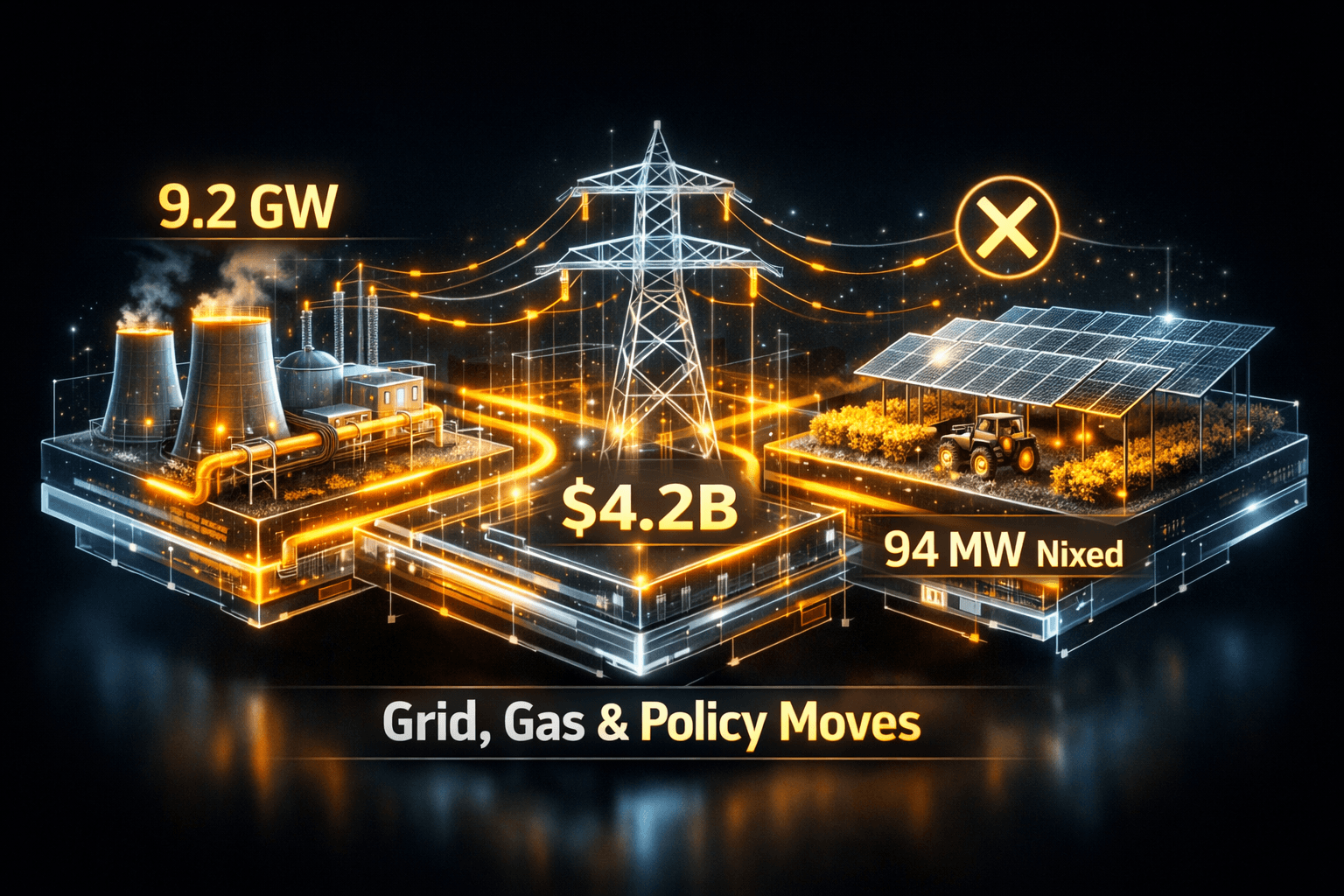
- DOE selects SB Energy, a SoftBank unit, to develop 9.2 GW of gas generation in Ohio, paired with a $4.2 billion investment with $AEP in transmission upgrades in southern Ohio.
- Ohio Power Siting Board unanimously denied a proposed 94-MW agrivoltaic solar project in Morrow County, halting the Crossroads Solar Grazing Center on roughly 570 acres.
- FERC rejected an RWE complaint about PJM interconnection practices and also cut New England transmission return on equity, while allowing two Indiana utilities to spread costs tied to DOE emergency orders keeping coal plants online.
- Offshore wind scored a win as a targeted project began sending power into the New England grid, providing an example of progress amid contested approvals.
- Industry voices signal a push for nuclear and grid modernization, including a fast-track style effort around DOE and industry to meet federal nuclear targets and new software tools for strategic grid planning from envelio.
Key Developments
DOE taps SoftBank arm for large gas build and transmission upgrade
The Department of Energy selected SB Energy to develop 9.2 GW of gas-fired generation in Ohio, and the plan includes a $4.2 billion transmission upgrade partnership with $AEP. This move is aimed at shoring up reliability in the region and easing congestion, and analysts note it signals federal willingness to fund fossil capacity and transmission where needed for short-term grid stability.
Renewables face mixed outcomes: agrivoltaic rejection, offshore wind progress
Local permitting remains a constraint after the Ohio Power Siting Board denied a 94-MW agrivoltaic project that combined solar with grazing, a loss for co-location innovation in that market. Yet offshore wind cleared a high-profile hurdle by bringing power to New England, showing projects can still succeed when federal and state coordination aligns.
Regulatory decisions shift economics for regional transmission and interconnection
FERC’s rejection of $RWE’s complaint over PJM interconnection practices and the agency’s decision to cut New England transmission ROE create winners and losers across regions. The rulings also allowed cost spreading for utilities covering coal plants kept online under DOE emergency orders, which changes cost allocation dynamics and could affect developer returns and rate cases.
Grid modernization and distributed power strategies gain urgency
Voices across the sector are urging new planning approaches as AI and data center growth increase load volatility. The Ameresco CEO argues for 'bring your own power' strategies for data centers to avoid straining grids, and envelio’s new automated strategic grid planning tools are getting attention for helping utilities map flexibility needs and resilience upgrades.
What to Watch
Upcoming policy shifts, federal funding timelines, and local permitting decisions will determine which projects move forward. Keep an eye on DOE announcements for implementation details around the Ohio package, and watch state siting boards for similar agrivoltaic or co-location proposals elsewhere.
Are interconnection reform efforts gaining traction? Monitor FERC filings and PJM process updates, because changes there will affect build timelines for both renewables and storage. Also watch congressional and DOE briefings on the nuclear push and any funding or licensing accelerations that could alter long-term capacity mixes.
For demand-side risk, follow reports about EV charging trends and technical issues in vehicle autonomy that could influence charging patterns, and track data center procurement strategies as operators consider on-site generation to manage AI-driven loads.
Bottom Line
- The sector is a mixed picture right now, with federal backing for gas and transmission balanced by local opposition to some renewable projects.
- Regulatory decisions from FERC and state siting boards will materially affect interconnection timelines and developer returns, so expect selective winners across regions.
- Grid modernization and on-site power solutions are rising up your watch list as ways to manage reliability and new load growth from AI and EVs.
- Offshore wind and nuclear developments show there is still room for large-scale non-fossil capacity when permitting and policy align.
- Stay selective, follow filings and siting calendars, and keep an eye on DOE implementation details heading into next week.
FAQ Section
Q: How does the DOE gas and transmission package affect regional reliability? A: The package is intended to add 9.2 GW of dispatchable capacity and fund $4.2 billion in transmission work, which should relieve congestion and improve short-term reliability in southern Ohio, analysts note.
Q: What does the Ohio agrivoltaic denial mean for future solar projects? A: The unanimous denial shows local permitting remains a major risk for co-located projects, and developers will likely face longer timelines and more community engagement requirements where land-use concerns are strong.
Q: Should you expect immediate rate impacts from FERC decisions? A: Some cost allocation shifts and ROE changes could filter into rate cases over months, and utilities may seek recovery mechanisms for emergency reliability costs, so follow state commission dockets for concrete rate implications.