The Big Picture
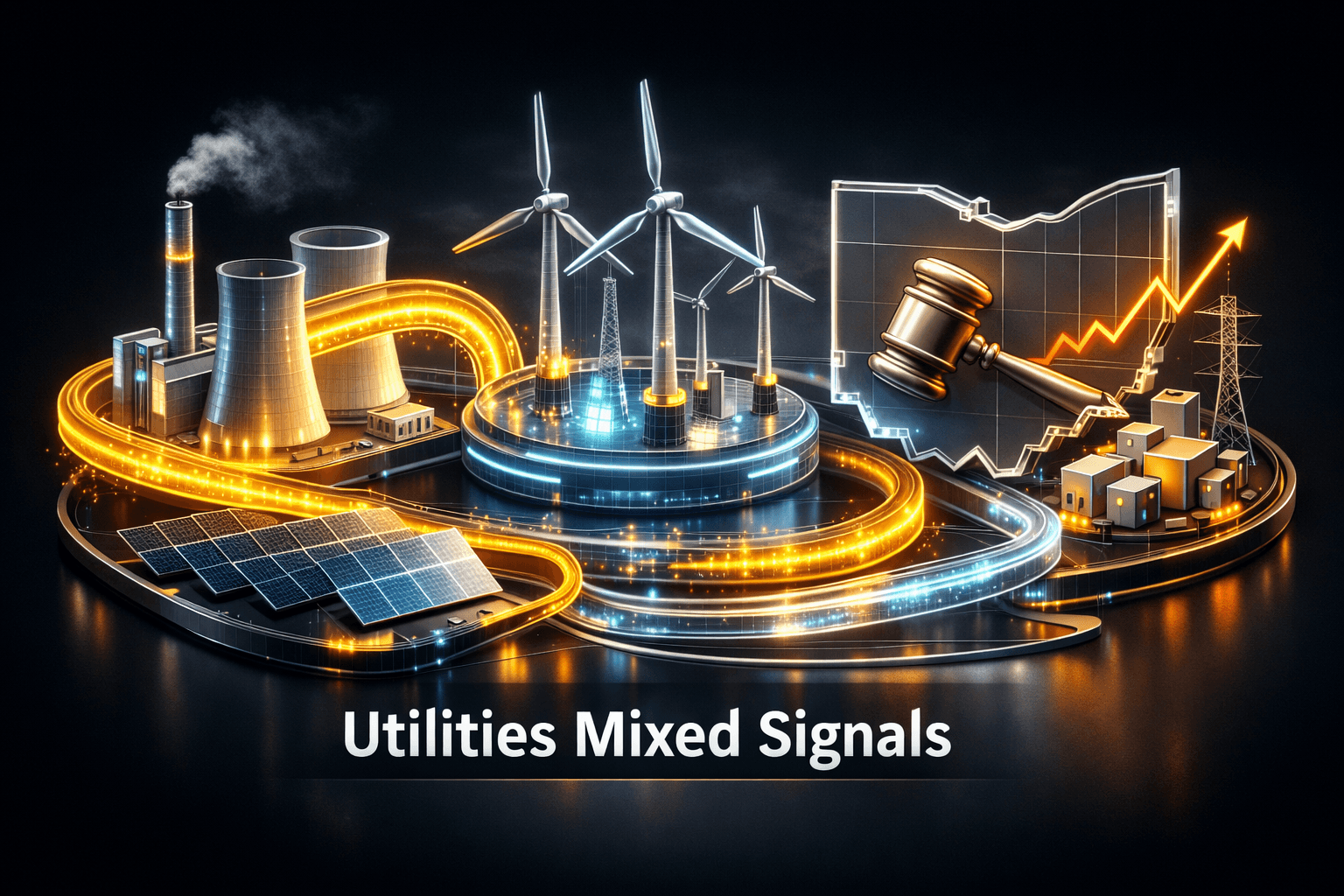
The Department of Energy's decision to tap SB Energy to develop 9.2 GW of gas generation in Ohio, paired with a $4.2 billion transmission upgrade with $AEP, was today's standout development and it underlines a pragmatic tilt toward reliability as the energy transition continues. At the same time, wins for community solar and an offshore wind project sending power to New England show clean resources are still advancing, but local permitting setbacks and regulatory rulings temper the upside.
This is a mixed bag for utilities and related suppliers, because you've got both large-scale investments that support near-term capacity needs and policy moves that could compress returns or complicate siting. How will that balance affect utility earnings and project timelines, and what should you watch next?
Market Highlights
Key facts and numbers from today's headlines, laid out for quick scanning so you can see the stakes.
- DOE selects SB Energy to develop 9.2 GW of gas generation in Ohio and teams it with $AEP on a $4.2 billion transmission upgrade in Southern Ohio.
- Community solar continues to expand, offering local rate relief and resilience for consumers, according to CleanTechnica coverage.
- FERC rejected a complaint from $RWE over PJM interconnection practices and reduced the transmission return on equity for New England, signaling regulatory pressure on allowed returns.
- Ohio's Power Siting Board denied a proposed 94 MW agrivoltaic solar project from Open Road Renewables, highlighting persistent local permitting risk.
- Offshore wind scored a policy win with a project now delivering power to New England, and DOE and industry are accelerating work on nuclear targets announced in 2025.
Key Developments
DOE taps SB Energy and $AEP for large Ohio build
The DOE selection of SB Energy to develop 9.2 GW of gas-fired generation, alongside a $4.2 billion transmission upgrade with $AEP, is a major capacity and grid investment story. For investors, that signals federal support for near-term reliability investments even as clean resources scale up, and it creates potential opportunities for equipment suppliers and transmission contractors.
Community solar growth vs. local siting setbacks
Community solar projects got positive coverage as a lifeline for ratepayers, showing continued expansion at the distributed scale. Yet the unanimous denial of a 94 MW agrivoltaic project in Ohio underscores that land use and local permitting still create material project risk, especially for mid-size solar developers like Open Road Renewables.
Regulatory outcomes, grid stability and clean development
FERC's move to reject $RWE's complaint about PJM interconnection, and to trim New England transmission ROE, highlights a regulator that is actively reshaping incentives. At the same time, offshore wind delivering power and a DOE-driven nuclear push show the administration and industry are moving on multiple fronts to address capacity and stability concerns. Data center demand is another wildcard, with industry leaders saying you should expect more 'bring your own power' strategies if AI growth stresses the grid.
What to Watch
Keep an eye on regulatory and permitting developments that will move project economics and timelines, because these are the levers that can swing returns quickly. You should monitor upcoming FERC orders, state siting board decisions, and DOE implementation plans tied to nuclear and thermal generation goals.
Also watch corporate filings and supplier contracts linked to the $4.2 billion Ohio transmission plan, because they will reveal who benefits from near-term buildouts. Who will absorb cost allocations across ISOs, and how will that affect retail rates and utility credit metrics? Those are the questions that will drive near-term market reaction.
Bottom Line
- Federal backing for 9.2 GW of gas plus a $4.2 billion transmission push signals a focus on reliability and near-term capacity, supporting certain utility and contractor revenues.
- Community solar and offshore wind are making tangible progress, but local permitting denials like the 94 MW agrivoltaic cancellation show development risk remains high.
- FERC's regulatory moves, including limits on ROE, add pressure to utility returns and change the economics of transmission investments.
- Data center demand and the push for 'bring your own power' could increase distributed generation and storage opportunities, while complicating grid planning.
- Stay selective and watch permitting, rate-case outcomes, and DOE implementation timelines for clearer signals on winners and losers.
FAQ Section
Q: What does the DOE SB Energy selection mean for utilities? A: It means federal support for large-scale capacity and transmission upgrades, which may create near-term contracting and revenue opportunities for utilities and vendors, while keeping reliability front and center.
Q: How important are local siting decisions after today's headlines? A: Very important, because denials like the 94 MW agrivoltaic rejection show that local boards can materially delay or stop projects, and that risk often shows up in developer financials and timelines.
Q: Should I expect faster buildout of clean resources after these stories? A: Data suggests buildout continues but is uneven, you'll see momentum in offshore wind and community solar, while permitting, interconnection and regulatory returns will shape the pace.