The Big Picture
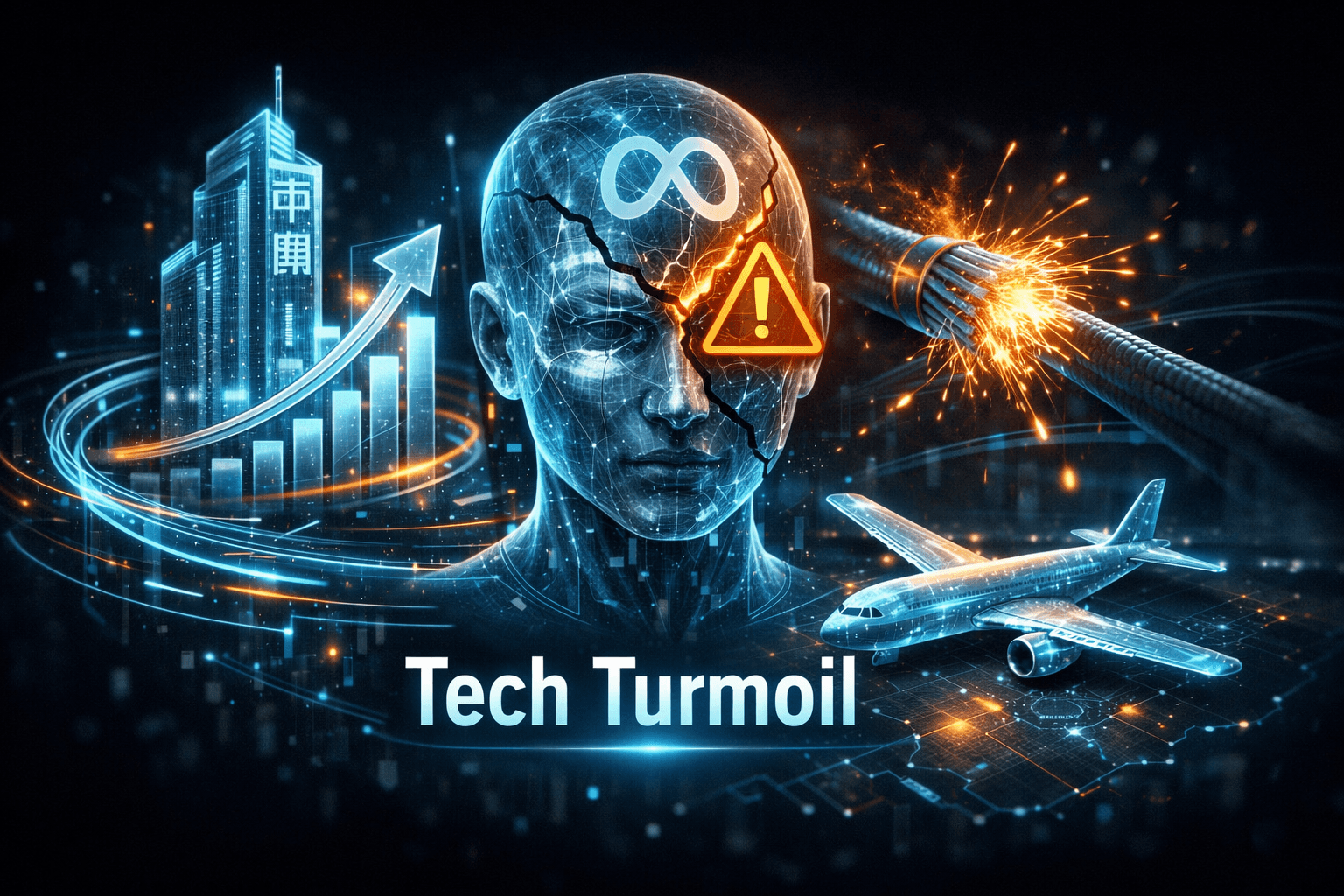
Technology markets opened with mixed signals on Sep 22, as fresh capital hits the sector at the same time serious operational and security issues surfaced. Ligent's Hong Kong IPO jumped about 19 percent after raising roughly $727 million, signaling continued investor appetite for AI‑linked hardware, while Meta's new AI assistant, Muse, was hit by a critical zero‑day vulnerability that raises questions about agent security.
This matters because you can see both upside from funding and IPO activity and downside from infrastructure and cybersecurity risks, all in a single session. Traders and longer term holders alike should note the divergence, and watch how companies respond in the coming days.
Market Highlights
Quick facts and price moves to keep on your radar this morning.
- Ligent Technologies, a Chinese optical transceiver maker, jumped about 19 percent in its Hong Kong market debut, implying an approximate market cap of $4.6 billion after raising about $727 million.
- Deeptech startup Morphotonics closed a €40 million funding round led by 3M Ventures and others, targeting expansion of its display technology into data center applications.
- Apple ($AAPL) unveiled Apple Music Hall, a 600‑capacity live venue in London at Battersea Power Station, set to open Sept 28, highlighting experiential bets beyond hardware and services.
- Meta ($META) faces a serious zero‑day in its Muse assistant, with researchers showing a complete hijack scenario using a ClickFix technique.
- A cut Verizon ($VZ) fiber cable disrupted hundreds of flights across the U.S., prompting FAA scrutiny of physical network resilience.
- Amazon ($AMZN) pledged $20 million to Colorado River water projects, yet reporting gaps persist around actual data center water usage.
Key Developments
Ligent IPO surge, continued AI‑hardware demand
Ligent's Hong Kong listing popped roughly 19 percent in debut trading, after the company raised about $727 million and landed an implied market value near $4.6 billion. This is the latest AI supply‑chain related IPO to find appetite in Asia, and analysts note demand for companies tied to compute infrastructure remains strong.
For you, this supports the idea that capital is still flowing into optics and networking plays that enable AI workloads. Watch subsequent trading and any follow‑on analyst notes for signs of durable secondary market support.
Security and infrastructure warnings: Muse zero‑day and the cut cable
Ars Technica reported a high‑severity zero‑day in Meta's Muse assistant that allows a complete agent takeover via a ClickFix attack, while a separate incident in New Jersey showed construction crews severing a Verizon fiber line, which disrupted hundreds of flights. Both stories highlight operational risk across software and physical networks.
Data suggests you should monitor how quickly vendors patch vulnerabilities and how carriers harden critical links. These events could prompt increased short‑term volatility for affected names and raise questions about regulatory and operational oversight.
Regulation, sustainability, and deeptech funding
Polymarket is lobbying EU and UK regulators to classify prediction markets under financial services rules instead of gambling laws, which would change compliance costs and market access. Meanwhile, Morphotonics' €40 million raise signals investor interest in specialized hardware for data centers.
Regulatory clarity and ESG scrutiny, especially around Amazon's water use disclosures, will shape capital allocation decisions. You'll want to follow regulatory filings and sustainability reporting as they evolve.
What to Watch
Here are the events and metrics that could move stocks and sentiment through the week.
- Ligent follow‑on trading, lockup schedules, and any Hong Kong‑listed peer moves, which could set a tone for network hardware names across APAC.
- Meta's response timeline for the Muse zero‑day, including patch details and any disclosure to customers. How fast and complete the fix is will determine reputational fallout.
- FAA and carrier updates on the Verizon fiber outage, plus any regulatory inquiries into physical infrastructure protections and contractor practices.
- Apple's Apple Music Hall opening on Sept 28, which will be a shop‑window for Apple's experiential retail and services strategy, and may influence $AAPL messaging on services growth.
- Polymarket lobbying outcomes in London and Brussels, where a shift into financial services regulation could alter market structure for prediction platforms.
- Sustainability disclosures from major cloud and data center operators, particularly around water usage after $AMZN's $20 million initiative.
Which of these headlines will matter most for your positions? Monitor official filings, patch notes, and regulator statements for clarity before you act.
Bottom Line
- Capital remains available for AI‑related hardware and deeptech, as shown by Ligent's Hong Kong debut and Morphotonics' €40 million raise.
- Operational and cybersecurity risks are front‑page issues, with Meta's Muse zero‑day and a major fiber cut showing vulnerabilities across software and physical networks.
- Regulatory and ESG pressures are rising, with Polymarket's lobbying and Amazon's water disclosure gap likely to attract more scrutiny.
- Be selective and monitor company disclosures, patch timelines, and regulatory filings, since momentum can flip quickly in this environment.
- Short‑term volatility is possible, so get a heads up on upcoming catalysts if you follow specific names closely.
FAQ
Q: How could Ligent's IPO affect other AI infrastructure stocks? A: Strong aftermarket performance in Ligent may boost sentiment toward optics and networking suppliers, but long‑term impact depends on order growth, margins, and broader macro conditions.
Q: Should I be worried about Meta's Muse zero‑day? A: A critical vulnerability is a material operational risk, and you should watch Meta's patch cadence and any related disclosures; rapid remediation reduces long‑term exposure.
Q: What does the Verizon fiber outage mean for data‑center and network investments? A: The outage highlights physical resilience risks, and you should track carrier responses, redundancy plans, and any regulatory investigations that could affect costs or contracts.