The Big Picture
A blend of AI advances, regulatory pressure, and infrastructure pushback set the tone for technology headlines on Jul 18, even as U.S. markets were closed for the weekend. For investors, the key takeaway is simple: innovation and policy are moving in parallel, and that creates both opportunity and uncertainty for the coming week.
You saw product-level news that supports consumer demand, but you also saw stories that raise operational and regulatory risk. What does that mean for your exposure to big cloud and AI names? Read on to separate the signal from the noise heading into the next trading day.
Market Highlights
Markets were closed Saturday, Jul 18. The last trading day was Friday, Jul 17 and the next session is Monday, Jul 20. Below are concise facts and company touchpoints from today's headlines.
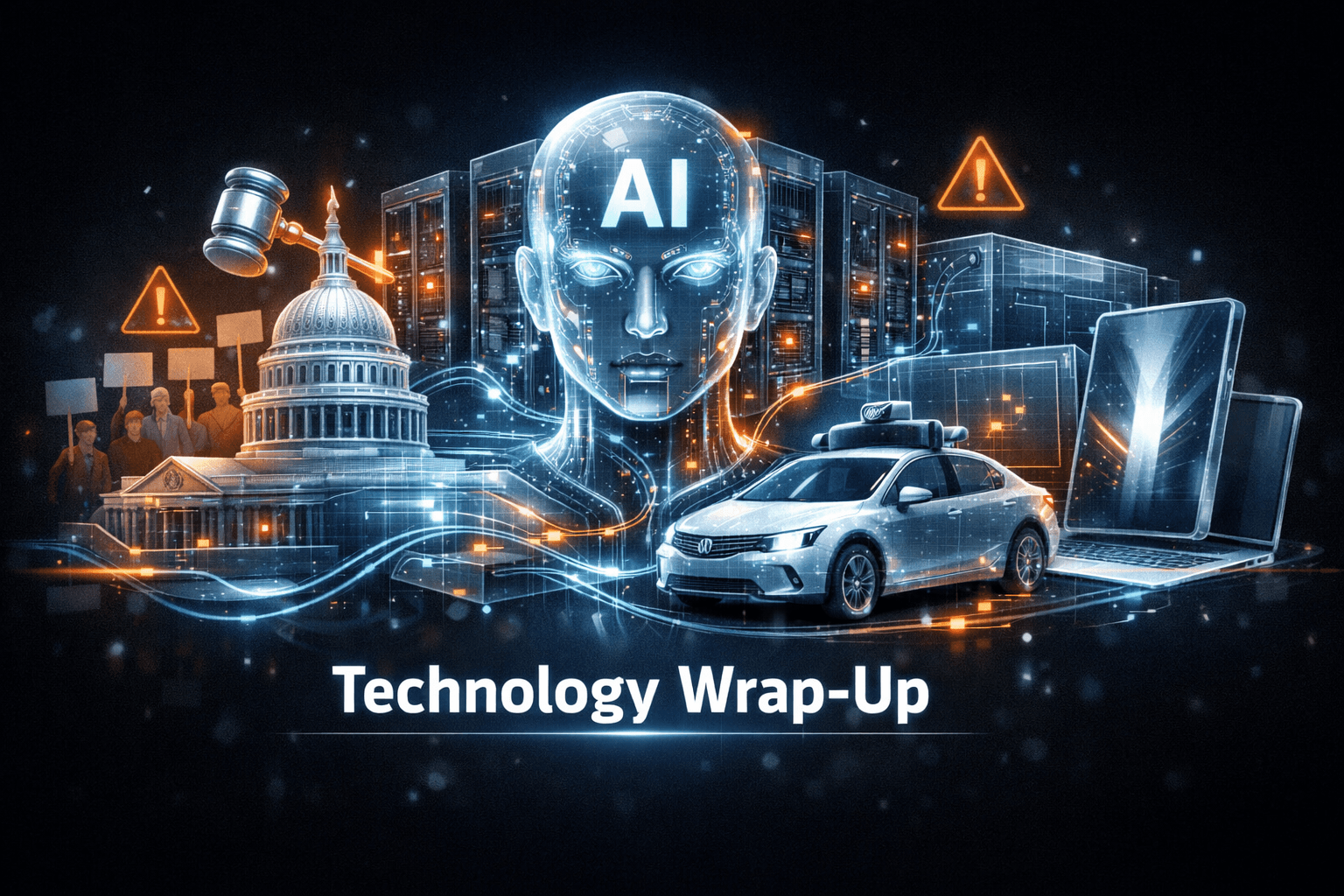
- Waymo resumes San Francisco service after roughly one-hour pause caused by a power outage, underlining operational fragility in autonomous fleets, parent company $GOOGL is the primary public proxy for the business.
- Grassroots group HumansFirst organized protests at 125 U.S. data center locations, highlighting public opposition that could influence permitting and local regulation for major cloud providers such as $AMZN, $MSFT, and $GOOGL.
- Moonshot AI released a new Kimi model that renewed debate about rapid model releases and potential misuse, while policy pieces note an interventionist U.S. approach to top AI models.
- Consumer hardware news stayed lively: leaks suggest the Pixel 11a may get a flagship Tensor G6 chip, Apple $AAPL is rumored to update the iPad mini with OLED and a faster processor this fall, and GoPro $GPRO is offering a Max 2 bundle discounted to $369.
- Political betting and prediction markets drew attention after reports that anonymous bets on ceasefire timing prompted White House legal alarms, raising new questions about information flow in Washington and potential regulatory responses.
Key Developments
AI, Policy, and Model Risk
Multiple pieces underscored a tightening policy backdrop for advanced AI. Reporting detailed how the U.S. has shifted toward more interventionist rules for top models, and the rapid release of Moonshot AI's Kimi model intensified public debate. Analysts note that tighter oversight could raise compliance costs for larger model operators and push more development offshore or to smaller firms.
At the same time, you should watch how markets price regulatory risk into the biggest AI beneficiaries, including cloud infrastructure providers and chipmakers. Will stricter rules slow deployment, or will clearer guardrails encourage enterprise adoption? That's the open question.
Infrastructure Stress: Power, Data Centers, and Protests
Operational reliability hit the headlines when Waymo paused San Francisco service for about an hour amid a power outage, then resumed. That episode is a reminder that autonomy depends on resilient local infrastructure. Separately, HumansFirst organized protests at 125 data center sites nationwide, calling attention to local impacts like water use and grid strain.
For investors, this suggests an increased probability of permitting delays, higher community engagement costs, and possible localized regulation. Cloud and colocation providers may have to step up outreach and capital planning to address these concerns.
Devices and Consumer Momentum
On the product side, leaks and deals offered signs of continuing consumer interest. The Pixel 11a is rumored to return to a flagship-grade Tensor G6 chip rather than an older processor. $GOOGL's mobile hardware line showing a stronger chip would be a positive signal for on-device AI performance.
Apple rumors point to the most significant iPad mini refresh in five years with OLED and a faster processor, which could support accessory and app ecosystems. Meanwhile, a $369 GoPro Max 2 bundle provides a near-term consumer-friendly price point. Offsets include continued EV model exits from the U.S. market, highlighting selective weakness in automotive electrification segments.
What to Watch
Heading into next week, these catalysts and risks deserve your attention.
- Regulatory signals: Look for statements or rule drafts from U.S. agencies about AI model restrictions and data controls, which could reshape costs and timelines for major vendors.
- Data center approvals and local policy moves: Protest activity could prompt municipal hearings or permit reviews. Watch permitting timelines in key cloud regions and any guidance from utilities.
- Product release cadence: Confirmed specs or launch dates for Pixel 11a and the next iPad mini could influence sentiment in the consumer hardware segment and related component suppliers.
- Operational incidents: Any repeat of reliability issues for autonomous fleets, or broader grid problems, could push investors to re-evaluate timing of autonomous service rollouts.
- Political risk in information markets: Follow any regulatory or enforcement developments around prediction markets, since they could affect how information flows in Washington and compliance for related platforms.
Bottom Line
- Innovation and policy are converging, creating mixed implications for tech exposure.
- Infrastructure and local opposition to data centers add a near-term risk premium for cloud providers and hyperscalers.
- Device leaks and consumer discounts show persistent product demand, but you should be selective across hardware makers.
- AI model releases and tighter U.S. rules make regulatory monitoring essential for anyone tracking the sector.
- As markets reopen Monday Jul 20, expect headlines about policy and infrastructure to drive day-one reactions, so stay alert to official guidance and confirmed product news.
FAQ Section
Q: How should I interpret data center protests for cloud stocks? A: Protests can increase permitting and community costs and may delay expansions in specific regions, analysts note, but broad demand for cloud services remains a structural driver.
Q: Does the Waymo pause indicate a systemic problem for autonomous services? A: A one-hour pause tied to a power outage highlights local infrastructure vulnerability, but it is not reported as a systemic failure; reliability metrics and frequency of incidents are what matter most.
Q: Will AI regulation slow model rollouts? A: Policy tightening can slow or reshape deployment, and firms will likely allocate more resources to compliance and safety testing, which may affect timelines and costs.