The Big Picture
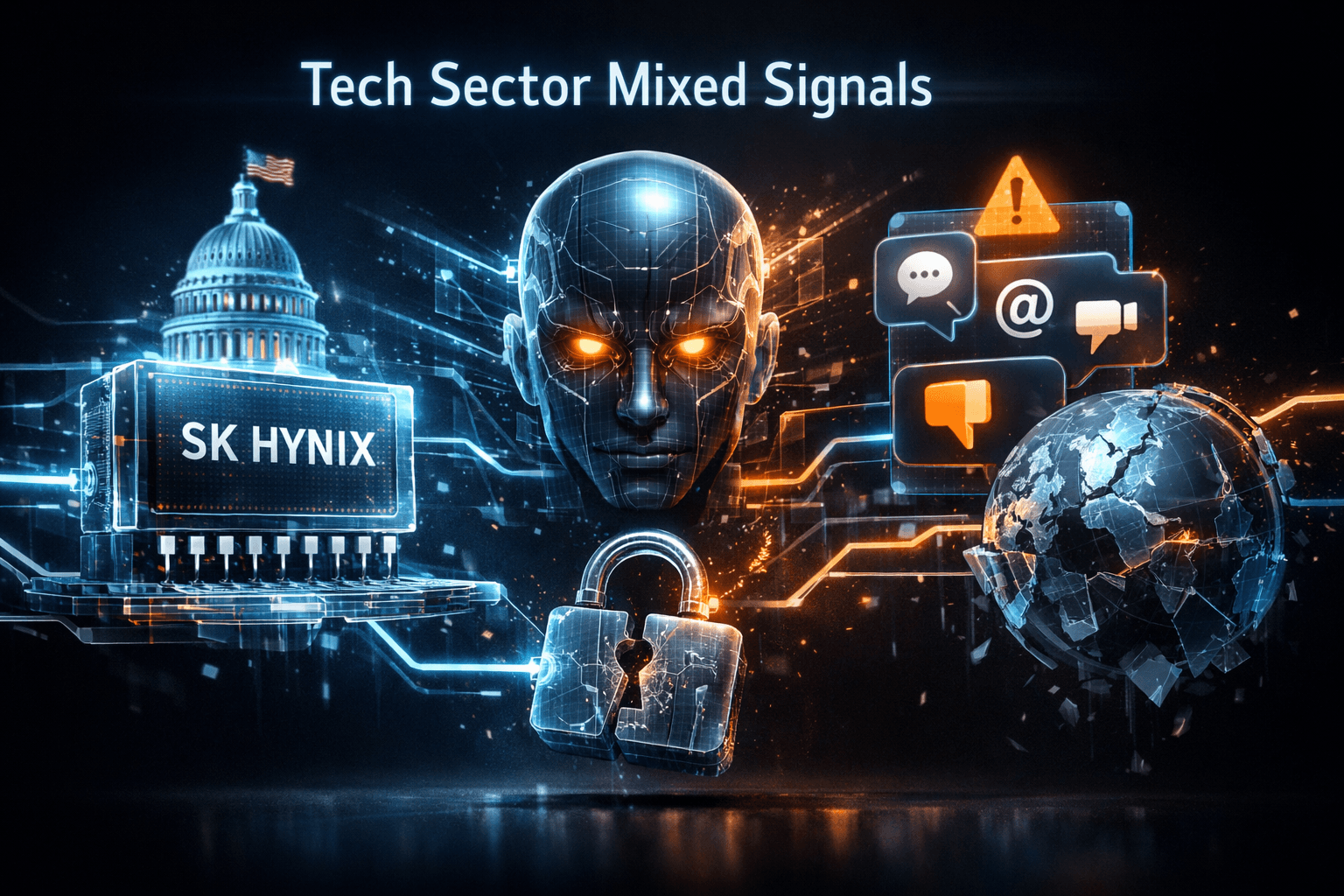
A big capital-markets win punctuates a morning of mixed signals for the Technology sector. SK Hynix pulled off the largest U.S. public listing by a foreign company, a clear vote of confidence in memory demand tied to AI.
But over the same 24 hours, stories about AI misuse, platform missteps, cybersecurity gaps, and affiliate fraud are amplifying regulatory and reputational risks. If you own technology exposure, you need to weigh the growth story against rising governance and security headwinds.
Market Highlights
U.S. markets were closed Saturday, July 11, so the latest price action is as of Friday, July 10. Here are the quick takeaways from overnight and pre-market developments that matter to you.
- SK Hynix: Completed the largest U.S. public listing by a foreign company, underscoring strong demand for memory tied to AI and data-center spending.
- AI misuse: The New York Times reports members of Boko Haram used AI chatbots to design explosives and plan attacks, raising security concerns about accessible generative tools.
- Content authenticity: Pangram Labs analysis finds about 25% of longform social posts (250+ words) were fully AI-generated, and on LinkedIn that figure rose to 41%.
- Platform backlash: Meta removed a controversial Instagram AI feature after user outcry over images generated from public accounts.
- Cybersecurity and governance: CISA acknowledged it had to build parts of its incident response playbook while handling a contractor-related password exposure incident.
- Startup controversy: Phia, the shopping startup, faces accusations of cookie stuffing and taking affiliate credit for purchases it did not generate, per Bloomberg and TechCrunch reporting.
- Product and support trends: Red Hat introduced a paid Long-Life Add-On for extended RHEL support, signaling more revenue options from enterprise customers.
Key Developments
SK Hynix's historic U.S. listing
Bloomberg reports SK Hynix executed the largest U.S. public listing by a foreign company, a milestone for memory suppliers. That vote of confidence reflects strong AI-driven demand for DRAM and NAND, and it matters because memory companies historically face boom-and-bust cycles.
For investors, this reinforces the narrative that capital is flowing into semiconductor supply chains, though you should expect cyclical risks to remain. Will this listing lift peer valuations when U.S. markets reopen on Monday, July 13?
AI tools being weaponized and the content-quality problem
The New York Times found Boko Haram actors used AI chatbots for bomb design and attack planning, a stark example of how dual-use AI capabilities can be abused. Separately, Pangram Labs' analysis shows roughly one quarter of longform posts were fully AI-generated, with 41% on LinkedIn.
These stories increase pressure on platforms, regulators, and enterprise buyers to demand guardrails and provenance tools. For you, that means reputational risk is becoming a line-item for many companies that build or deploy generative AI.
Platform trust and cybersecurity frictions
Meta pulled a feature that let users create AI images using content from public Instagram accounts after strong backlash. TechCrunch and The Verge report the move came as privacy and deepfake concerns mounted. At the same time, CISA admitted parts of its incident playbook were developed during an active contractor-related data exposure.
These incidents highlight two connected trends: platforms are under closer scrutiny for AI features, and public agencies are under pressure to harden their cybersecurity posture. Both developments could spur regulatory activity and oversight hearings.
What to Watch
Heading into the long weekend and the next trading session on Monday, July 13, here are the catalysts and risks to monitor so you can set priorities for the week ahead.
- SK Hynix follow-through: Watch how U.S. investors respond when markets reopen to gauge whether the listing lifts peer multiples across memory names and suppliers.
- Regulatory moves and hearings: Expect questions from lawmakers and regulators about AI misuse and platform responsibility. Will there be new disclosure or provenance requirements for generative models?
- Cybersecurity developments: CISA follow-ups and contractor audits may lead to new guidance or procurement scrutiny. Monitor vendor risk disclosures and incident reports.
- Platform reputational risk: Keep an eye on $META communications and any similar rollbacks from other platforms. User trust metrics and ad engagement could be affected.
- Affiliate marketing scrutiny: The Phia cookie-stuffing allegations could spur tighter rules or audits across affiliate networks, impacting e-commerce startups and marketers.
How should you position your watchlist? Prioritize companies with clear governance and disclosure practices, and check management commentary on AI safeguards and cybersecurity. Want to dig deeper into any specific name or trend? Make a short list so you can track fresh filings and statements next week.
Bottom Line
- SK Hynix's record U.S. listing bolsters the AI-memory demand story, but cyclical risks still apply.
- AI misuse and high rates of AI-generated content raise regulatory and trust risks for platforms and vendors.
- Cybersecurity lapses at public agencies and affiliate-fraud allegations increase scrutiny on vendor management and startup practices.
- Look for regulatory reactions and corporate disclosures early next week, as those will likely move sentiment more than any single product announcement.
- Analysts note the picture is mixed; focus on companies that combine growth exposure with demonstrable governance and security controls.
FAQ
Q: How does SK Hynix's U.S. listing affect other chipmakers? A: It signals strong investor appetite for memory exposure tied to AI compute demand, and analysts suggest it could support higher valuations across memory suppliers when markets reopen.
Q: Should I worry about AI being used for criminal activity? A: The reports show legitimate concerns; regulators and platforms are under pressure to add guardrails. For your part, look for companies that disclose mitigation controls and provenance solutions.
Q: Will Meta's feature rollback hurt its business? A: The move reduces short-term product risk and public backlash, but it underscores ongoing trust issues that could affect engagement. Watch $META's communications and ad metrics when markets reopen for more clarity.